The Running Event touched down in San Antonio, Texas for the first time with a larger venue to serve as host, noticeably more exhibitors and a bold sign that at the retail level, the running industry can double down on a bet to thrive in a sport locked in on consuming indefinitely.
Last week’s event, packed into just three days, felt decidedly mature over the set up in Austin where it called home since 2006. But with renovations and construction to that city’s convention center — and surrounding area — the roomier digs at the Henry B. González Convention Center were a glimpse of that could (and likely will) be.
According to TRE’s new owner Diversified, the planned shift from Austin and its at least three years of convention space renovations opened the door for other cities in Texas to step in.
And with Houston or Dallas having more that enough infrastructure to easily dwarf Austin, it was San Antonio that emerged as a solid fit even if some long time TRE attendees were vocal about missing what had become a cozy home of the industry’s family reunion.
The changes in San Antonio were felt even before the floors at the venue saw foot traffic.
Some attendees flying from the East coast early Tuesday morning saw weather-related delays, with some flights being diverted to Austin in what possibly felt like a small tease to the event’s former city — with its would be crowd moving on to something presumably bigger.
What did not change at the event — regardless of venue — was a core mix of new product presentation, networking, workshops and the fine print of specialty retailers hammering out what pieces will fill their stores in the following year.
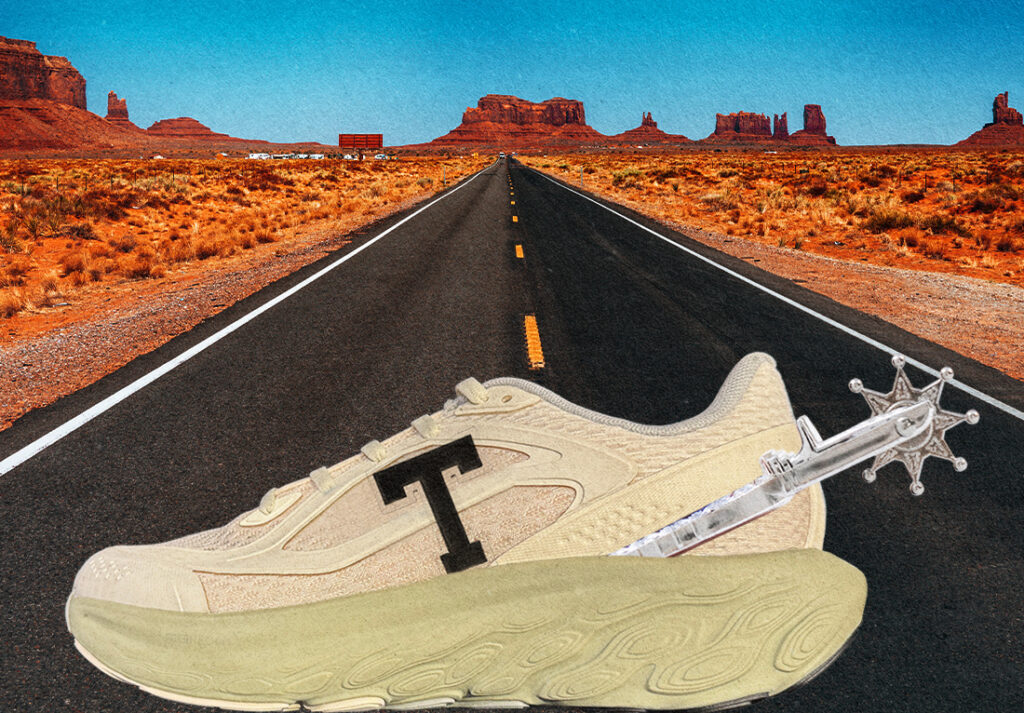
The vision of a group of retail industry veterans was having a new glow-up moment. And a neon sign adorned with its own electric cowboy hat in the lobby space was a vivid, and silent, landmark that this would not be San Antonio’s last running retail rodeo.
And to accompany the convention center’s first TRE, the city would later welcome a larger scale racing newcomer with the inaugural San Antonio Marathon stepping in immediately as the trade show’s booths were being dismantled. The race, born out of the Rock and Roll series shifting away from the city, meant that TRE’s parent, Diversified, and San Antonio Marathon organizers could present a united package of week-long activities built for the industry and consumer side of running.
But the numbers during TRE’s two days of exhibition to attendees unlock a peek into a running footwear retail surge that saw a 9 percent jump at $5.3 billion in sales over a 12-month period from September 2024 to this year. The figure excludes manufacturer direct-to-consumer transactions, but running is more than having a niche fling with the overall footwear industry.
Races, beginners, die hards and dedicated disposal income — even in a rocky economic climate — are sealing a loud long term commitment with manufacturers who know they can put the best technology in light foams and mesh uppers and scatter the pieces in expanded running shoe lineups.
And that was on full display at TRE.
And the industry, as a whole, isn’t hurting.
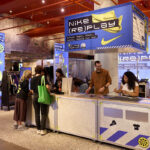
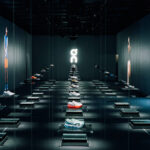
Big booth spaces from Brooks, Nike, Puma, Asics, New Balance, The North Face and others — like Diadora — were joined by medium sized displays from accessory makers like Goodr, whose representatives swapped fun outfits between days.
Chinese powerhouse Anta made its TRE debut at a time when rumors of a Puma takeover will not dissolve. But the company pledged a deeper running presence in North America and seemed intent on delivering. Anta’s booth displayed four new performance models and on Tuesday distance legend Kenenisa Bekele, amidst a large crowd, gave away signed shoes.
The bulk of the main presentation area covered around 100,000 square feet and easily fit 357 brands and exhibitors, with ample room for eager attendees to hop from booth to booth. Meeting rooms on the second and third levels fielded numerous specialty store representatives with ballroom spaces within reach.
A separate adjacent space being used for event storage looked as if it could contain Austin’s entire floor space, signaling that the large convention era has arrived for TRE.
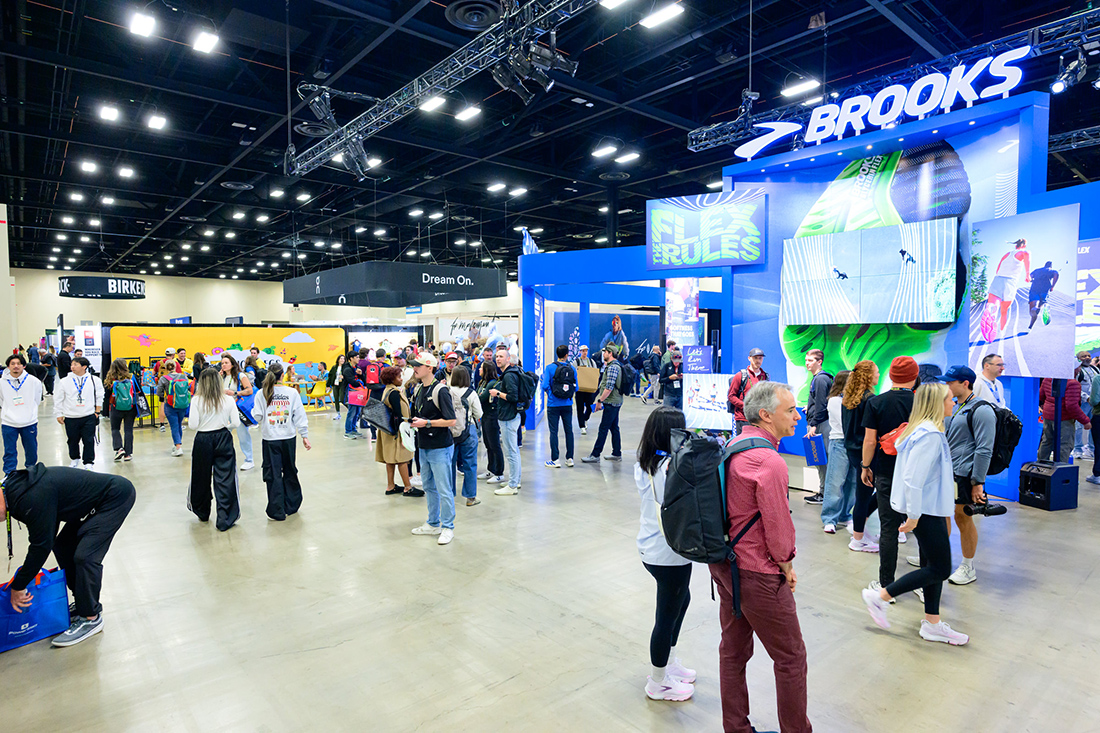
Meanwhile, 124 first-time exhibitors gambled on themselves — and TRE — by appearing as brands (legacy and newer) decide to stake their claim to the industry so they can report back to customers with growing product lines. All 50 states were represented by attendees along with those from 33 countries.
Last year’s Austin event welcomed 336 exhibitors with 111 newcomers, and the noticeable rise of in brands in San Antonio invites the question of how bigger can TRE get — if bigger equals something better. But what can be assumed is the event won’t shrink in the coming years and is evolving with a running boom that is proving to be ageless.
And any adjustments along the way will come as in-person traffic at specialty retail sees itself being outpaced by online shopping. Still, the two sides feed a running universe ready to spend of bolster their shoe lineups along with opening their wallets wide for apparel, accessories, nutrition — and race directors.
The industry and its consumers are not immune (or largely unaware) of the Magic 8-Ball-imitating uncertainty the economy — domestic or abroad. Looming tariffs have not skipped running manufacturers or retailers and a study during a session on Tuesday at TRE revealed that while the $5.3 billion in sales bump reflects growth, other factors are in the mix.
Average selling prices for running footwear are higher universally as the industry finds a temporary way to sustain itself via consumer appetites for the latest product. Temporary could feel more permanent as innovation from the brands is inevitable and those upgrades will command higher prices. How retail pivots in its buying strategy will surely be of interest when next year’s figures are revealed in September 2026.
Still, the industry appears step in tandem with consumers and running is the common thread. Participation continues to roar in a broad demographic of experienced runners, newcomers, sub elites, professionals, fashion forward shoe tastemakers and casuals and those seeing social value in run clubs push the willing ceiling of sport that will not resist.
As TRE came to a close and the exhibition floor felt calmer on Thursday, it was easier to assume the industry will claw upward as serves a crowd that is hungry for what shoe comes next and less dialed in on fiscal year figures since that line of focus does not mix well with miles.