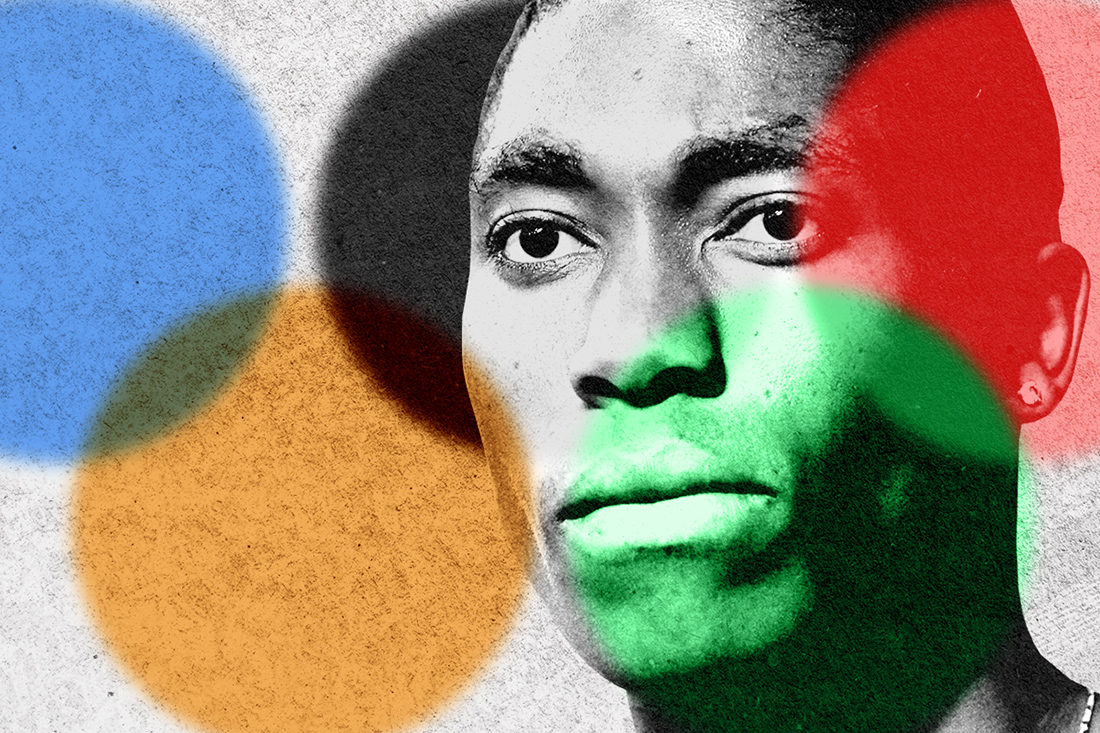
Caster Semenya has criticized the International Olympic Committee’s new eligibility mandates for women’s competition and is calling on athletes to join her legal effort against the organization.
“There is no respect for women,” Semenya said in an interview with Sky News on Saturday. “The minute you start asking a woman to be tested to take part in sports, that’s not dignity.”
The IOC announced on Thursday that a one-time genetic test would be implemented to determine eligibility for any female category event at the Olympics beginning with the 2028 Games in Los Angeles.
For Semenya, 35, the move not only feels familiar, echoes her own extensive dealings with questions of gender at the highest level in competition, but is a new motivator to challenge another major power in sports.
“To be honest it is heartbreaking because you look at it in terms of [what] they’re saying, Semenya said. “They talk about that they are neutral. There’s no neutral about it. This is a decision based on power.”
Semenya said she will push for a class action legal battle against the IOC and encourages athletes to join her as word of the mandate has sparked debate about eligibility, transgender rights and what determines the protection of the female category in events like the Olympics.
Under the new system, saliva, blood or a cheek swab sample will be administered as part of the SRY gene screening procedure.
And for IOC president Kirsty Coventry, the policy is the first major mark in her brief tenure and inevitably sets the stage for debate over gender-based eligibility in the Olympics, which she promised to address during her campaign last year.
“As a former athlete, I passionately believe in the rights of all Olympians to take part in fair competition,” Coventry said on Thursday. “The policy that we have announced is based on science and has been led by medical experts. At the Olympic Games, even the smallest margins can be the difference between victory and defeat.”
Semenya expressed disappointment that Coventry, the first female IOC president, would play a pivotal role in a decision that many feel will ultimately have a direct impact on women’s competition.
“It’s unfair, you know, for a woman to do such…to other women,” Semenya said.
The IOC stance also falls in line with President Donald Trump’s “Keeping Men Out of Women’s Sports” executive order from last February, which likely factored in the the United States Olympic & Paralympic Committee later changing its own eligibility rules that prohibited transgender athletes from women’s events.
In November, talk of the IOC banning transgender athletes gained traction when the organization confirmed that it was reviewing data that cited a science-based study indicating that athletes who are born male have physical advantages should be prohibited from female events.
At the time, the IOC said its discussions were ongoing, with the finding likely being a deciding factor its newest directive.
World Athletics implemented a similar gene test policy before last year’s world championships in Tokyo after months of internal discussion, research and consultation with stakeholders. The move was a definitive stance on what the governing body’s president Sebastian Coe has repeatedly said would be part of the “protection and the promotion of the integrity of women’s sport.”
“We are saying, at elite level, for you to compete in the female category, you have to be biologically female,” Coe said last July when the gene test rule was announced. “It was always very clear to me and the World Athletics Council that gender cannot trump biology.”
Semenya has long been at odds with World Athletics over changes in gene test rules and guidelines on naturally occurring testosterone levels.
In 2018, testing policies drew headlines when the governing body rules that differences in sex development athletes (DSD) would have to medically suppress natural elevated testosterone levels. At that point, Semenya was already a two-time Olympic champion for South Africa and with the World Athletics action set for the following year, her career faced uncertainty.
Semenya was against the use of any medical procedure to lower her testosterone levels and said the drugs made her feel sick. She would later raise the issue legally in the European court system for years, effectively ending her competitive career as she turned to coaching. She has always identified as female, but has a DSD condition resulting in high testosterone levels typically found in the male range.
In October, after numerous appeals and other litigation, Semenya ended her seven-year clash with World Athletics even after a July 2025 ruling said she did not receive a fair hearing in Switzerland’s Supreme Court in 2023. But now her battle turns to what feels like an unavoidable encounter with the IOC.
“I’ve been broken before, but I had to find a way to gather myself — pick up the pieces, and go out there fight, you know, for all women,” Semenya said.