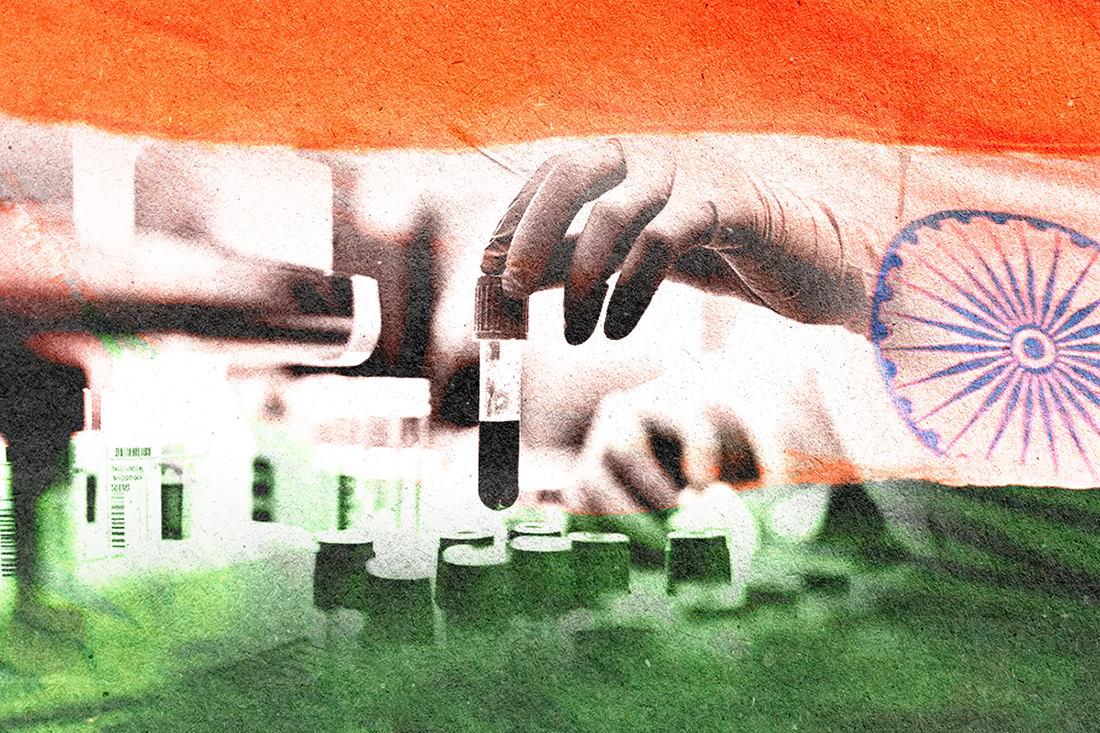
The Athletics Integrity Unit has placed India on its highest doping risk watch protocol after finding that the country’s anti-doping efforts lag far behind the nation’s rate of rising violations.
In a notice on Monday, AIU chair David Howman noted that Athletics Federation of India was reclassified to Category A under World Athletics anti-doping rules, signaling that the nation’s continued infractions have outpaced internal efforts for reform.
“The doping situation in India has been high-risk for a long time and, unfortunately, the quality of the domestic anti-doping program is simply not proportionate to the doping risk,” AIU chair David Howman said. “While the AFI has advocated for anti-doping reforms within India, not enough has changed. The AIU will now work with the AFI to achieve reforms to safeguard the integrity of the sport of athletics, as we have done with other ‘Category A’ Member Federations.”
India was previously classified as a Category B federation relative to its risk based on Anti-Doping Rule Violations (ADVRs) and ranked second in athlete doping breaches in 2022 with 48 ADVRs and 61 in 2023, first in 2024 with 71, while 2025 totals are still being tabulated. But its ADVRs for last year are already at 30. Only Kenya ranks higher on the rate of violations.
World Athletics has three categories doping risk and all member nations are assessed every three years by the Integrity Unit Board. But under Rule 15, its extensive framework for anti-doping obligations, the governing body’s mandates are clear and gives authorization to reclassify any country based on violations and what can been seen as poor effort to curb the use of banned substances.
A main requirement under the rule is that member nations must establish a base anti-doping and testing protocol if that country looks to participate in international competitions.
The Athletics Federation of India will now join the likes of Belarus, Ethiopia, Kenya, Nigeria, Russia and Ukraine as Category A nations and face increased scrutiny on its handling of ADVRs and its testing methods will be carefully evaluated.
“These high standards need only be maintained in 2026 for the BAA to be re-categorized for 2027 – our next World Championships year,” Howman said.
The AIU reclassification comes at a time when India is the early stages of planning as host of the 2030 Commonwealth Games, which will take place in Ahmedabad, Gujarat after previously hosting the even in 2010 in Delhi. India also launched its bid to host the 2036 Summer Olympics with a formal letter of intent to the International Olympic Committee in 2024.
India’s anti-doping agency has acknowledged — and accepts — the AIU’s reclassification and believes changes can be made with testing that is not just focused on upcoming events.
“There will be more scrutiny. All in all, it will clean up the system. More has to be done in gathering intelligence, out-of-competition testing and testing at state and district level,” AFI spokesperson Adille Sumariwalla said to The Indian Express. “The Government is also moving towards criminalizing doping, which I have been asking for years. Suspension and arrests of coaches, supplies and distributors should be done.”