The International Olympic Committee said on Thursday that a one‑time genetic test will be implemented to determine eligibility for any female category event at the Olympics beginning with the 2028 Games in Los Angeles.
“Eligibility for any female category event at the Olympic Games or any other IOC event, including individual and team sports, is now limited to biological females, determined on the basis of a one‑time SRY gene screening,” the organization said in a notice explaining the new mandate.
The gene screening, which World Athletics adopted before last September’s world championships in Tokyo, is part of what the IOC said “protects fairness, safety and integrity in the female category.”
The move aligns with the President Donald Trump’s executive order, “Keeping Men Out of Women’s Sports,” from last February which also was likely a factor in the United States Olympic & Paralympic Committee later changing its eligibility rules that prohibited transgender athletes from women’s events.
In October, the IOC cited a science-based study that said athletes who are born male have physical advantages and will should not be allowed to compete in the Olympics. The study also concluded that even if and athlete who was born male had taken treatments to lower testosterone levels, a physical advantage was still present.
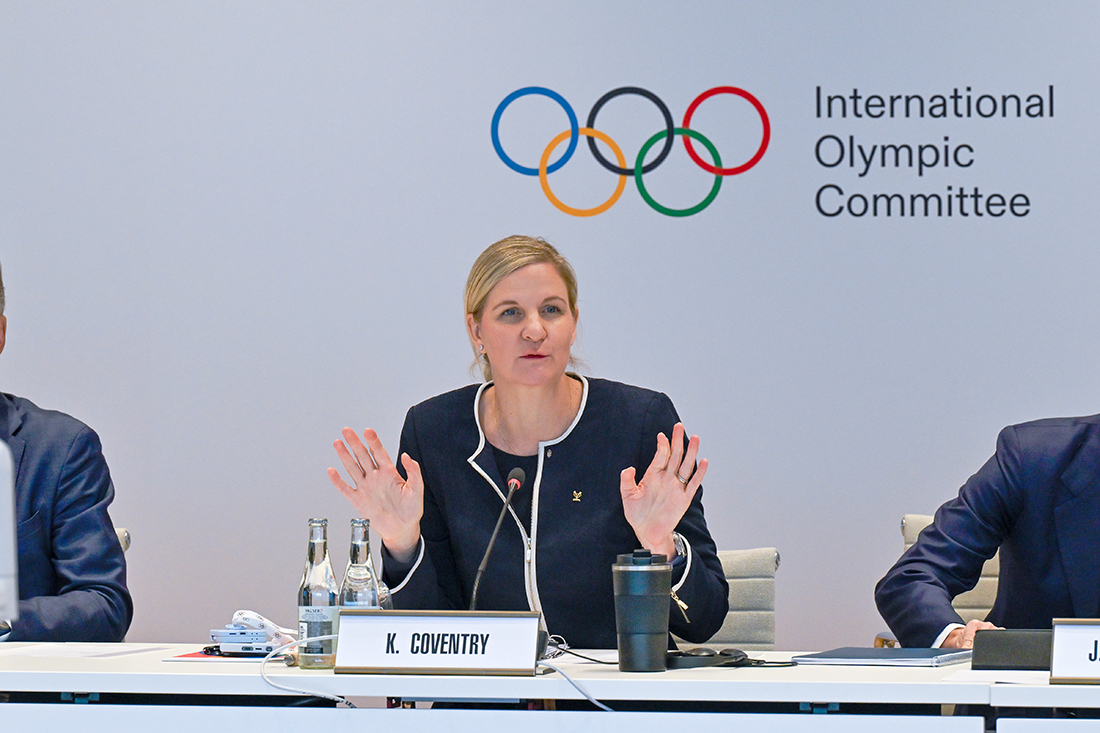
“As a former athlete, I passionately believe in the rights of all Olympians to take part in fair competition,” IOC President Kirsty Coventry said. “The policy that we have announced is based on science and has been led by medical experts. At the Olympic Games, even the smallest margins can be the difference between victory and defeat.”
Under the new system, gender eligibility will be determined with a gene test through saliva, blood or cheek swab sample.
“Every athlete must be treated with dignity and respect, and athletes will need to be screened only once in their lifetime,” Coventry said. “There must be clear education around the process and counseling available, alongside expert medical advice.”
Individual federations have previously had jurisdiction over its own guidance on transgender and DSD athletes, but Thursday’s decision, the most notable action since Coventry was appointed IOC president last June.
World Boxing also implemented a similar policy last August, requiring female athletes over 18 to undergo genetic testing to determine their sex at birth in order to compete in international events.
During Coventry’s campaign for IOC president, after being named one of seven candidates in September 2025, she was adamant about taking a decisive stance on eligibility in women’s events.
In recent years, three notable sports, track and field, cycling and swimming, have held a firm stance on banning transgender athletes born with male sexual markers.
Two-time Olympic champion Caster Semenya, who has high natural testosterone levels, drew a wave of headlines when World Athletics changed its eligibility rules in 2018. Semenya when she refused to use medicine that would artificially reduce her testosterone and said the medication made her feel sick.
She launched a yearslong legal fight against track and field’s governing body, arguing against the rule change which effectively ended her career. In October, her seven-year battle in the court system ended when her lawyers said Semenya would not continue with the lengthy appeals process in European courts.