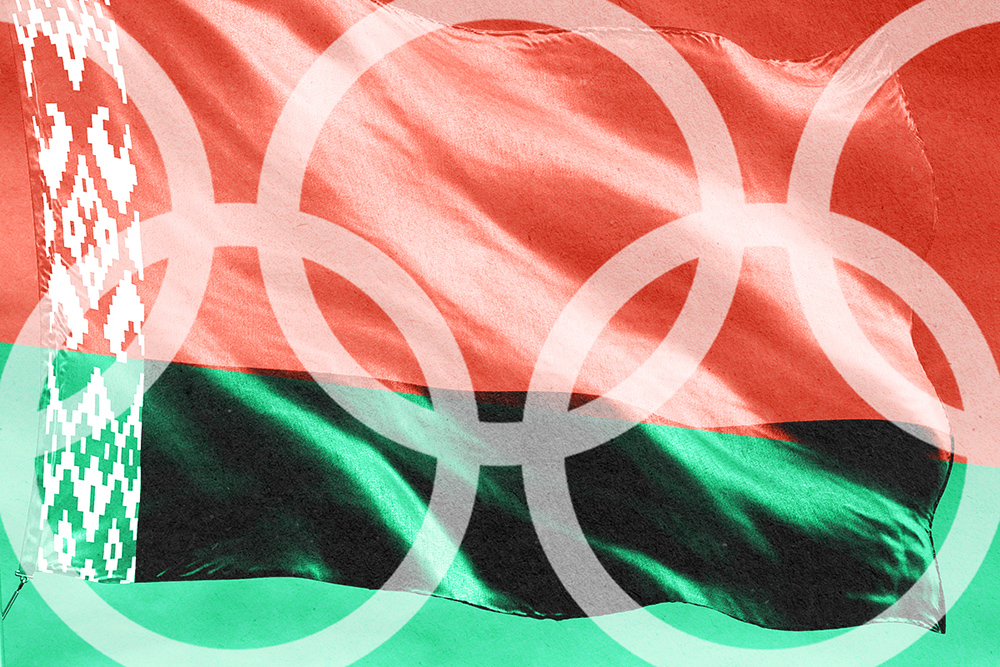
The International Olympic Committee said on Thursday that sanctions barring athletes from Belarus from competing would be lifted four years after Russia’s invasion of Ukraine.
As part of recommendations from the IOC’s executive board, Belarusian athletes should be permitted to compete “free from political interference or governmental pressure.”
“As the IOC continues to navigate the ever-increasingly complex realities and consequences of the current geopolitical context, including the rising number of wars and conflicts, and amidst growing global instability, it must uphold its mission to preserve a values-based and truly global sporting platform that provides hope to the world,” the IOC said in a statement.
Belarus was banned from international competition by the IOC after its participation in the Russian-led military action in Ukraine in February 2022. Russian athletes will not be included in Thursday’s order, along with Belarusians holding Russian passports.
The IOC said that the National Olympic Committee of Belarus is now “in good standing and complies with the Olympic Charter,” which has been a significant contributing factor toward easing competition restrictions.
Both Russia and Belarus have been allowed to field individual athletes under neutral flags at the 2024 Paris Olympics and the Milan Cortina Winter Olympics in February, with no insignias shown or anthem played, while team sports have remained restricted in competition.
Lifting the restrictions would be key for Belarus since the qualification period for both the 2028 Olympic Games in Los Angeles and the Dolomiti Valtellina 2028 Winter Youth Olympic Games begins this summer.
Meanwhile, Russia’s path toward reinstatement could come under consideration under new IOC president Kirsty Coventry, though the situation remains complicated.
In late April, Russian President Vladimir Putin signaled that he hoped his nation would be able to establish a cooperative dialogue with Coventry’s leadership team after a contentious relationship with former president Thomas Bach, who stepped down last June after 12 years in office.
During Bach’s tenure, Russia was named in a detailed state-sponsored doping scheme in a 2016 report by the New York Times that revealed at least 15 medal winners from the Sochi 2014 Winter Olympics were implicated in using banned substances.
Bach later said the report was “detailed and therefore very worrying,” while World Athletics began its own inquiry into Russian doping and launched Operation LIMS in 2019, heavily investigating laboratories implicated in an extensive system that resulted in more than 300 athlete sanctions.
Still, Russia’s continued engagement in Ukraine, and the lack of a resolution, will remain a major barrier to allowing full athlete delegations in international competition, even as Belarus moves toward reinstatement — a decision that has already drawn criticism.
Late Thursday, World Athletics rejected the decision to lift restrictions on Belarus and said it would not follow the IOC in removing its own existing bans against the nation.
“As a consequence of Russia’s invasion of Ukraine, World Athletics sanctions implemented in March 2022 excluding Belarusian and Russian athletes, officials and supporting personnel from competition remain in place,” the governing body said in a statement. “Our council has made a clear decision that when there is tangible movement towards peace negotiations it can begin to review its decisions. We all hope this will be soon, but until that happens the council continues to be united in standing behind the decision it made in March 2022 and revisited in 2023 and 2025.”