ON a hot day in June 2018, Liz Rock wanted to run the streets of Boston in her sports bra, without a shirt.
However, she just could not bring herself to do so.
HerStory
Even if Rock didn’t get catcalled, or harassed, or looked at strangely, she had to fight her own internal hesitations and insecurities.
Ultimately, she chose the physical discomfort of a sweat-drenched shirt over the mental and emotional turmoil of imagining or — more devastatingly, actually experiencing — unwanted outcomes.
“I could never find the confidence to take off my shirt to run,” she acknowledged.
Rock completed her run, then called her friend Frances Ramirez with an idea.
Rock and Ramirez were – and remain – members of PIONEERS Run Crew, Boston’s first Black-and brown-led running community, and each had experienced her own struggles with body image and maintaining fitness. Ramirez was Rock’s first sounding board for what, less than a month later, became The Bra Run.
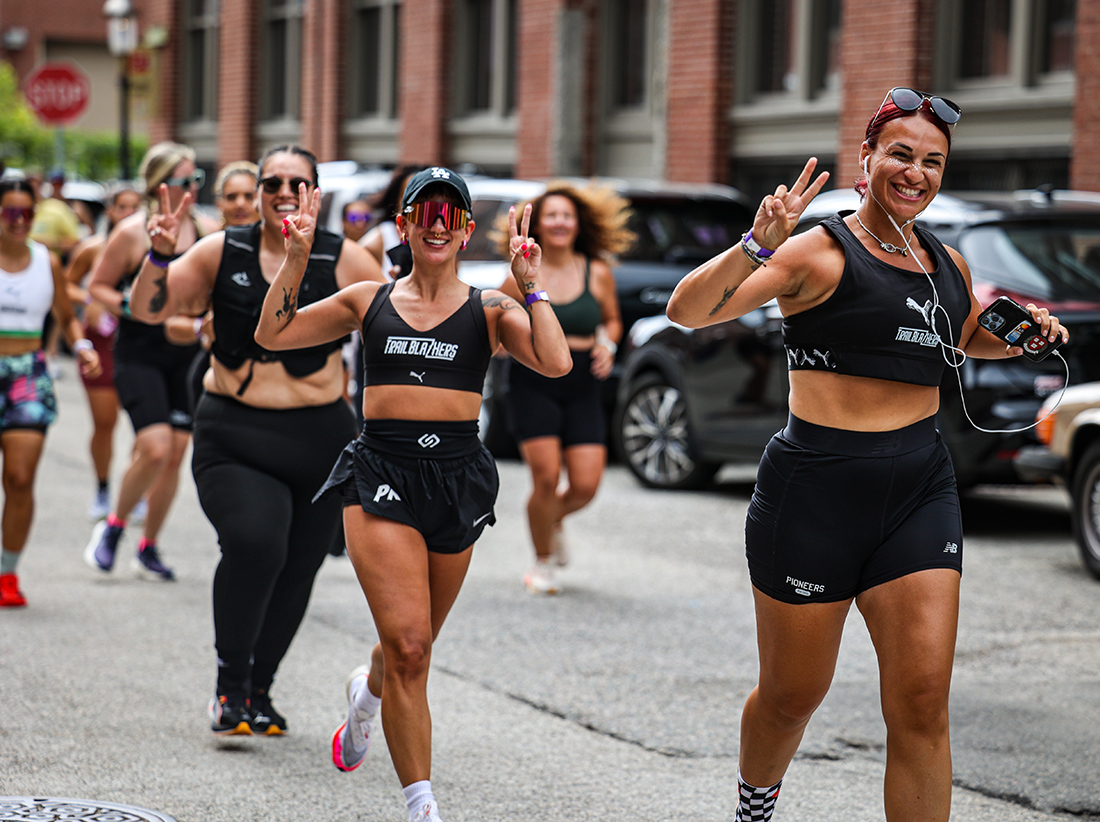
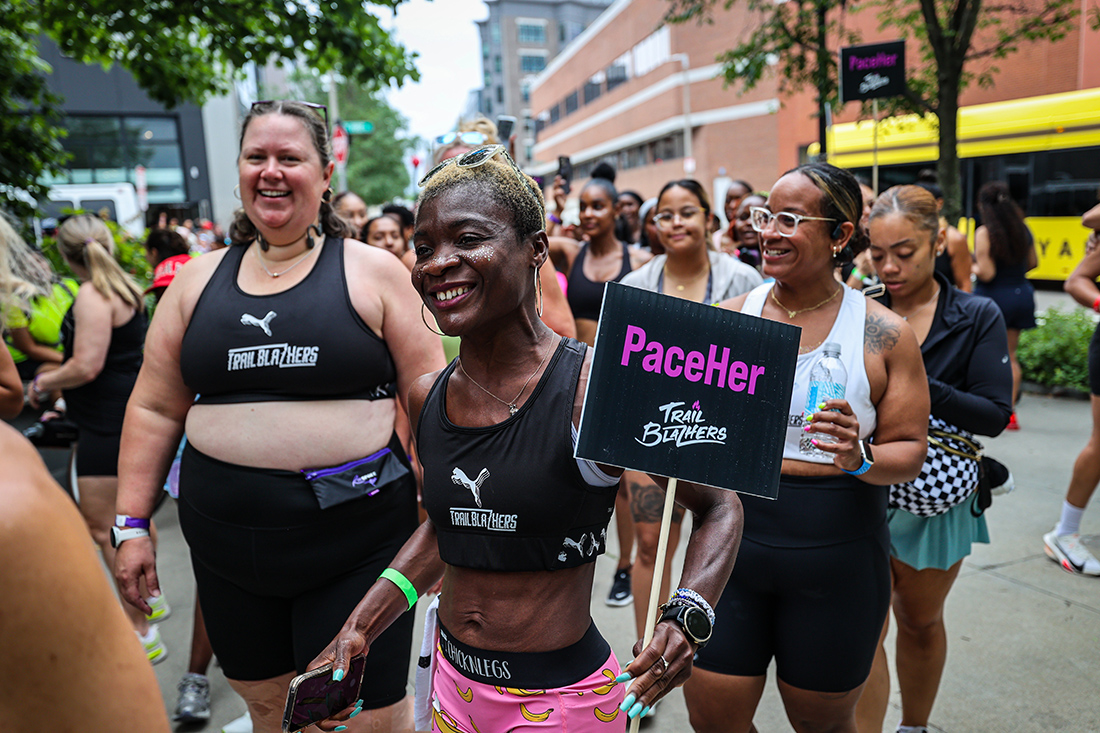
The premise was simple: women were invited to gather, en masse, to run or walk the streets of Boston shirtless, in just a sports bra.
The impact was profound: many women of all fitness levels, body types and ages – some in their 50s or 60s – who took to the streets for the event said that The Bra Run was the first time they had ever run without a shirt.
The demand escalated: women immediately started asking what and when the next event would be.
Rock responded, not unkindly, that “This is a lot of work – we’ll see you next July.”
The Bra Run’s second iteration in July 2019 was more successful and yielded the same feedback.
“The community informed us that they needed something more than The Bra Run,” Rock recalled.
By July 2020, Abeo Powder, a Boston-based run coach and holistic physical and mental health advocate, had come into Rock’s and Ramirez’s inner circle.
Prior to the third iteration of The Bra Run in July 2020, Rock and Ramirez had a feeling that their budding bra-branded revolution could become a formalized all-women’s group that would meet throughout the year.
However, it took Powder to provide the spark.
“Abeo gave us the confidence to go forward in thinking about maybe creating a group,” Rock recalled. “Having Abeo’s creativity made the decision a little bit less scary.”
Due to COVID, the 2020 Bra Run was held virtually, with an option to join in-person at a park. It was there that Rock, Ramirez and Powder announced that they would create a yet-to-be-named all-women’s running and wellness group that would uphold and expand upon the mission and vibes of The Bra Run.
The yet-to-be-named aspect was a bit of a hitch until Powder started workshopping during an hours-long video call with Rock and Ramirez that stretched into the wee hours of the morning.
When Powder hit on Trailblazers, then threw in an “H” to honor what would be a woman-centered space, the deal was done.
“Are You Good, Sis?”
A few months later, in October 2020, TrailblazHers Run Co. hosted its first event, Self Care Sunday.
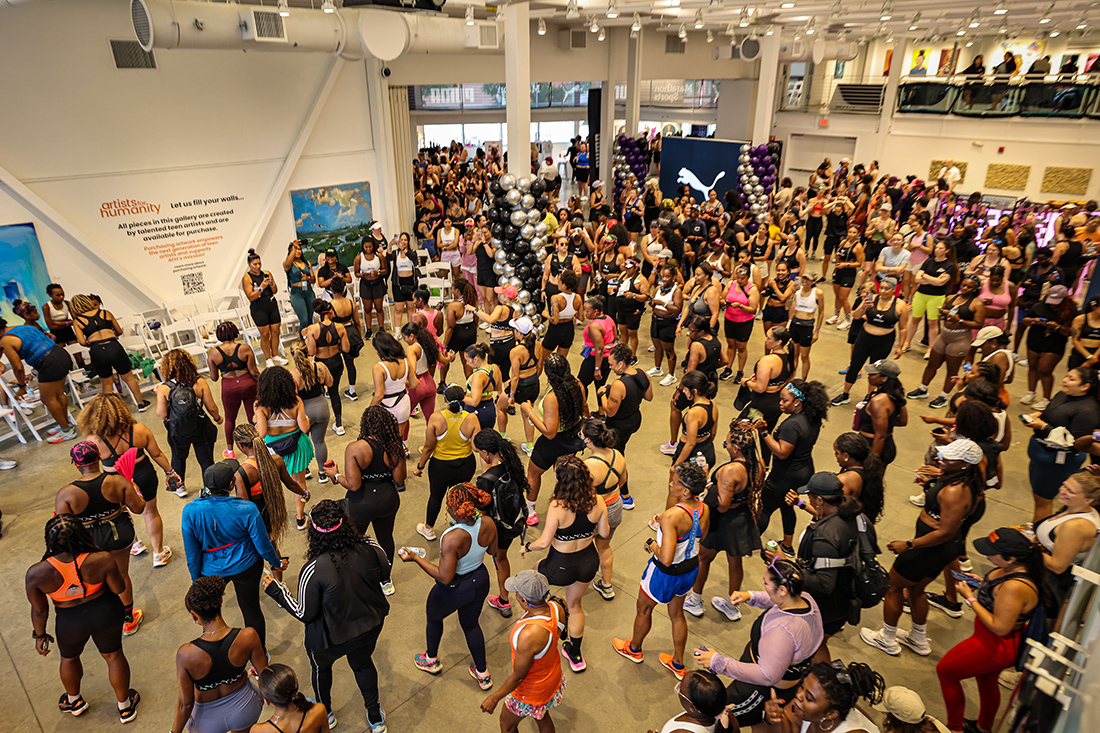
Held monthly for between 80 to 120 participants, Self Care Sundays pair running or walking with an additional activation related to women’s health. Past events, which TrailblazHers leadership has thoughtfully planned to reflect the community’s needs and ideas, have included specialized sessions in meditation, yoga, dance, and self-defense, as well as bespoke presentations by wellness practitioners.
On Self Care Sundays, session leaders and practitioners are carefully vetted and always paid. To wit, Lindsey Thorne-Bingham, one of three TrailblazHers LeadHers who works closely with the group’s three founders, noted that it took two years to find the right person to talk to the TrailblazHers community about nutrition.
Other regularly occurring TrailblazHers events include Renew You, an annual day-long retreat that, each January, attracts 100-150 women dedicated to renewal via movement, group discussion, and reflection to start the new year; and Take Back the Night, an after-dark run/walk for 150-250 participants held around International Women’s Day to bring attention to the fact that running after dark is especially dangerous for women.
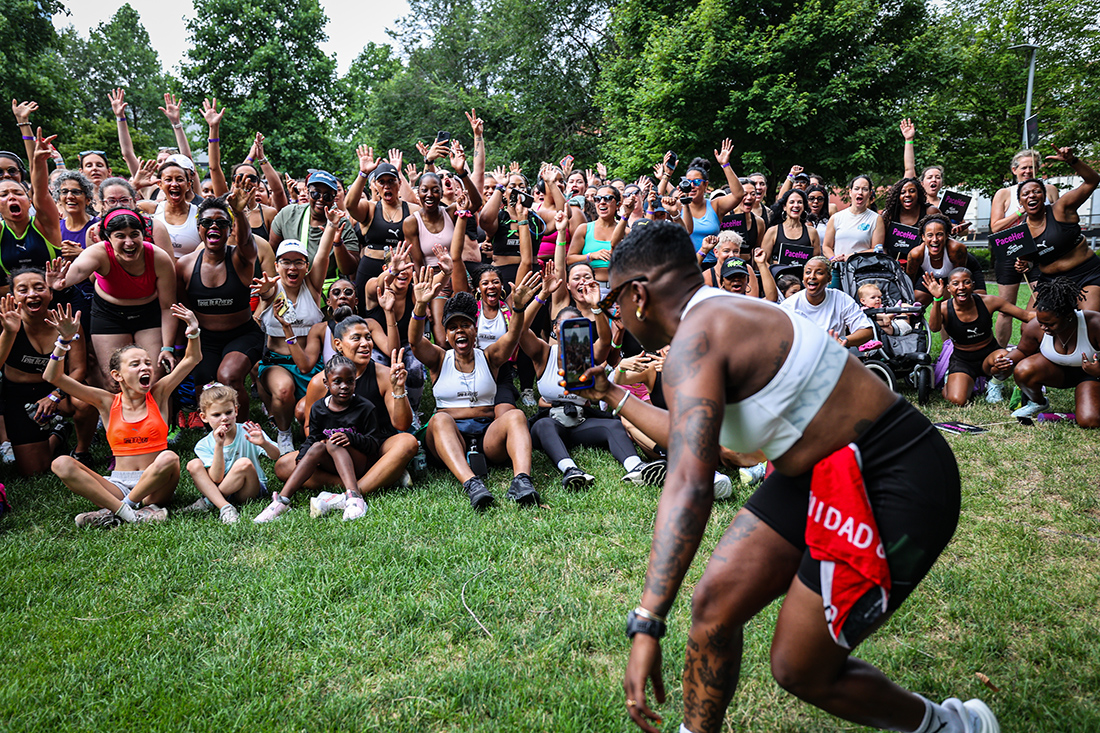
Fittingly – albeit counterintuitively – a weekly group run, Follow the LeadHer, was the last event added to TrailblazHers’ rotation.
That a group run was the final addition to TrailblazHers’ recurring programming ardently affirms the group’s mission to put “community first, running second.”
Given the prioritization of community and sisterhood, even at a Follow the LeadHer meetup, the act of running or walking might fall to third or fourth priority.
As Thorne-Bingham declared: “Most people can run, most people can walk – but are you good, sis? If you’re not good, then this exercise isn’t going to make you whole.”
Follow the LeadHer
TrailblazHers leadership has developed relationships with local restaurants and stores like Marathon Sports that open their space as a homebase for the group’s weekly Follow the LeadHer runs. The group often meets at Marathon Sports’ Boston or Cambridge location and hosts two runs per month in Boston’s Jamaica Plain neighborhood.
They’ve also been across Boston Harbor, where Alia Qatarneh, another of the group’s LeadHers, coordinated a run a few blocks from her family’s triple-decker in East Boston.
Qatarneh said that initially, she and Thorne-Bingham very deliberately planned the routes, paces and procedures for Follow the LeadHer runs, although now that they’ve been doing them for years they can really “play with the sisterhood side of things.”
This includes what Qatarneh described as dynamic pacing, which means that the group’s paces ebb and flow based on the collective vibes on a given day, as well as designated dancing stops.
That’s right — Follow the LeadHer routes incorporate points where everyone stops to dance.

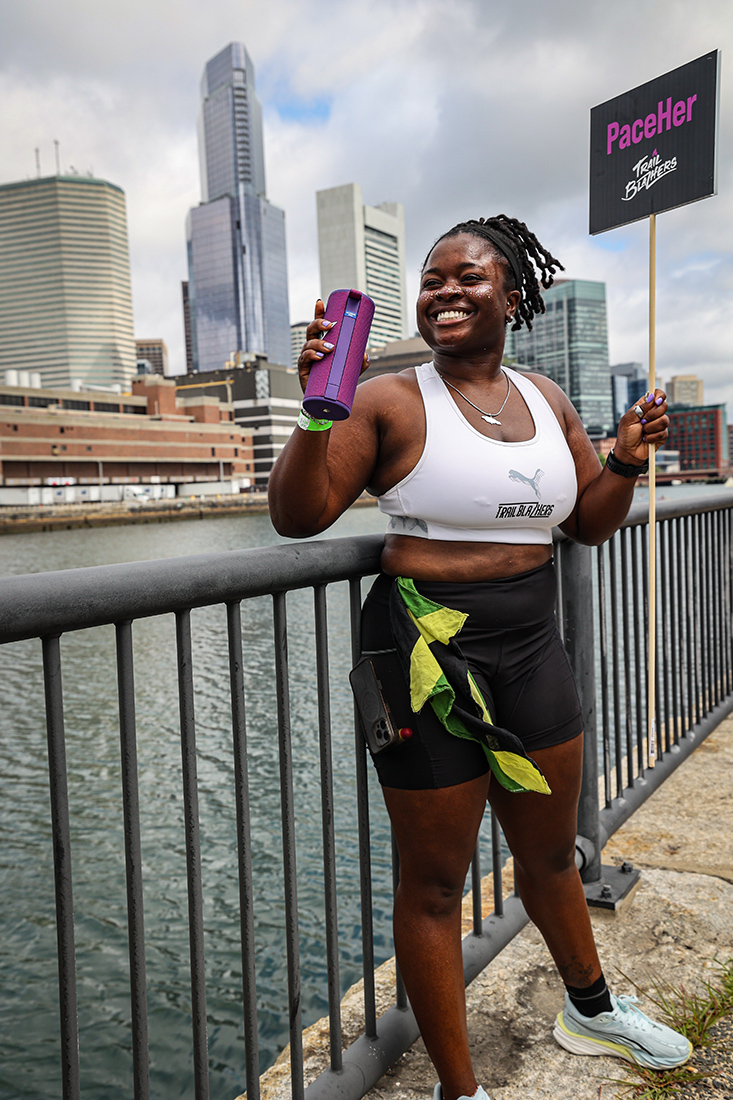
Qatarneh recalled a time when the group was in lockstep to Beyoncé’s “Before I Let Go,” and she noticed a woman who was waiting at a bus stop furtively looking over while subtly falling into steps of her own.
It wasn’t long before she was dancing with the group.
“No matter where we go,” Qatarneh has noticed, “someone approaches us to say, ‘What is this thing, what are you doing, and how can I become a part of it?’”
She added that “The goal of Follow the LeadHer has never been to have a large mass of people.” Instead, the priority is making everyone feel welcome, supported, and embraced.
Aliese Lash, a PIONEERS Run Crew captain and long-time member of TrailblazHers, observed that TrailblazHers leadership “does such a thoughtful job of really making sure that nobody ever, ever, ever is running at the back of the pack alone.”
That many women who run with PIONEERS, including captains like Lash and Ramirez, are also affiliated with TrailblazHers underscores the crews’ complementary coexistence and accentuates the value of a women-centric, predominantly BIPOC wellness space that prioritizes community via a sense of sisterhood.
“We are a run crew and we want to meet women where they are in their journeys, but we need community,” Thorne-Bingham said, “TrailblazHers has been that community for so many in a time when so many communities are being attacked, in every sense of the word.”
The Lawsuit
Some attacks have been more blatant than others, including an incident at a 2023 Boston Marathon cheer zone that was hosted by TrailblazHers and PIONEERS and primarily composed of Black and brown spectators.
According to a federal discrimination lawsuit that TrailblazHers filed against the Boston Athletic Association (BAA), which organizes the Boston Marathon, and the City of Newton, where their cheer zone was located, spectators in their cheer zone were “unjustly targeted” when Newton Police created a human barricade around all sides of the group after the BAA received complaints that people from the cheer zone were obstructing the race.
The lawsuit contends that police did not approach – never mind discipline – nearby white spectators who were also avidly cheering and that the police’s extreme demonstration of force jeopardized the safety of those in the joint cheer zone.
Lash, who was part of the cheer group, described the experience as “very traumatic and disturbing for our communities across the board in a lot of ways.”
With the suit still pending, TrailblazHers’ leadership had no comment other than Rock’s assertion that “It’s a lot to take on with everything that we have going on in our day-to-day lives, but we felt like it was very important to move forward with the lawsuit because things will never change if you don’t take these types of scary risks.”
The ongoing litigation impacted what was once a healthy relationship between TrailblazHers and the BAA, according to Rock.
In 2020 the BAA reached out to the group to join its newly founded Boston Running Collaborative (BRC), a collective dedicated to promoting and expanding access to the Boston running community with a focus on inclusivity for people of color.
TrailblazHers leadership declined to comment about their prior relationship with the BAA or BRC, but confirmed that despite still being listed as a member on the BRC website they are no longer affiliated with either organization.
LeadHership in Numbers
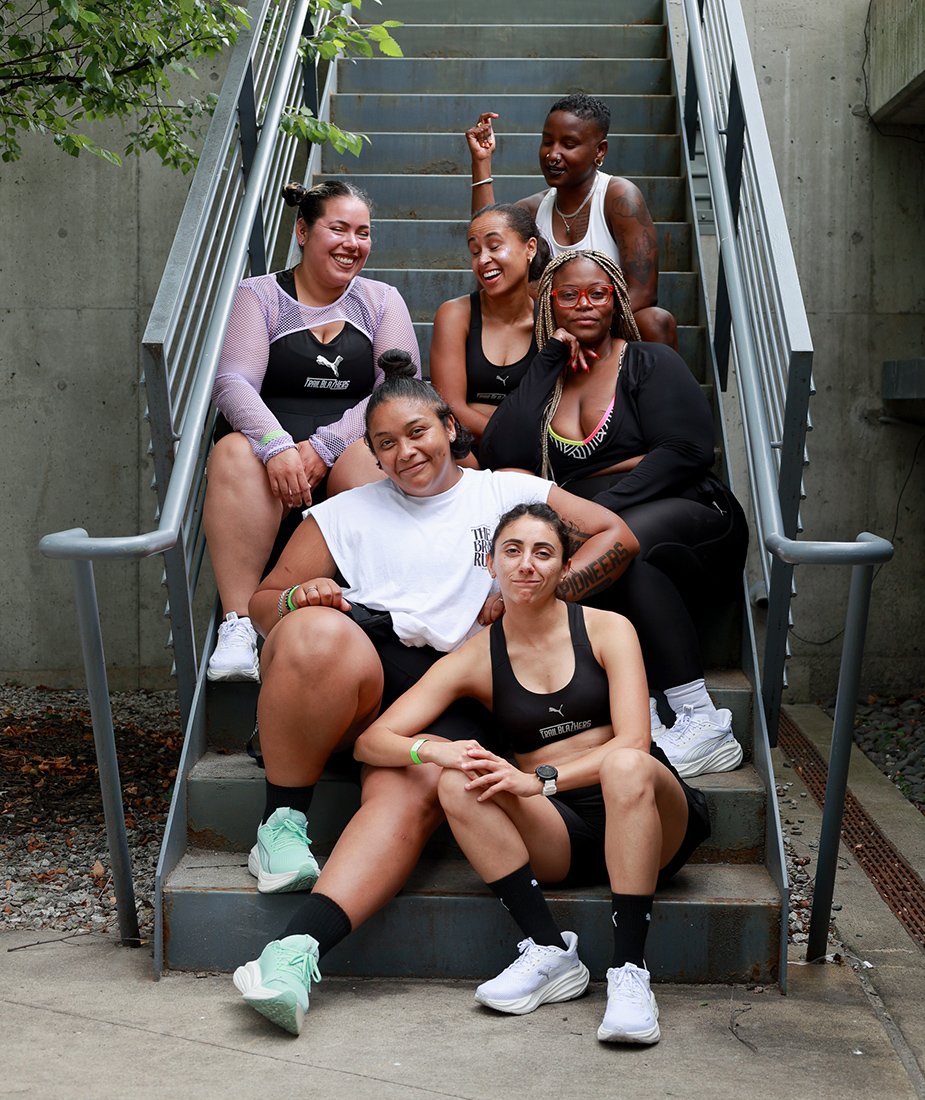
TrailblazHers is led by six women of color who are committed to fulfilling the group’s mission purely as a passion project. In addition to co-founders Rock, Ramirez and Powder, LeadHers Qatarneh, Thorne-Bingham and Melissa Cornejo round out an unusually large leadership team that is, by all accounts, not at all hierarchical.
If anything, having six women at the helm reflects TrailblazHers’ commitment to connection, care and collective change.
“Our superpowers truly mirror who we are as individuals, and this space allows us to bring these superpowers together in a way that feels different from other run crews,” Qatarneh observed.
One of those differentiators is TrailblazHers’ unabashed approach to women’s health and fitness, particularly pertaining to women of color, while at the same time holding every woman’s experience as precious and sacred.
Regarding The Bra Run, which last year had over 550 participants and a city-approved route permit, Rock proclaimed that “We wanted to give the middle finger to society about what a woman’s running body should look like, or a woman’s body in general should look like.”
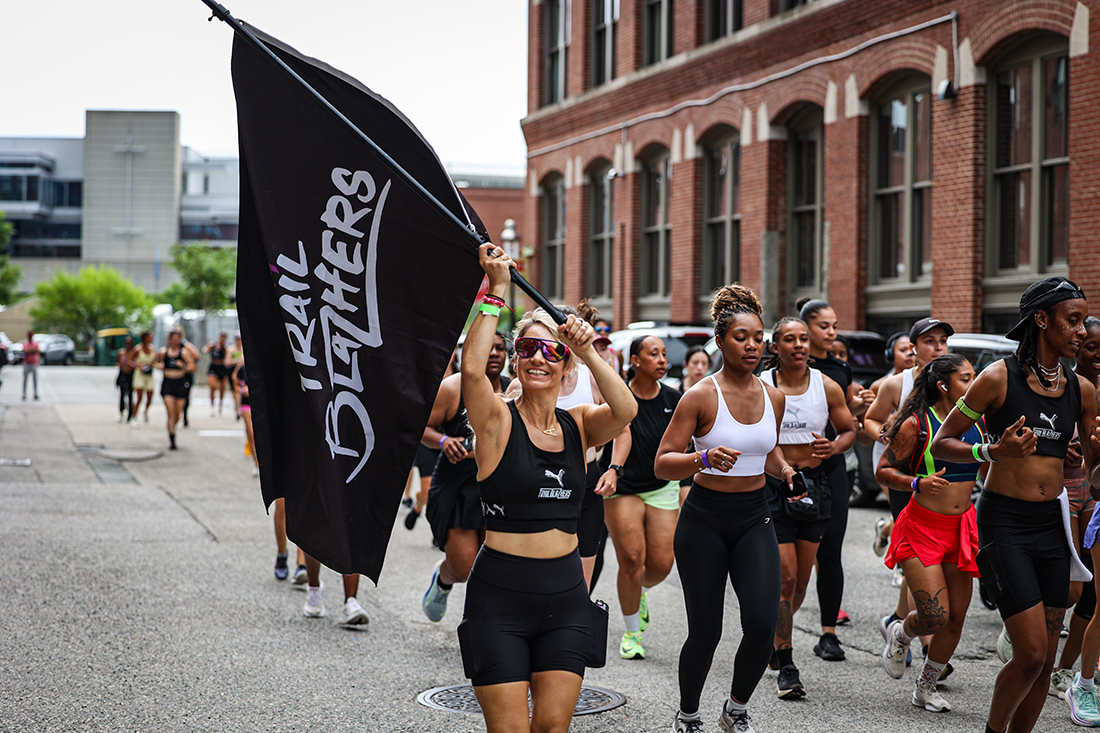
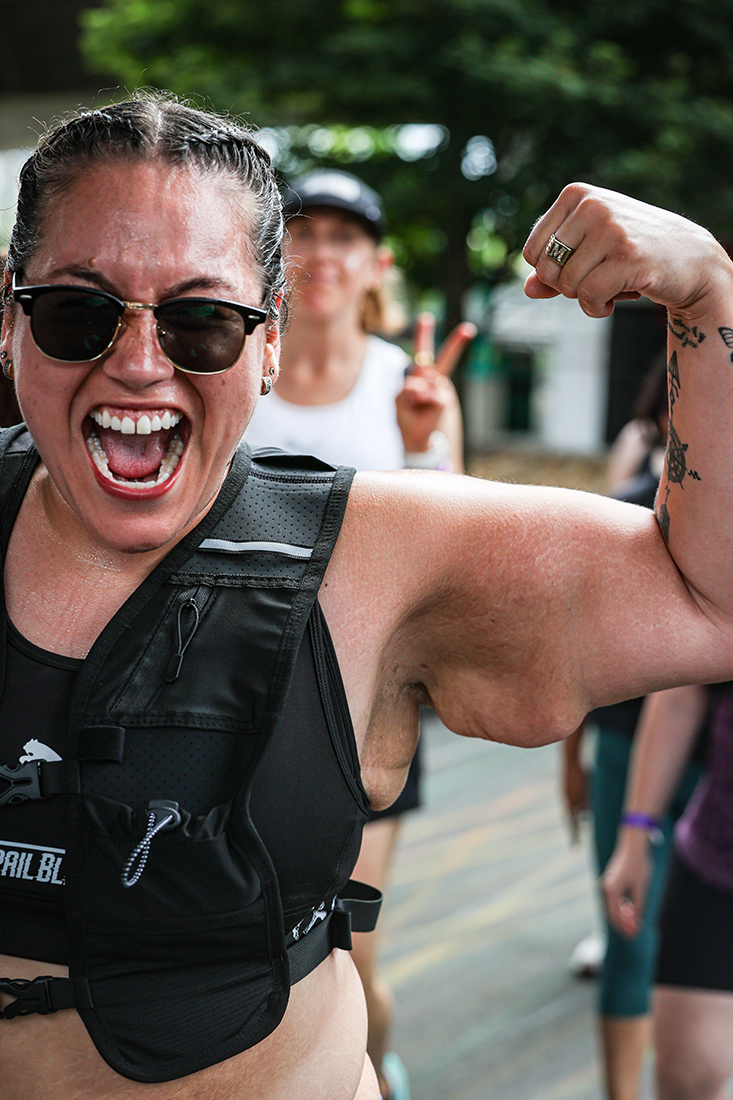
And yet, at an individual level, TrailblazHers is so cognizant of its members’ bodies and sensibilities that it took two years to find a nutritionist whom they felt comfortable putting in front of their community.
“Having a space to just show up and feel held and feel safe is more important than ever now,” said Qatarneh.
And yet, said Lash, “The space is just so electric every time I go to an event.”
The electricity of sisterhood need not always be the jolt of running among hundreds of other women in sports bras or collectively dancing in the streets.
So much of TrailblazHers’ ethos and reason for being are the subtle, yet profound, currents of connection and care that electrify the group as a beacon for what happens when an all-women’s running crew prioritizes sisterhood and well-being over the act of running.
“I’ve seen similar groups to TrailblazHers,” said Thorne-Bingham, “but nothing seems the same.”
A Formalized Structure Toward Furthering Impact
TrailblazHers recently registered as a 501(c)(3) nonprofit organization and the leadership team expects to apply for several grants this year to support their programming and initiatives.
Puma, the sportswear brand, has supported TrailblazHers for years and will continue throughout 2026. However, both parties are open to an alternative arrangement for 2027 and beyond.
“I want to get to a place where we’re not relying on brand sponsorships,” Rock asserted.
All of TrailblazHers’ events, including The Bra Run, are free. Any monetary donations are immediately put toward future events, or, as promoted during certain activations, given directly to another women’s organization.
TrailblazHers events currently reach over 2,000 women annually and in 2026 leadership seeks to deepen the group’s impact rather than increase numbers.
Instead of adding new events or trying to hit arbitrary participation metrics for existing activations, the goal is to continue doing more of what they already do exceptionally well and in alignment with what the community needs.
Ideally, TrailblazHers will host a year-end gala to celebrate their successes in 2026. Down the road, they hope to have a multi-use, brick-and-mortar space in Boston that would serve as a coworking, fitness, event, therapy and general gathering space for women. In-house paid staff would manage the group’s day-to-day operations and work to expand their reach throughout Boston and its surrounding communities – with a focus on connecting with younger girls and women.
Those connections would be through running, via sponsorships for race bibs or costs related to traveling for races, to make the sport more accessible to a broader swath of Boston’s women.
“TrailblazHers finds women when they don’t necessarily know they need it,” Thorne-Bingham said. “It becomes an integral part of their life that not just enhances their wellness journey, but enhances their life and encourages them to step out of their comfort zone and [strive toward] big things.”
An Indispensable Sisterhood
Nearly eight years ago, one woman’s latent desire to run shirtless has transformed into an indispensable refuge of sisterhood and wellness for thousands of women who didn’t necessarily know they were looking for it.
“What TrailblazHers is creating is fulfilling a gigantic need for people to have relationships that allow them to feel seen, and heard, and valued, and cared for,” Lash emphasized. Those relationships apply to girls and women of all ages, as Lash and other members sometimes bring their young children to TrailblazHers events.
“I feel like my daughter has, like, 50 aunties who really love her and dote on her,” Lash said. “TrailblazHers is impacting many, many, many people’s lives by offering that really solid base of sisterhood and community.”