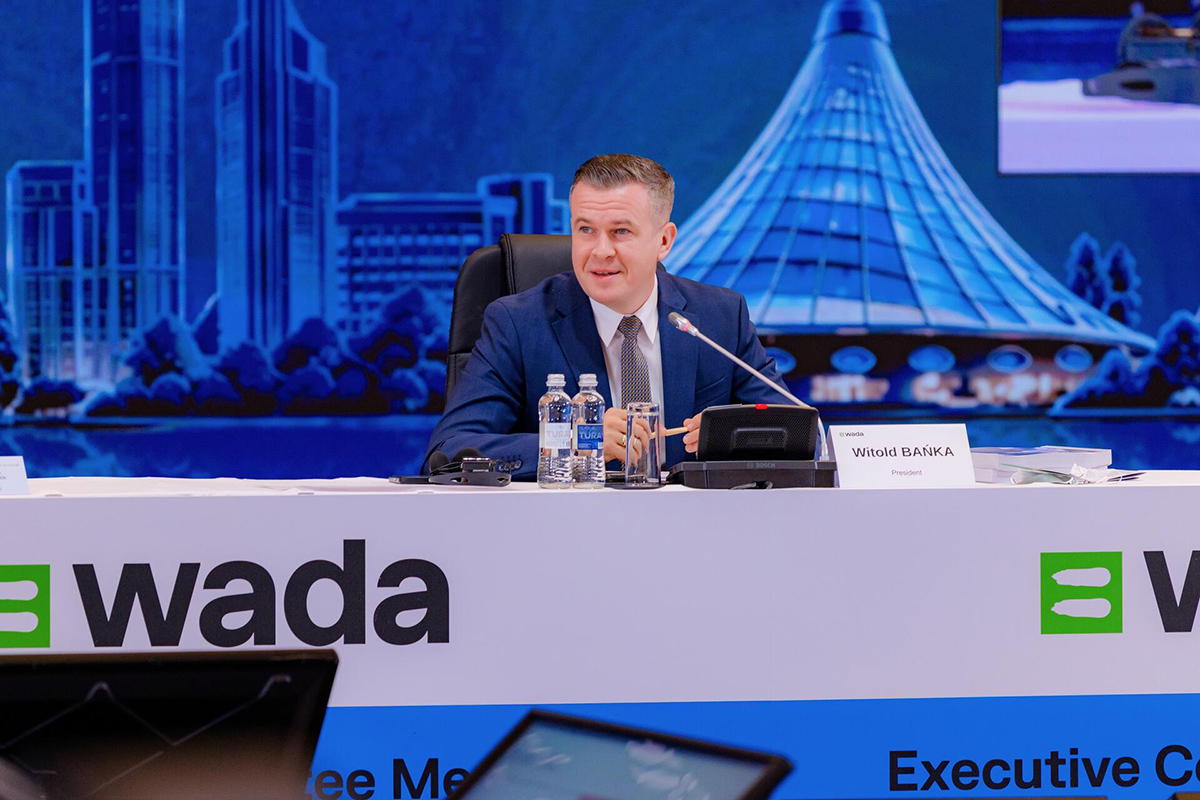
The World Anti-Doping Agency approved a $56.3 million budget for 2027, an 8.5 percent increase over 2026, while warning of financial sustainability risks linked to unpaid dues from the United States and Russia.
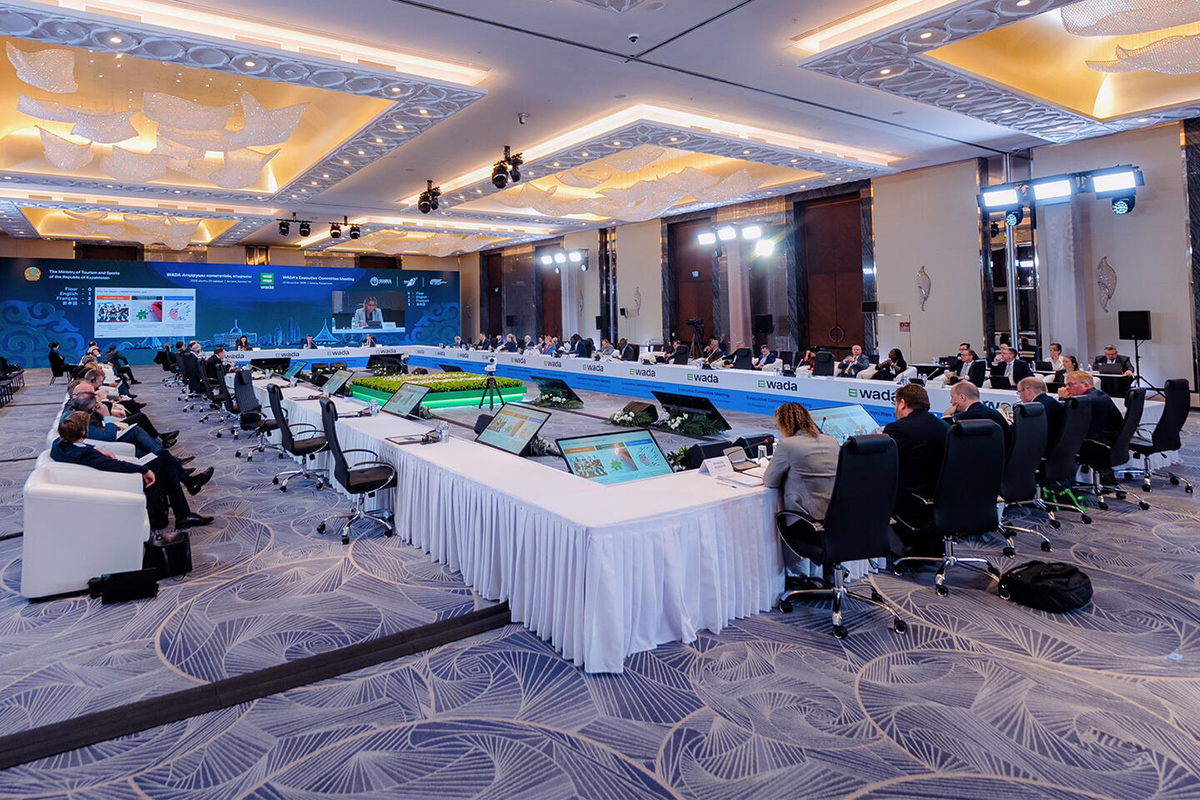
At the organization’s Foundation Board meeting in Astana, Kazakhstan on Thursday, WADA addressed a range of issues beyond its financial forecast, including independence of testing at future Olympic and Paralympic Games, anti-doping code revisions, the possibility of relocating its headquarters from Montreal and the election of a new president and vice-president in 2028.
WADA’s chief operating officer, Stuart Kemp, identified the continuing shortfall in government contributions as a significant financial risk, with the non-payment of fees by the U.S. and Russia creating additional pressure on the organization’s finances, based on remarks published by Russian state media during the meeting.
“WADA will only be able to continue its operations, achieve its goals, and implement its programs if its funding model remains robust and sustainable,” Kemp said. “The Committee analyzed the current funding shortfalls from government agencies, including the lack of funding from the United States and the Russian Federation, as well as the application of the co-financing principle. Of particular concern is the potential cumulative effect: if the reduction in government contributions is not offset within the approved budget, the consequences could be severe.”
The U.S. has deliberately withheld its payments amid an ongoing dispute over WADA’s handling of positive doping tests involving 23 Chinese swimmers ahead of the Tokyo 2021 Olympic Games and the organization’s prior response to Russia’s own state-sponsored doping scandal in 2016.
According to WADA, the U.S. owes $11,425,221 in fees, with $3,624,983 withheld in 2024 during the Biden administration and $3,842,482 and $3,957,756 the following two years under President Donald Trump.
Russia maintains that it has tried to make payments but has faced difficulties because of international sanctions and banking restrictions stemming from the invasion of Ukraine in 2022 and that its 2023 contribution of around $1.267 million was sent in December 2024 but could have been intercepted and frozen by an intermediary bank in Luxembourg.
WADA said that 88 percent of invoiced government dues for 2026 had been received by September, while have sent partial payments. The U.S. and Russia account for the largest of the current shortfalls, but WADA’s October 2026 financial statement also listed dozens of other countries with outstanding payments for the year.
But many of those amounts were comparatively small since the contribution system varies greatly by country.
Member federations like the U.S. and the United Kingdom are budgeted to pay millions, while Brazil pays hundreds of thousands of dollars and smaller nations like Botswana and Benin were assessed annual contributions of just $1,365 for 2026.
WADA indicated that the unpaid fees could have consequences outside of simply waiting for members to eventually send payments, since under its own funding model, government contributions are matched by the Olympic Movement. If one or several nations fail to pay its portion of the annual budget, WADA could lose the corresponding contribution from the initiative.
The financial crunch has already surfaced in some operational shifts in the last two years, with WADA’s financial and executive committee discussions noting that budget reductions have either postponed or eliminated projects, pulled back on the scale of research funding in order to ease pressure on cash reserves.
In 2024, the agency reported a $3.1 million deficit and reduced cash positions, with tighter constraints the following year that limited travel and replaced in-person meetings with virtual sessions, pausing some activities, leaving some vacant positions unfilled and curbing expenses in internal departments and support functions.
The Executive Committee in late 2024 showed that WADA had originally prepared a 2025 budget of around $57.5 million but reassessed it spending since contributions from the U.S., Russia and aid from the Olympic Movement meant there would be a dip in funding.
Meanwhile, on Thursday, the board also addressed several broader governance issues that will ultimately WADA’s future.
Members approved measures aimed at strengthening the independence of anti-doping testing at future Olympic and Paralympic Games, including restrictions on host-country anti-doping organizations being responsible for planning testing and selecting athletes for testing at their own Games.
Ahead of the revised World Anti-Doping Code and accompanying International Standards that will take effect on January 1, 2027, the board discussed preparations that would streamline consistency and oversight across the global anti-doping system.
WADA also approved plans to begin an open competition next year to decide the location of its headquarters beyond 2031 and possibly leave Montreal, where it has been based since 2002. A decision on a new host city is set for November 2028 and Montreal is eligible to retain its position for the headquarters.
A timetable for WADA’s next presidential election was also proposed, with candidates set to be invited in November 2027 and expected to launch their campaigns, with a vote scheduled for May 2028.
The new president and vice-president would take office on January 1, 2029, succeeding Witold Banka and Yang Yang.