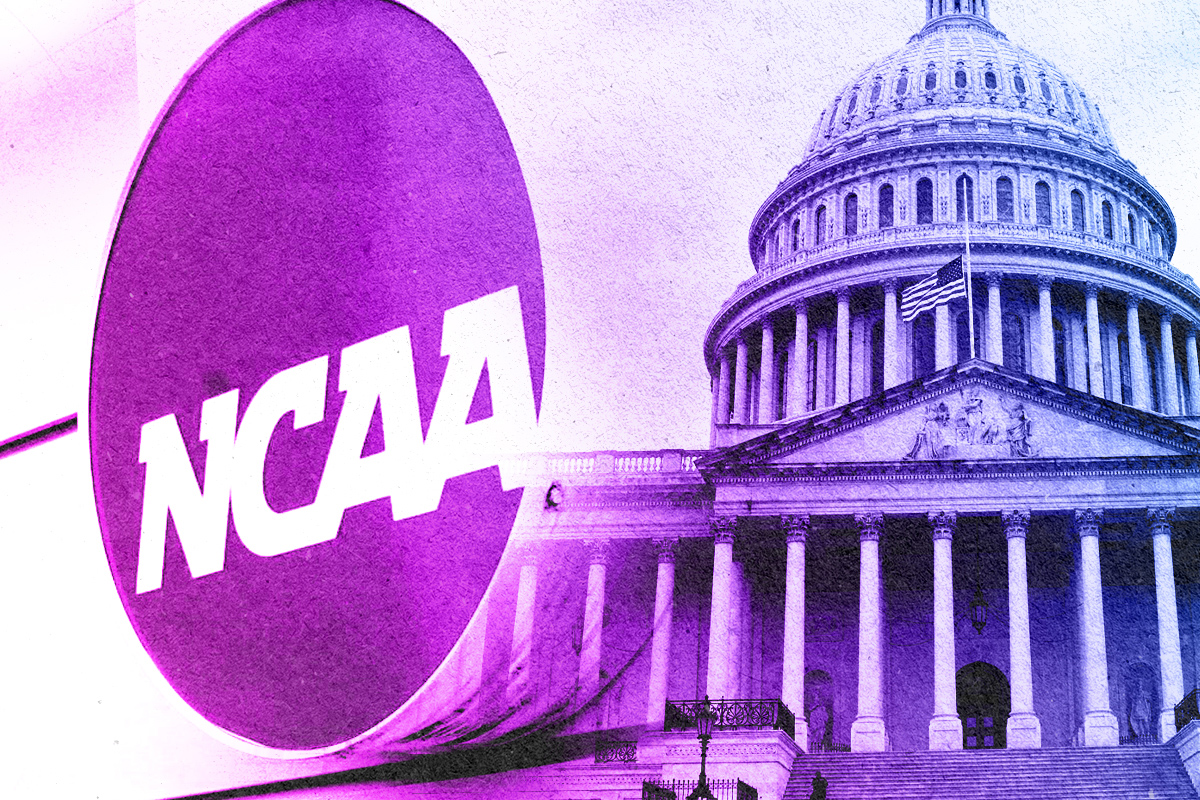
A major step toward overhauling college sports received a boost late Monday night after the U.S. Senate voted to push a federal bill aimed at eligibility rules, NIL and how schools take on funding.
The Senate overwhelmingly voted 77-22 to pass the Protect College Sports Act, a bipartisan bill pushed by Republican Ted Cruz and Democrat Maria Cantwell, which now moves to the House of Representatives where it will likely face stiff opposition.
“Today is a monumental day for college athletics,” Cruz said. “The United States Senate voted to protect the hundreds of thousands of student athletes currently competing in college sports, the millions who will follow in their footsteps, and every college sports fan who wants to preserve this great American tradition for generations to come.”
The House of Representatives does not plan to return before the November midterm elections to take up the bill. Speaker Mike Johnson has planned to keep the House out until after Election Day while Cruz lobbied for representatives to return to Washington rather than wait, as the make-up of Congress could likely look different than the current group.
A new Congress takes over in January following the election and a new session of presenting the bill, voting and passing the motion over to the House would have to start over if representatives don’t hear the bill before the end of the year.
Johnson has said in the past that he would be able to bring representatives back with 48 hours notice in the event that a major piece of legislation was presented.
“After years of discussions and months of intense deliberations, we achieved what many said was impossible and succeeded in getting the Protect College Sports Act through the Senate with a huge bipartisan vote,” Cruz said. “I am proud of our success, and I trust the House of Representatives will remain focused on bringing stability to college sports by delivering the Protect College Sports Act to President Trump’s desk without delay.”
Cruz and Cantwell introduced the bill in May in a proposal that tightly aligned with the White House and its vision for changes to NCAA guidelines.
The bill looks to replace the complicated patchwork of current name, image and likeness rules and create a federal right for athletes to earn money through their own deals, lock in a standard revenue sharing model for schools, create antitrust protection for certain NCAA rules, regulate how often athletes can transfer and require Division I schools to provide medical coverage.
There is also a provision in the bill to require schools to maintain a minimum number of sports and prevent the elimination of non-revenue programs. And agents representing athletes would have to adhere to strict registration requirements and a place a 5 percent cap on their fees.
NCAA president Charlie Baker welcomed Senate vote and urged the bill to make its way to the House with hope of a similar outcome.
“Student-athletes from across the country and all three NCAA Divisions worked hard to get on this legislation moving and thanks to their advocacy, the bill just received a massive, bipartisan vote in the Senate,” Baker said. “The NCAA thanks the many senators who sponsored this bill – including Senators Cruz, Cantwell, Schmitt and Coons – as well as the many other senators who voted for the bill, for their bipartisan effort to protect this uniquely American tradition of college sports in the decades to come. Now the bill moves to the U.S. House of Representatives and there is much work left to do to ensure student-athlete benefits are codified into federal law and future generations of young people can access those benefits and use college sports as the launching point for their careers.”
In April, President Donald Trump issued an executive order that limited college athletes to five years of eligibility to one transfer, while building a structure of preventing schools from eliminating scholarships and ensuring medical care for athletes. It was his second executive order targeting college sports reform and parts of the bill by Cruz Cantwell closely resembled his mandate.
Meanwhile, in June, the NCAA passed its own guidelines on athlete eligibility, which they said would start when they first enroll in school or at the beginning of the academic year after their 19th birthday, depending on which comes first. That change was made effective immediately and drew a wave of backlash and lawsuits.
An appeal granted by the Tenth Circuit Court of Appeals in Colorado ruled in favor of the NCAA’s move which prohibited athletes from the 2022-23 academic year from getting an extra year of eligibility.
That came after a federal class-action lawsuit filed in July by University of Northern Colorado basketball player Brock Wisne argued that the new eligibility mandate directly impacts athletes who began their college enrollment in 2022.