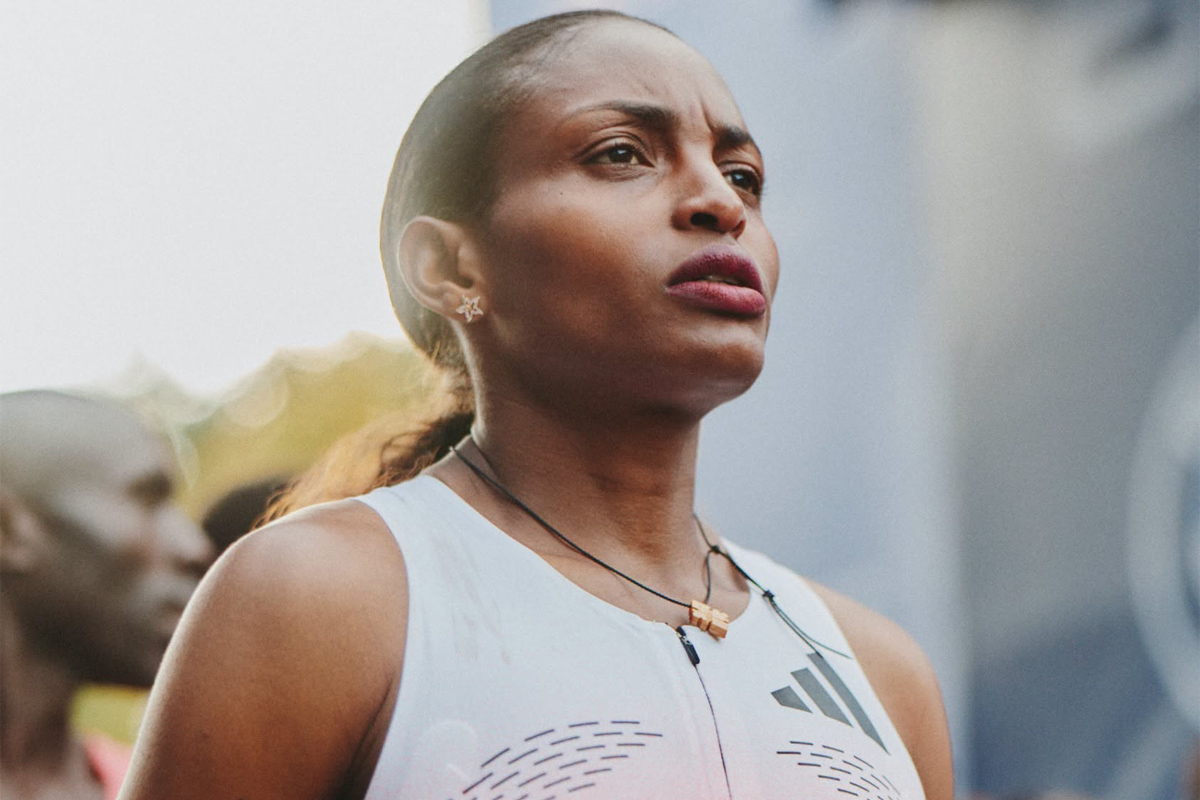
Tigst Assefa will undergo surgery in Munich on Monday after suffering a partial rupture of her Achilles tendon on her right foot at the Berlin Marathon on Sunday.
Assefa, 29, limped noticeably in the closing stages of the race as she approached the finish line just past Brandenburg Gate in her 2:11:04 win in the women’s field and immediately collapsed after breaking the tape.
She was helped away from the finish area by distance legend Haile Gebrselassie and did not appear at the medal ceremony alongside Bedatu Hirpa and Dera Dida, who took second and third, respectively.
Demadonna Athletics, Assefa’s management team, would later confirm the ailment in a message posted on social media and said she was “impacted by the injury.” The company later posted an image of Assefa wearing a walking boot on her foot on a private plane after meeting with Adidas CEO Bjørn Gulden, who wished her a quick recovery in a separate post.
“What you did today was unbelievable . . . recover fast,” Gulden said in his message.
Assefa’s 2:11:04 is the third fastest all-time by a woman but she immediately set out at world record pace on Sunday with an aggressive approach from the opening moments and quickly established a lead over the women’s group.
At the 5km mark at 15:30 she was 25 seconds ahead of Rosemary Wanjiru, who was the second woman and essentially represented the chase pack as the rest of the field remained behind. The group would eventually catch Wanjiru, but by the halfway point, Assefa was nearly three minutes ahead as Dida, Pascaline Jelagat, Alemitu Tariku, Bedatu Hirpa and Zeineba Yimer arrived to decide the other podium spots.
The record was still in range by 35km with Assefa cruising by at 1:47:32 and she was in line to shave at least 10 seconds from Ruth Chepngetich’s 2:09:56 record from the 2024 Chicago Marathon. But her pace would begin to ease and without her pacemakers shielding her from the view of the broadcast, it was apparent that she was in discomfort with each step.
Recovery time is typically six to twelve months after surgery of an Achilles tendon tear, and a partial tear requires four to six months of rehab for daily activities and up to twelve months or a full return to high-intensity sports.
As word of Assefa’s injury spread via social media, she was widely praised for remaining on the course and posting a winning time that was 68 seconds from Chepngetich’s world record. Assefa’s victory in Berlin is her third on the course, after winning back-to-back titles in 2022 and 2023.
She entered the race on Sunday still riding the wave of her stunning 2:15:41 women-only record at the London Marathon in April, and it was widely known that she would set out to push the pace on the streets of Berlin with the sole objective of lowering the time on her way to a new world record.