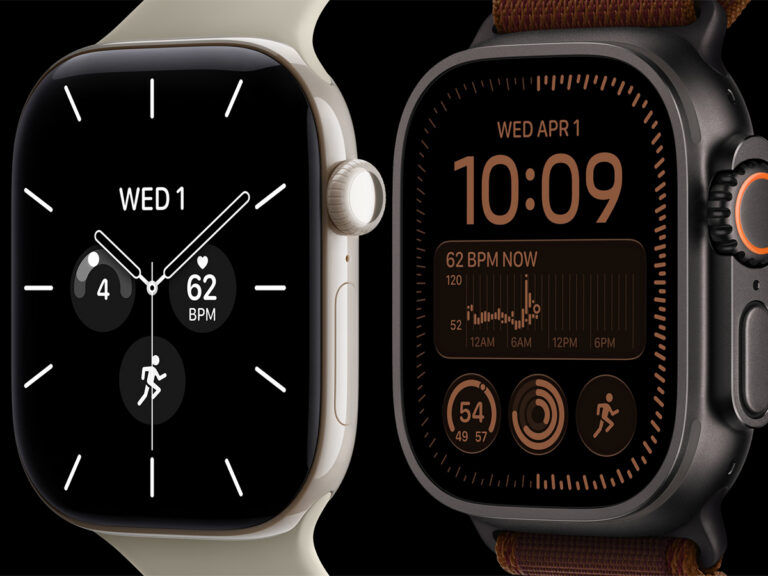

Ahead of Apple’s annual iPhone and new products event in September that will see some of the final public remarks under the guidance of outgoing CEO Tim Cook, the company is pondering whether its wearables segment is ready for a noticeable pivot.
A rumored foldable iPhone could represent the most drastic revamp of the iconic product line in years while a makeover of all things Apple Watch is also on the table.
What that could mean is a new rounder design language for the smartwatch and a screenless fitness tracker similar to devices from Whoop or the new Fitbit Air, according to a report from Bloomberg that suggests the company is doubling down yet again on valuable wrist real estate.
But arriving fashionably tardy on purpose to a party that is packed with a potent roster that includes Whoop’s devices, the Fitbit Air, Garmin’s also-late Cirqa, the Polar Loop, Luna Band, Amazfit Helio Strap and a host of clones means Apple’s decision to show up could mean trying to redefine a segment that relies on stealth as a standard.
The wearables shakeup can easily be tossed in with the wave of changes that will greet incoming chief executive John Ternus and his handpicked appointees as he embarks on shaping the immediate and future version of Apple. It should be understood that the adjustments won’t be limited to watches or introducing a fitness tracker.
Apple is banking on a reborn Google Gemini-powered Siri to push where its own internal efforts fell short, a HomePod replacement is imminent and core products like its deep iPad lineup and MacBooks have to shine beyond minor spec bumps at a time when the company, like many others, continue to paddle thorough global memory chip shortages.
Being considerably late to the screenless tracker rodeo despite having significantly superior resources than rivals is already a formula Apple has mastered, likely doesn’t view its timing as overdue and has a cushion of an established services ecosystem built from 11 years of its premium smartwatch.
But there would — and should — be enough motive to disrupt a fitness tracker segment that doesn’t require a manicured visual user interface.
When Garmin released its Cirqa band device late last month after what felt like an eternity of rumors and leaks, there were similar question about why a proven tech giant would wait so long to dive into an arena Whoop had fortified within the last five years.
The obvious answer is both Apple and Garmin produce smartwatches that are not only established but are highly profitable and more personal than any screenless wearable. They make devices that are perfect companions for so many moments, right along with smartphones.
And at the marathon finish line (and start), the watch/phone combo are just as essential as a gel or water on the course. Garmin has known this for decades and has a stacked roster of watches as proof that premium wrist space should be reserved for a Forerunner or Fēnix, or possibly a rival.
But even with Whoop’s popularity and Google’s wallet-friendly Fitbit Air, Apple can swing a mightier sword as it commanded around 28 percent of total global wearable shipments. An Apple-branded fitness band would draw a collective groan from Whoop, Garmin and the rest of the tracker collective but signal to its own loyalists that the Ternus administration is committed to pushing new product.
And while the notoriously secretive company has offered little to direct the murmurs and rumors, a wearable without the mental might of the Apple Watch could be the affordable greeting for those on the outskirts of the brand.
Paired with a reskinned Health app to do the heavy visual lifting in the absence of a screen, a fitness tracker might not be the home run on a single swing, but it would be the no-nonsense option for the masses in the same way that it’s hot selling MacBook Neo laptop has shown that cheaper can still strut in a set premium footsteps.