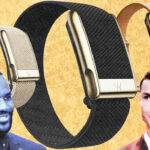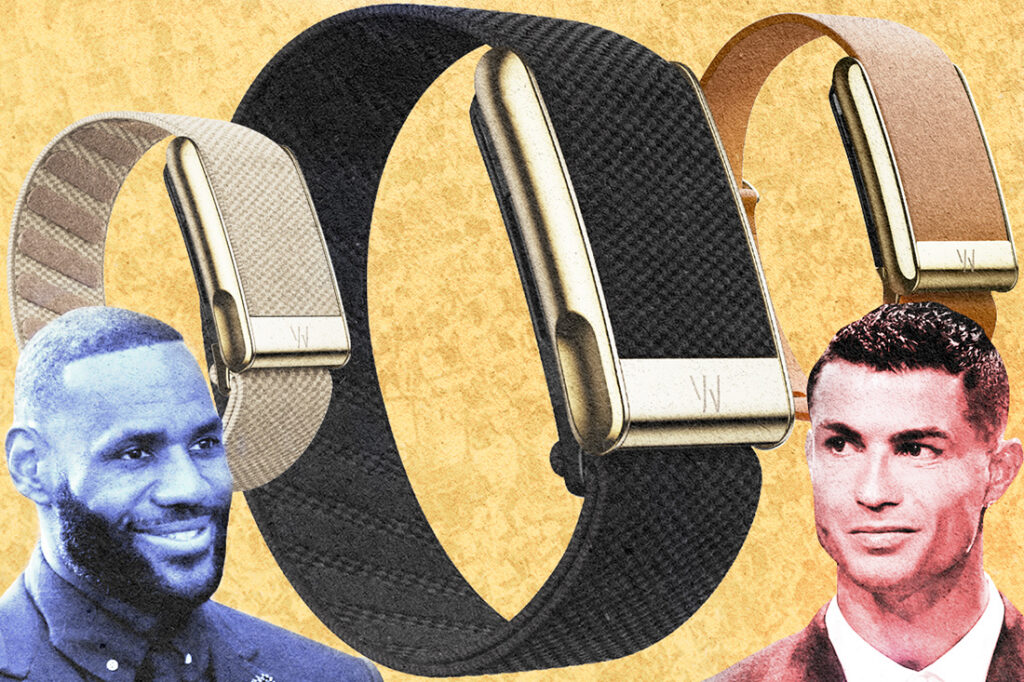
Whoop revealed on Tuesday that it has raised $575 million its latest funding effort as the the fitness company has soared to a $10 billion valuation while continuing its push toward a public offering.
The brand said that the Series G round was aimed at a broader goal of expanding into the health space alongside its wearable trackers and was lead by New York City-based venture firm Collaborative Fund. Other investors included were 2PointZero Group, Qatar Investment Authority, Mubadala Investment Company, Abbott, Mayo Clinic, Macquarie Capital, Glade Brook, B-Flexion, IVP, Foundry, Accomplice, Affinity Partners, Promus Ventures and Bullhound Capital.
“Our raise brings together the world’s most sophisticated investors, leading health institutions, and iconic global athletes behind the mission to unlock human performance and healthspan,” founder and CEO of Whoop founder and CEO Will Ahmed said. “We are building the personal health platform that people use to improve their health and livelihood.”
Meanwhile, the company noted that several prominent athletes were also part of the funding, with Cristiano Ronaldo, LeBron James, Rory McIlroy and Reggie Miller on board.
“Whoop has become one of the most important tools I use to support my long-term health,” Ronaldo said. “I am proud to participate in this round because I believe in the future we are building together. No other company has created a health platform this powerful that people are proud to wear.”
With more than 2.5 million users on its platform and using its devices, Whoop has blurred the lines of fitness, data and culture with stylish trackers that have made the company synonymous with fabric and leather straps that do not have screens but collect numerous metric like sleep, blood oxygen levels and heart rate.
And while other competing brands — and clones — offer similar products, Whoop continues to lead and be the face of its segment that is decidedly different than smartwatches and touts being sleek as main selling point.
Still, Ahmed wants more and he alluded to the company’s eventual pivot to an IPO as inevitable.
“I would think about it over a horizon of two years,” Ahmed said in an interview with Bloomberg in November. “If you ask yourself, what public company today owns personal health, what comes to mind? I draw kind of a blank spot. It feels like it should be a big company in the world that is known for owning personal health.”
The Boston-based company was founded in was founded in 2012 and has grown to over 725 employees, ensured its devices are seen on some of the more notable athletes of the moment while the brand solidifies new partnerships like its most recent deal with Ferrari’s Formula 1 team in February. And last week, Whoop revealed it signed a three year deal to be the wearable partner of Premier Padel, the top professional circuit for padel.
The brand even found itself in the middle of minor controversy in early March when White House chief of staff Susie Wiles was seen wearing a fitness tracker during a briefing of Operation Epic Fury as the U.S. and Israel launched target strikes against Iran. Social media users claimed Wiles was wearing an Apple Watch and breaching security rules.
Ahmed was quickly to step in and clarifed what device Wiles had on her wrist but what what explained the tracker’s capabilities.
“It’s called a whoop,” Ahmed said in a social post. It does not include a microphone, GPS, or cellular capability of any kind and has long been on the NSA approved PED list. Given today’s performance, it’s likely she had a green recovery, low RHR, and high HRV.”
But the broader goal is boosting its medical grade technology as Whoop looks beyond its core subscription model of distinctive trackers. Deeper health data integration in its wearable devices, prioritizing accuracy — and innovation — are a matter of when and not if and Whoop is intent on introducing own blood testing feature.