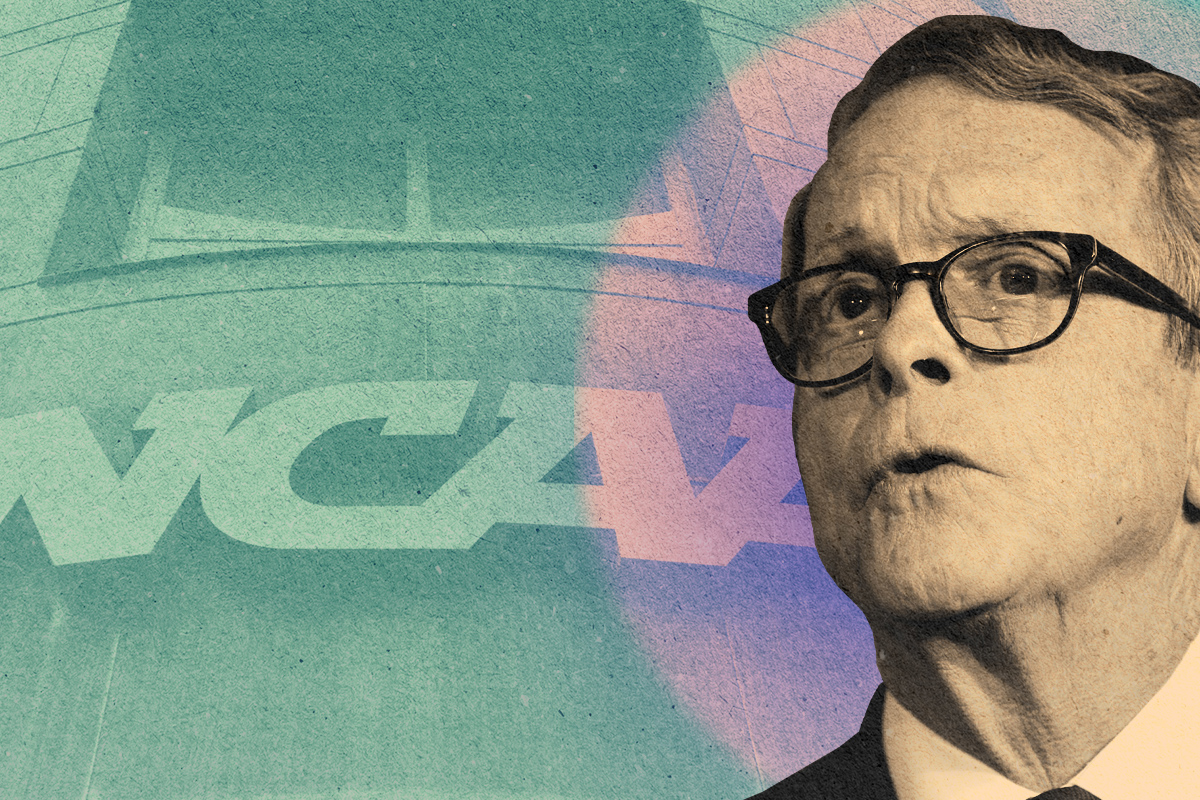
The NCAA filed a lawsuit against Ohio governor Mike DeWine on Friday, challenging a state executive order he issued this week that would allow athletes from the class of 2022 a fifth year of eligibility in the state.
According to the collegiate governing body, the suit was filed in federal court in Ohio, with NCAA president Charlie Baker deeming the move as “necessary” since DeWine’s action directly conflicts with tighter rules implemented beginning this season that address eligibility.
“First, the Executive Order unlawfully burdens interstate commerce in violation of the Commerce Clause in the US Constitution by improperly conferring an advantage on Ohio in-state institutions,” Baker said in a state addressing the lawsuit. “It also violates the First Amendment by purporting to provide Ohio institutions with legal cover to maintain their NCAA membership while simultaneously flouting the NCAA’s rules. Finally, the Executive Order violates state law.”
DeWine’s executive order permits public and private universities in Ohio to allow student athletes who entered college in the 2022 class to play even though the new NCAA rule, passed in June, caps eligibility to five years but excludes those who graduated just before the mandate.
The NCAA rule change has drawn a wave of backlash, opposition across numerous states and lawsuits, with DeWine being the latest to join a growing battle that also extends beyond limits on eligibility.
“When the rules change, fairness has to remain part of the equation,” DeWine said on Tuesday after issuing his executive order. “We want Ohio’s student-athletes to have the same opportunity as student-athletes in other states.”
DeWine and his staff refused to comment on the lawsuit and none of the Division I programs in the state have released a statement on his executive order, but Ohio lieutenant governor Jim Tressel, who coached at Ohio State and Youngstown State, voiced his support for opening up a path to a fifth year of eligibility for class of 2022 athletes.
“It’s important we do not deprive our current student-athletes of the same opportunities enjoyed by their peers,” Tressel said on Tuesday.
Meanwhile, the NCAA said in its lawsuit that DeWine’s executive order was a move that would prompt Ohio schools to ignore its rules “to the disadvantage of thousands of student athletes and institutions across the country.”
The NCAA also said that while it credits the work of student athletes from the 2025–26 academic year, the rule changes were part of necessary reforms across all college sports and permitting a fifth year would impact future classes of athletes who would be displaced.
“But allowing them to return for an unexpected fifth season of competition would give them a benefit they never reasonably could have expected, to the detriment of thousands of eligible student-athletes who have been waiting for their opportunity to compete,” the NCAA said in its statement. “Those student-athletes just as much deserve a voice and protection through the judicial process.”
Opposition and lawsuits over the NCAA’s rule were expected and are likely to continue through next year. A federal suit filed in July by University of Northern Colorado basketball player Brock Wisne is set to continue this month as he and 11 other plaintiffs argue that the NCAA’s new mandate unlawfully restricts competition and has barred them from a fifth year of play.
And as that lawsuit unfolds, the NCAA remains adamant about pushing regulations at a government level that try to prevent its guidelines from being undermined. Last month, the Protect College Sports Act bipartisan bill was passed in the Senate 77-22 with a aim at a major overhaul of college sports that targeted eligibility rules, NIL and how schools take on funding.