It’s said that if you can make it in New York, you can make it anywhere.
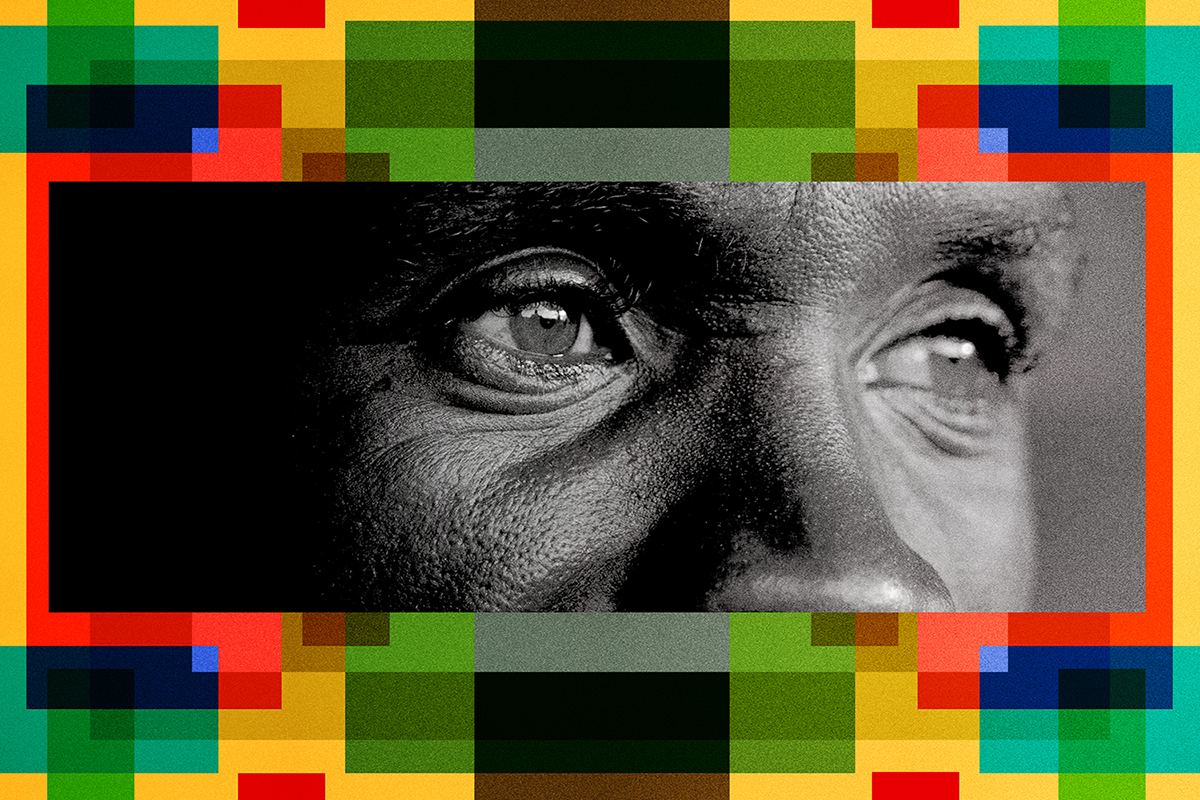
On October 30, just three days before running the city’s namesake marathon for the first time, Eliud Kipchoge made it in New York by posting an Instagram photo of himself on Central Park South, wistfully gazing upward.
“New York,” he wrote, “it’s so great to be here.”
Results be damned, the greatest marathoner in the world was set to run the greatest marathon in the world in the greatest city in the world.
Kipchoge made it in New York by simply showing up.
What remains to be seen is whether he can now, as a waning top-tier marathoner and ascending global running ambassador, make it anywhere.
All He Did Was Win, Win, Win
Kipchoge is an internationally recognized superstar in a globally contested marathoning arena. He has excelled in and redefined the sport in ways that may never be replicated — or outdone.
And he is the only person to have completed the marathon distance in less than two hours. Separately, he set the official marathon world record in 2018 and then again in 2022. From 2014-2023, he won 11 World Marathon Majors in addition to two Olympic gold medals.
Kipchoge’s race victories seemed inevitable from the outset, which doesn’t always make for a great spectator experience. However, his breathtaking performances captivated the likes of hardcore running fans, marathon newbies and casual observers because no matter when he broke away from his competitors or how far ahead of them he surged, the clock made his races relevant.
For a decade, every time Kipchoge showed up at a marathon start line, first place had effectively been ceded and the world record was in jeopardy.
And, as demonstrated in New York, even now that he is undeniably past his prime as a competitor, the specter of his past performances, the allure of his aura and the magnetism of his mystical musings have hyped each of his recent races into a must-see scene.
The Monastic Marathoner
Very few elite marathoners ultimately realize the status of global renown, in part because in the world of professional sports, running 26.2 miles remains exceptionally niche – and for many casual observers, a boring endeavor.
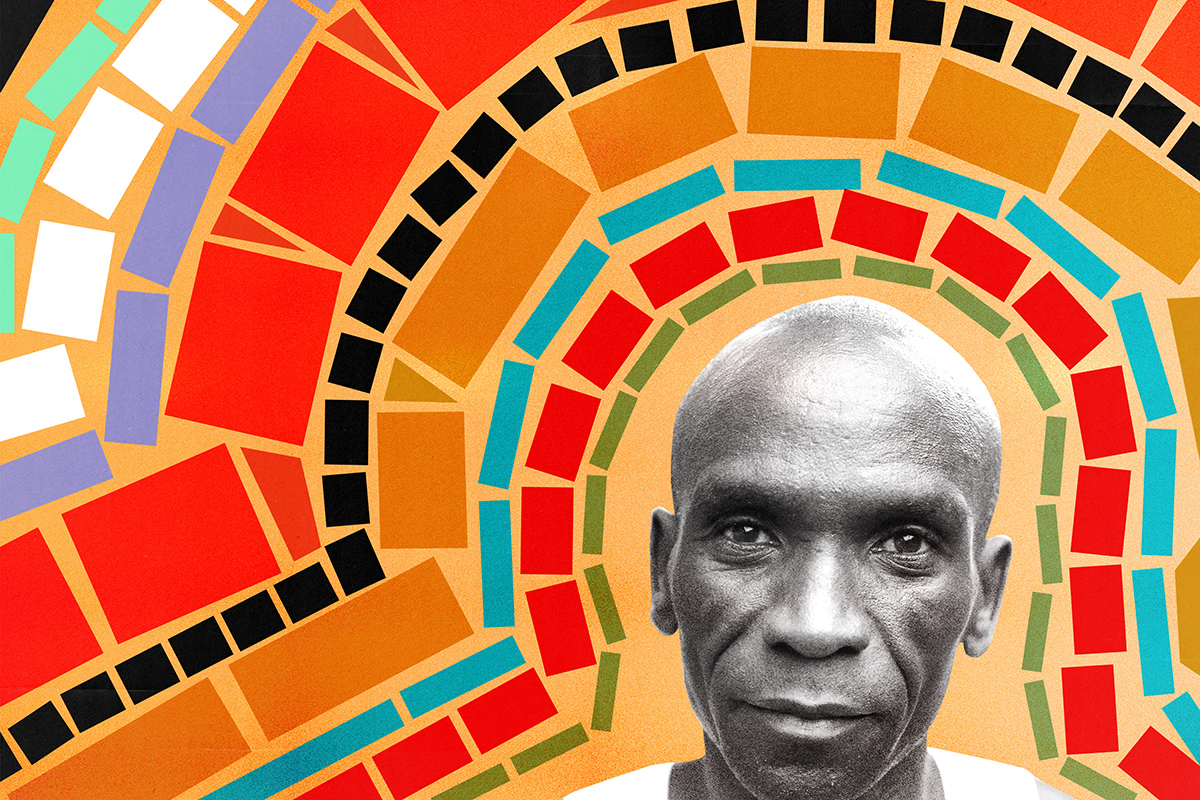
Over the years, Kipchoge has livened up his victories not with the brash energy of a sprinter or the unbridled grit of a miler, but the enlightened ruminations of a spiritual guru.
He commands attention not just for his sterling marathon résumé, but also an uncanny ability to capture esoteric aspects of the human condition in pearls of knowledge and insight typically reserved for monks or philosophers. And, by all accounts, Kipchoge has embraced a monastic devotion to running marathons and living simply that has undoubtedly informed his wisdom and charm.
In just the last six months, Kipchoge has posted to his three million Instagram followers that:
“Limits only exist in our minds.”
“A running world is a happy world.”
“Your mindset is your most powerful muscle.”
“The real victory is waking up and showing up.”
“To master anything, first master yourself.”
“A seed starts by growing down. That’s the hard work. And no one sees it. But you have to do that work before you can break the surface. In all professions, success begins in silence, through discipline and belief.”
“Yes, it’s common, I often wake up and don’t feel like running. But then I ask myself: ‘What will I do if I don’t run?’”
Considered as a composite of his achievements and eruditions, Eliud Kipchoge has come to wholly personify the concept of “the man, the myth, the legend” – and the world has taken notice.
The Limit Does Not Exist
The public relations teams at Nike and the NN Running Team together with, critically, Kipchoge himself, seem convinced that he is preordained, through his accomplishments and aura, to change the world through running.
Has any top athlete in any sport ever taken on and so fully embodied such an ambitious – and grandiose, without a hint of complacency – level of purpose on a global scale?
As a harbinger of Kipchoge’s preordination to become a global running icon, he introduced his defining edict that “no human is limited” in August 2018 – weeks before setting his first marathon world record by an otherworldly 78 seconds. And that was over a year before breaking the two-hour marathon barrier at an exhibition in Vienna.
He wrote that his “legacy actually will be fully concentrated on ‘No human is limited’, I want to actually tell every living soul in this world that anything he wants to do he can do, provided he is believing and trusting in it.”
Even before becoming a household name as a generational marathon runner, Kipchoge was already thinking on a much larger scale.
He was questioning his own limits before fully eclipsing the world of marathoning. He boldly – if quietly – anointed himself, then started persuading the running masses louder and louder once he had earned a platform and realized his potential to reach further.
His motivations to run fast must be entirely intrinsic and his quest for limits entirely introspective, as someone who wins 11 marathon majors and two Olympic marathon gold medals has to be stimulated by more than his human competition.
Fortunately, marathons have a clock. And Kipchoge beat that too on several occasions.
The result of the Vienna showcase was his newfound megaphone to proclaim that no human is limited, and it must have been as much of a motivator for his followers as it was for himself and his own long-term goals.
More converts to the church of Kipchoge meant more disciples to spread his running gospel.
The Limits of Not Being Limited
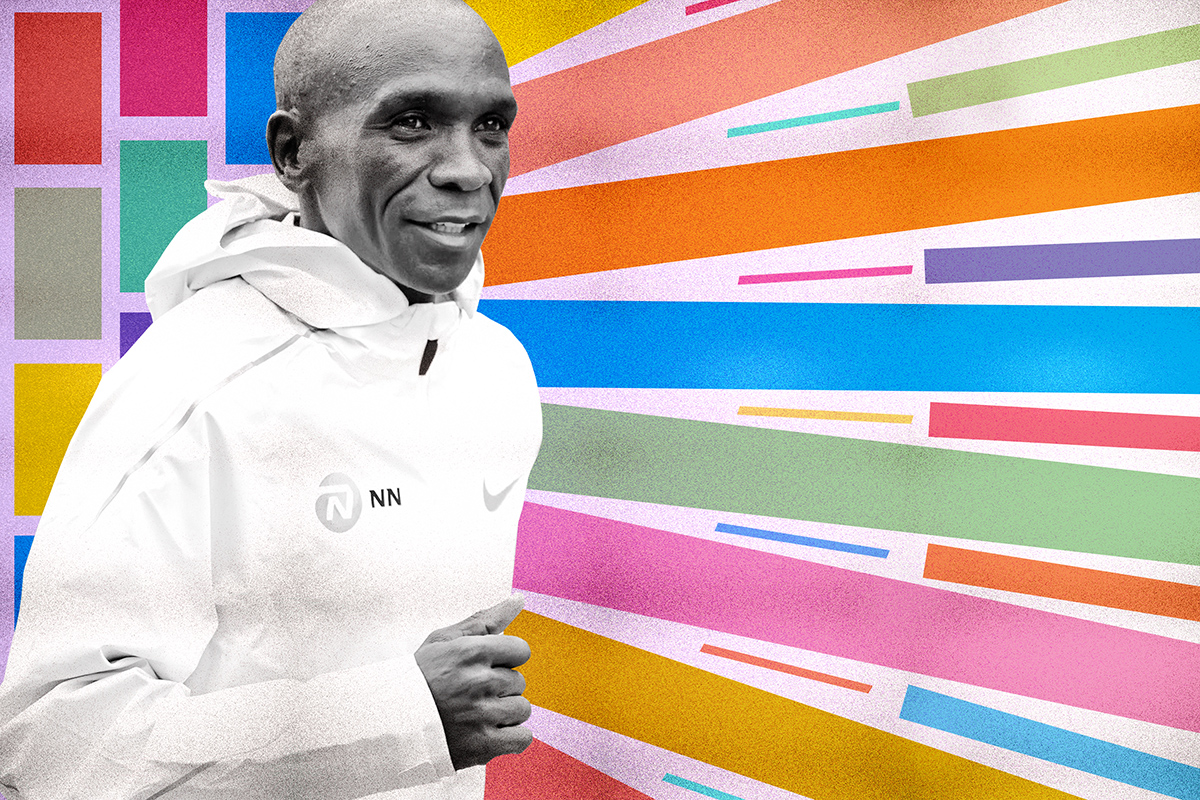
Like Kipchoge himself, the concept that a human can’t be limited is inherently enigmatic.
And it’s so demonstrably false that it conveys some level of truth.
It’s as humble as it is braggadocious.
It’s as understandable as it is inscrutable.
Kipchoge’s supposition that no human is limited has nothing to do with the physical or physiological limits of the human form, rather it’s an observation about perceived limits. And, perhaps most critically, the framing thereof.
It’s about the willingness to test a perceived limit, and the undeniable triumph of transcending it.
And even if that particular limit is not eclipsed, one can find solace in that surely some other perceived limit was surpassed at some point in the process.
It’s about setting goals, and being fearless in the pursuit. Framed as such, there’s no such thing as failure.
The Proof is in Not Proving
After a somewhat disappointing (by his standards) ninth place finish at the 2025 Sydney Marathon, Kipchoge demurely told The Guardian that “I trust I have nothing to prove.”
For him, having nothing left to prove looks like dozens of everyday runners stopping during an out-and-back on the Sydney Marathon course to record and/or cheer for him as he flew by in the other direction.
It looks like him being announced at the start line of the New York City Marathon to widespread applause from Wave 1 runners and those waiting in the Athletes’ Village, or celebrating his Abbott Six Star medal just as heartily as each of the 22,000-plus other people who have earned one.
Kipchoge is now embarking on a quest to define his legacy as about more than just running.
“I trust I have nothing to prove” perfectly fits the mold of a quintessential Kipchoge paradox.
Greatness Asks and Eliud Answers
Within hours of a very disappointing (by his standards) 17th place finish at the 2025 New York City Marathon in 2:14:46 – his slowest marathon performance and lowest finishing place to date – Kipchoge and Nike Running jointly posted the following to Instagram:
@kipchogeeliud proves that no human is limited. Not by doubt. Not by distance. And never by time.
Greatness doesn’t ask if there’s a finish line. It asks: where do we run next?
Greatness asks, and Eliud answers: we run the world.
After New York, Kipchoge announced the Eliud Kipchoge World Tour in which, over the next two years, he will run a marathon on each of the seven continents and, crucially, other runners can join him.
The tour hinges on the fact that throughout Kipchoge’s rise and generational dominance as a marathoner, he has always come across as deeply relatable as a human being — not just a marathon machine. He presents as humble, approachable, and down-to-earth. His reputation has no blemishes.
When Kipchoge runs, people watch.
When Kipchoge speaks, people listen.
When Kipchoge asks the world to run a marathon with him, the world simply asks where and when.
The website is currently sparse on details, but states that this endeavor will allow Kipchoge to “[Leave] a global footprint and a continuing legacy that spans the earth.”
Like the concept that no human is limited, the construct that Kipchoge can leave his physical and metaphorical footprint on every corner of the world while running seven marathons is so idealistic as to be unfathomable.
But he has already left molds of his footprint in Sydney and New York — and that’s just the beginning.
No one else could pull this off.
Different Stage, Same Spotlight
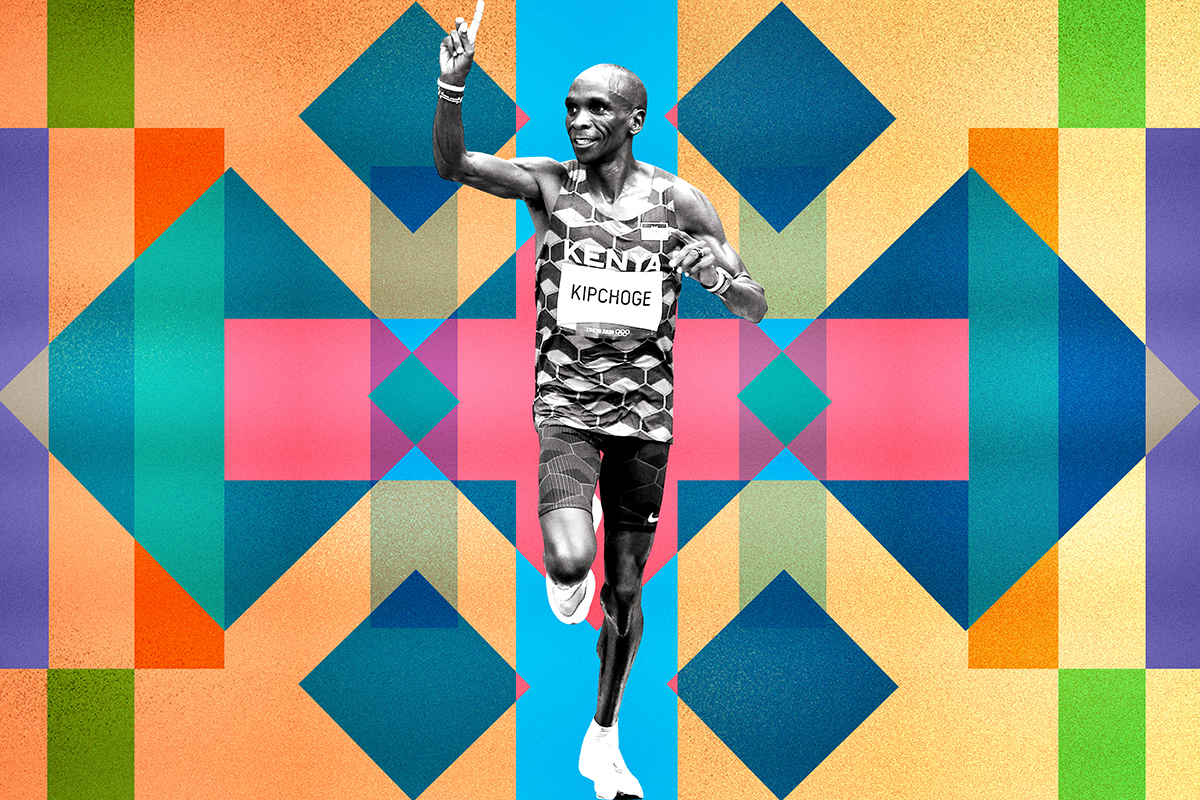
Kipchoge has had two sub-two-hour marathon attempts planned solely around him and was the marquee name in every marathon field he has entered since 2015, so he’s used to having star power. He and his team are banking on the hope that his magnetism at established large-scale races will translate to the creation of his own stage.
Theoretically, he could have remained relevant within the existing structure of marathoning by becoming an ambassador for the Abbott World Marathon Majors and running two or three of the races for the next several years while offering thousands of fundraising bibs for his namesake foundation.
At some point, he wouldn’t even need to run the races – just shake hands, kiss babies and shower runners with motivation and encouragement.
That he is taking it upon himself to run the world on his own terms speaks to his astronomical level of self-belief (#nohumanislimited), as well as a desire to seamlessly start his new existence as a former elite marathoner through a marathon-centric capital campaign.
Tens of thousands of people raise hundreds of millions of dollars for charities each year by running the Abbott World Marathon Majors, and Kipchoge – who has helped establish marathoning as an inspirational, globally relevant pursuit more than anyone since Pheidippides himself – has every right to mimic that model without needing Abbott as the middleman.
Some articles about the Eliud Kipchoge World Tour have mentioned a $1 million goal over two years, but Kipchoge has not referenced any monetary aspirations.
He has, however, made it clear that the proceeds from his tour and any future fundraising efforts will be put toward education and the environment in Africa. Earlier this month, Kipchoge told The Athletic that “I want to make education affordable in Kenya, to build a lot of libraries here. In the future, I want to build a library in every capital city in Africa. I want to make Africa, as far as education, go high. I want to conserve the environment, to plant trees around Kenya, (then) expand to East Africa, to Central Africa, and all of Africa.”
Again, this is so idealistic as to be unfathomable.
No one else could pull this off.
The Only Thing Left to Prove
Considering how much he has given to marathoning and because of his hard-earned prestige and goodwill as a runner, running ambassador, and humanitarian, Kipchoge has every right to leverage the act of running toward whatever outwardly unfathomable outcome he damn well pleases. Just ask Barack Obama.
Hundreds of thousands of people will want to be part of the Eliud Kipchoge World Tour, to be the seeds that accompany Kipchoge in continuing the hard work of growing down such that, if his long-term vision comes to life, hundreds of thousands of Africans will benefit from what breaks the surface.
Maybe Kipchoge’s preordination as a transcendent runner was just the gateway to something much bigger than running.
Because unfortunately, the race he is now starting, the one “to make this world a running world,” is one that he will never win.
Even he can’t pull that off.
But that’s not the point.
The only thing Kipchoge has left to prove is that no human is limited.