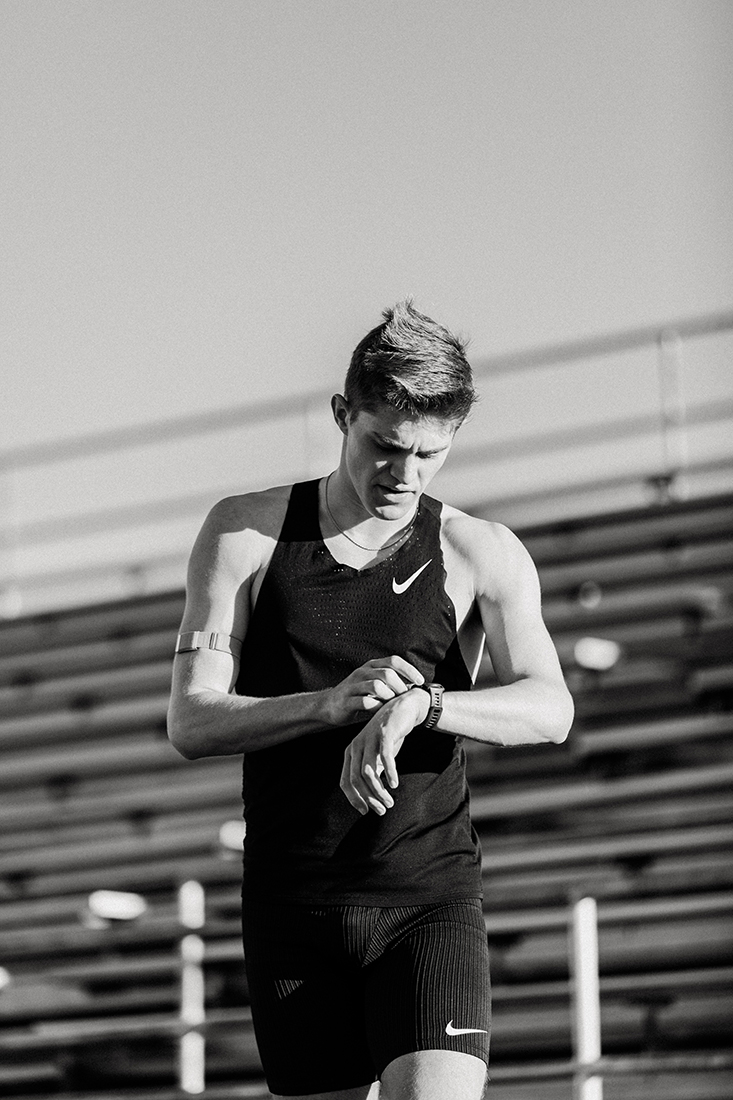
In real time and what feels like a bit of a time shift, Cooper Lutkenhaus and fans of the sport can easily identify the moment his trajectory aligned with the direction that has catapulted him into more than a track and field buzz word.
At last year’s USA Track and Field Outdoor Championships in Eugene in August, Lutkenhaus rocked the men’s 800m final with a 1:42.27 second place finish that brought down the U18 mark by just over a second, was good for the sixth best mark of 2025 and inched the then-16-year-old into a professional contract with Nike weeks later.
In that span, Lutkenhaus realized the impact of every second — millisecond actually — and got a taste of the world stage in Tokyo the following month.
On Wednesday, he moved at his own pace and revealed that would take his next big step alongside Coros and integrate the brand’s technology deeper into his training and subsequent analysis of a slate of performance-based data. He made it clear that his sights are locked on more impactful 800m races that matter throughout the season.
“Hopefully in that 1:43 to 1:44 low range,” he said. “I think that’s definitely possible right now if I can just get in the right race for it.”
Lutkenhaus then chatted with A Mile. A Minute. about how critical the numbers are in his development as he continue to rock the sport through pure tactic — not by invitation.
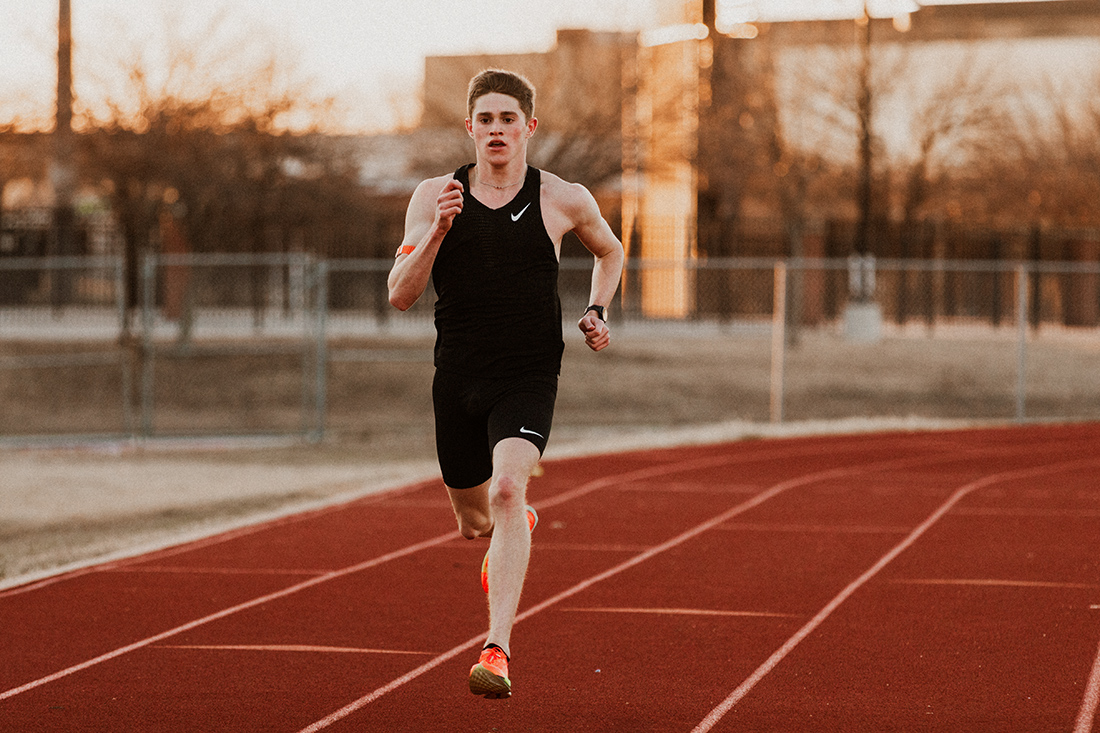
AMAM: What does a typical training week look like? We heard around eight miles is your longest run ever — is that true?
Lutkenhaus: A typical week has a [long run] of 7 miles, 3 runs of around 5-6 miles, and 2 workout days. Sunday is typically off. All these are done in the morning and I follow up each afternoon with some type of cross training, either an elliptical or bike ride. I’m in the weight room 2-3 days a week.
What is your philosophy on building base mileage and how does this philosophy allow you to be recovered for race day?
Lutkenhaus: Fall is my typical base training that doesn’t really deviate much from inseason training. My workout days are just more threshold, longer interval type sessions. We still touch on speed a little everyday. Lots of times it’s 4 x 80m all out after a regular run. I never deviate too far from the speed side of things.
If the 4x800m were an Olympic event, who would you want on your team? Any particular order?
Lutkenhaus: Current Team: Hoey-Hoppell-Brazier-Myself… I would definitely want to be the anchor on that squad! That would be a very tough team to beat for sure.

Do you pay attention to your fitness score on Coros? How was it trending ahead of Millrose Games?
Lutkenhaus: Looking back on it, it shows it was trending down slightly but that would be because we were backing off in training slightly to make sure I was fresh and ready to go. I really wanted to be at my best for that one.
How does your heart rate and perception of effort allow you to make accurate decisions for your speed sessions?
Lutkenhaus: I find that at the beginning of a lot of my workout sessions my perceived effort and heart rate are in line for the most part. However as they progress towards the back end of a hard workout my heart rate will “drift” just a bit as fatigue starts to set in. Nothing major but there is a noticeable difference I believe.
What are some tips you would give to athletes looking to improve their 800m performance? Workouts? Tactics?
Lutkenhaus: I am a big believer that there are 2 types of 800m runners. 400/800 and 800/1,500. It’s important to know where you fit so that your training fits. I believe I fit into the 400/800 group. However as time goes on I could see myself slowly transitioning into the longer group. I want to ride out the speed side as long as I can before making that move. I think it’s important to touch speed everyday even if it’s just a little bit. We all know how important the speed element is to the 800m so I never want to deviate too far from that. The faster my 400m is, the more comfortable I can run the opening lap and still have gas in the tank to come home strong.