
Nike co-founder Phil Knight and his wife Penny have donated $1 billion to the University of Oregon, the school revealed on Wednesday. The donation is the largest known gift ever to a public flagship university in the United States and will go towards establishing an engineering college.
The future college would be designed as a flagship to attract engineers and applied scientists in bioengineering and other high-demand disciplines and draw top faculty and researchers in the university’s aim to pioneer discoveries that reach beyond the laboratory.
It is the third major donation the Knights have steered toward Oregon in the last ten years after a $500 million gift in 2015 and another $500 million in 2021 that created and expanded the Knight Campus.
“To make an audacious dream a reality requires more than a vivid imagination,” Knight said. “It also requires the sort of opportunity that our great American universities, both public and private, have historically provided. This is no time to abandon them. Penny and I are grateful for the chance to invest in our most promising young people’s future in this important way.”
Phil Knight, 88, graduated from Oregon in 1959 and would later team with his track coach from the school, Bill Bowerman, to found what would become the global sportswear powerhouse.
The latest donation by the Knights to the university now tops $2 billion in philanthropy and comes a week after they announced they will commit $1.1 billion to Providence St. Vincent Medical Center in Oregon and its Providence Heart Institute in one of the largest gifts ever to an American health institution.
“Phil and Penny Knight have a long history of believing in things before they exist,” University of Oregon president Karl Scholz said. “They did it in 2016, and they are doing it again now, at a scale that is genuinely hard to take in. I am grateful to them, and I am grateful to be here for it.”
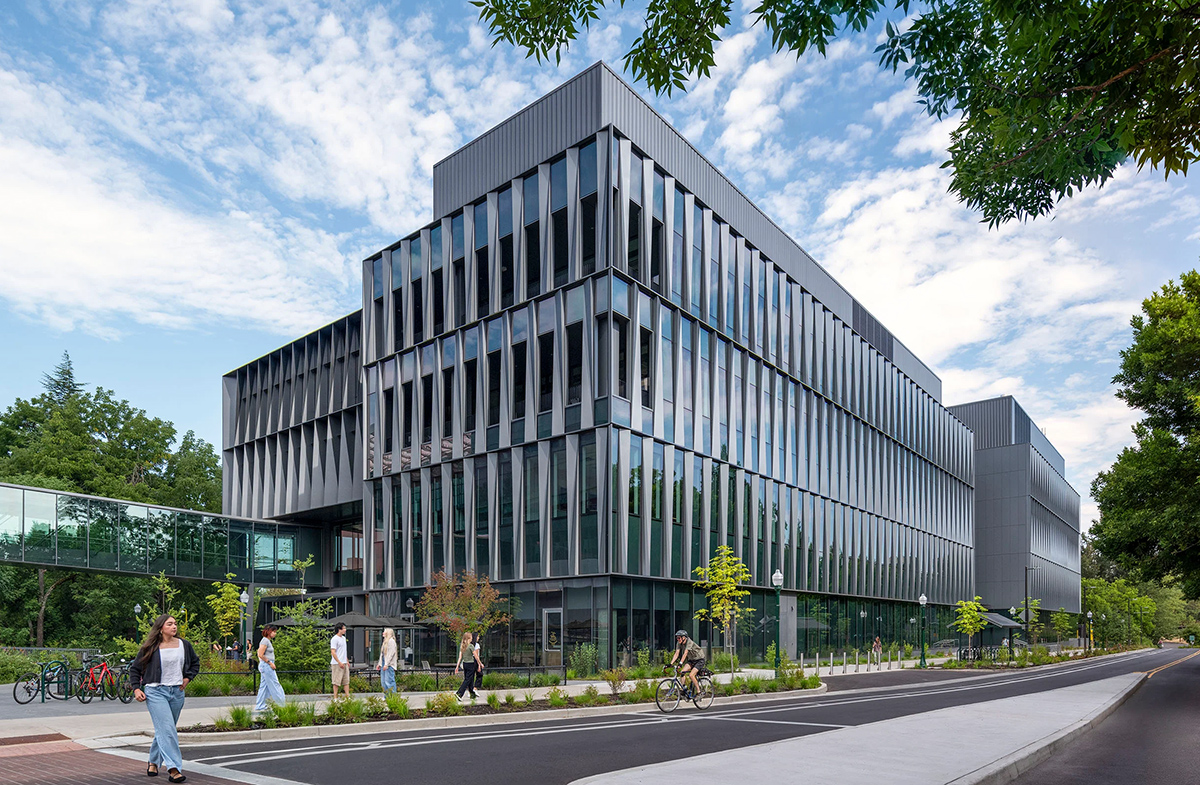
According to Oregon, since 2016, the Knight Campus was the catalyst of the school’s first engineering department and source of the first engineers that graduated from the university, in addition to boosting its research laboratory count to 17. More than 500 students and trainees are funneled through the engineering program annually.
Through the campus, a path toward entrepreneurship has become more realistic for some students and with incubator laboratories at the Papé Family Innovation Center in the facility, as more than 200 companies have found access to capital via Launch Oregon, a university-backed initiative.
“The creation of a College of Engineering builds on the original vision put forward by UO faculty who inspired Phil and Penny to invest in the idea that we can do better translating the great work we do out into the real world,” Bob Guldberg, vice president and Robert and Leona DeArmond executive director of the Knight Campus said in a joint statement. “The Knight Campus stands on the foundation of a remarkable Oregon legacy: the belief that bold innovation can unlock human potential. Today, we carry that same belief forward, applying it to science, technology and human health.”
Supporting engineering careers and innovation in the region is a key pillar of boosting the steps toward building the engineering college, with around 2,500 engineering job openings expected in the state every year. The university said that the state is the home to “nearly a tenth of the country’s semiconductor workforce but trains fewer people for those jobs, relative to industry size, than any other major semiconductor state.”