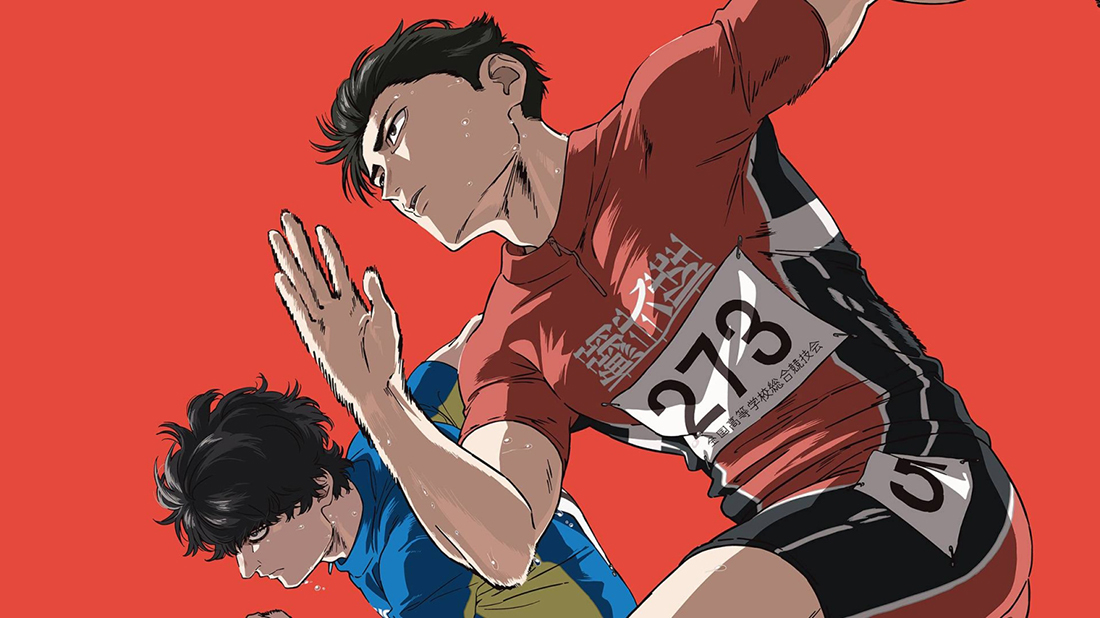
The bulk of live action, on-screen running visuals comes from marathon coverage or track meet broadcasts where the formula of proven elite athletes is a reminder that only one can win.
But also, only one can come in second — and third and beyond.
On a slightly bigger screen, 100 Meters is director Kenji Iwaisawa’s theatrical effort to illustrate the quest for victory, emotional character journeys and sometimes dealing with unavoidable defeat.
Initially released in theaters in Japan last year during the World Athletics Championships in Tokyo in September, the film is an anime adaptation of the manga series from Uoto (creator of Orb: On the Movements of the Earth) and later saw limited release in select countries. It landed on streaming via Netflix on December 31 and has built up new buzz just two days into the new year.
100 Meters begins with an initial focus on Togashi, who is instantly recognized for his gifts on the track and faces little competition as he wins numerous races — and is the standout amongst his peers. He commands attention and respect and it seems like a life as a top Japanese sprinter was already coded in his existence from birth.
A new student, Komiya, transfers to his school and class and is seemingly the opposite of Togashi except for their ability to run fast. And while Togashi is increasingly polished, Komiya is focused but has poor form, lacks solid breathing technique and prefers to wear worn shoes since his parent believe he will ruin them by running.
But Togashi and Komiya find common ground with running and specifically tackling the 100 meter dash. Togashi serves as Komiya’s instructor, helps tidy up his sprinting habits and it becomes apparent they are on collision course on the track — at least in the short term.
Weeks later Togashi’s class is informed that Komiya has suddenly moved away with his family and the film then transforms into a years-long journey that expands well beyond the tale of two runners.
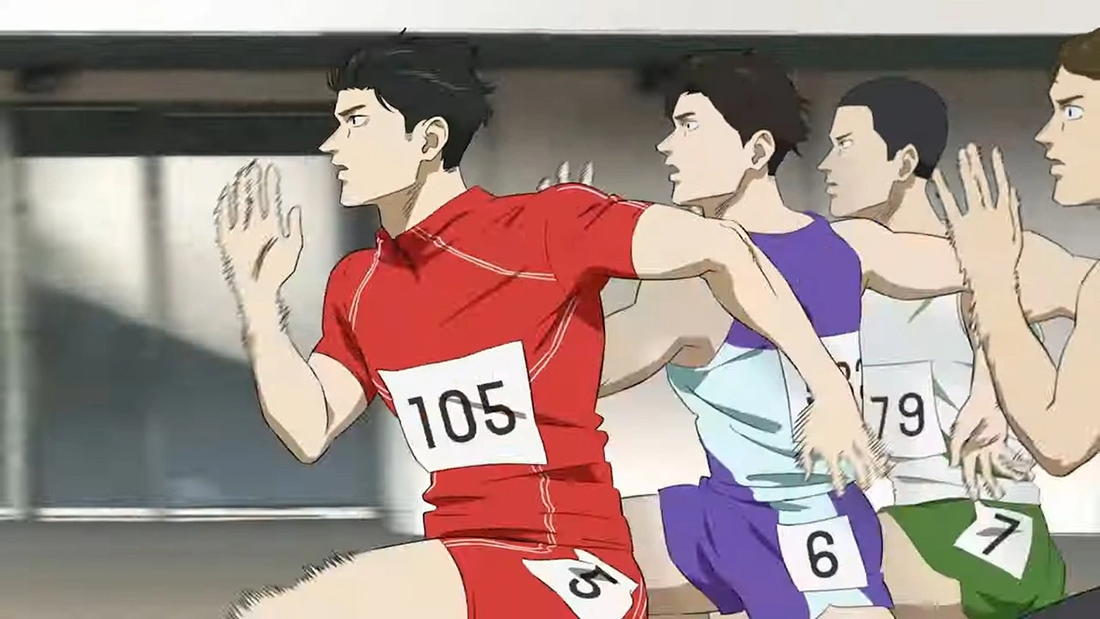
By high school, Togashi would see his track star status dimmed a bit as he coped with the external pressures of simply being appreciated for his talent as his mental health floundered. He’s less eager to complete even while national records and spot as one of Japan’s top runners awaits. The school is not known for its sports teams but Togashi later finds his new found anonymity put on pause when a classmate urges him and Nigami — a struggling running prodigy — to join the track club.
It’s the spark Togashi needs and during the the film, years of the grind of racing advances the timeline and older characters are introduced. These newer characters illustrate the hurdles of aging and self-reflection in their own ways, with their identities deeply tied to racing and having to rebuild themselves when winning is no longer a guarantee.
Togashi and Komiya are ultimately reunited through competition, with Komiya emerging into an elite sprinter who is more refined, exposed and has a better grip on his sense of discovery.
A recurring theme of existence through competition is present in the film and could seem trivial to non-running audiences, but the sprinting and distance crowd will laud 100 Meters for displaying why running is embedded in everyone who is forever motivated to lace up their shoes and move without being called.
Iwaisawa’s film ends with a race sequence that will be up to the viewer to interpret but for any runner, the prospect of another run (and another) is the true conclusion.
Anchored by a vivid rotoscoping animation technique, 100 Meters is a welcome balance of existentialism through running but dazzles in several action sequences where the characters are nearly at their limits of controlled spring chaos. It’s worth the watch as a fresh piece of media for the running crowd. And at numerous points in the film, it will be easy to spot many top footwear and apparel brands on the characters that feel like part product placement, Easter eggs — and an attempt to appeal to the label-conscious runner.
100 Meters is streaming now on Netflix. View the trailer below.
“100 Meters”
Directed by Kenji Iwaisawa
Genre: Drama, Anime, Sports
1h 46m