Peloton defied Wall Street analyst estimates in its third quarter, posting $630.9 million in revenue and a narrow 1 percent rise in profit over the same time last year, even as subscriber numbers continue to decline.
Overall, the company recorded a $26.4 million net profit in the quarter, a notable turnaround from the same point last year when the fitness brand saw a $47.7 million slide.
While analysts predicted $617.6 million in revenue, but Peloton noted that its per-subscription profits were up while equipment sales also saw an increase.
“In Q3 we made great progress on deepening our relationships with our Members, growing our opportunities to reach new Members globally, diversifying our revenue streams and planting new seeds for future growth,” Peloton CEO and president Peter Stern said. “At the same time, we continue to strengthen our financial foundation, highlighted by revenue growth, a significant increase in adjusted EBITDA, and a dramatic reduction in net debt. With the announcement of the Peloton Commercial Series and the recent launch of our global Spotify partnership, we are accelerating our evolution into a comprehensive, global wellness ecosystem.”
Peloton now expects fiscal year 2026 revenue to reach $2.42 billion to $2.44 billion, up from its original forecast floor of $2.4 billion — but still a 2 percent drop from 2025.
Even with subscriptions fluctuating, a price hike last October and new member signups represented key growth areas in the quarter, with subscription revenue reaching $428 million for a 2 percent increase over last year’s totals in the same period. But the company’s connected fitness products saw a drop in revenue to $202.9 million, a slight decline from the $205.5 million reported at this point in 2025. Those subscriptions fell to 2.662 million, a decrease of 218,000, or 7.6 percent from last year when signups were at 2.880 million.
Peloton says the subscriber slide is in line with its expected guidance, while its cash flow soared by 50 percent to $151 million as net debt dipped 70 percent from the same time last year to $173 million.
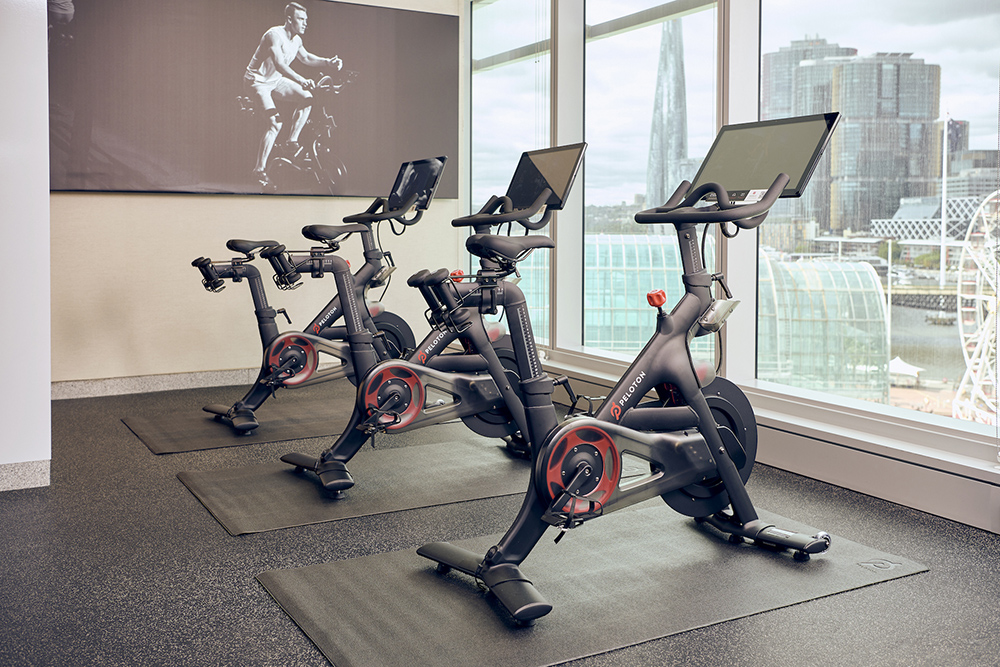
The company will continue to branch into other crucial segments, and its commercial products saw a promising 14 percent increase in the quarter amid a greater push to integrate its bikes and treadmills in gyms and high-traffic club settings. Peloton launched its commercial series in March after unveiling a partnership with Precor last year. The strategy could make up for shortfalls in the flagging consumer business, and convincing fitness operators to adopt the new commercial line is a challenging priority that the company expects to be a critical hallmark in 2027.
At just 3 percent of the $10 billion commercial market, Peloton understands that the rollout in large gyms is a major initiative of its ongoing turnaround efforts.