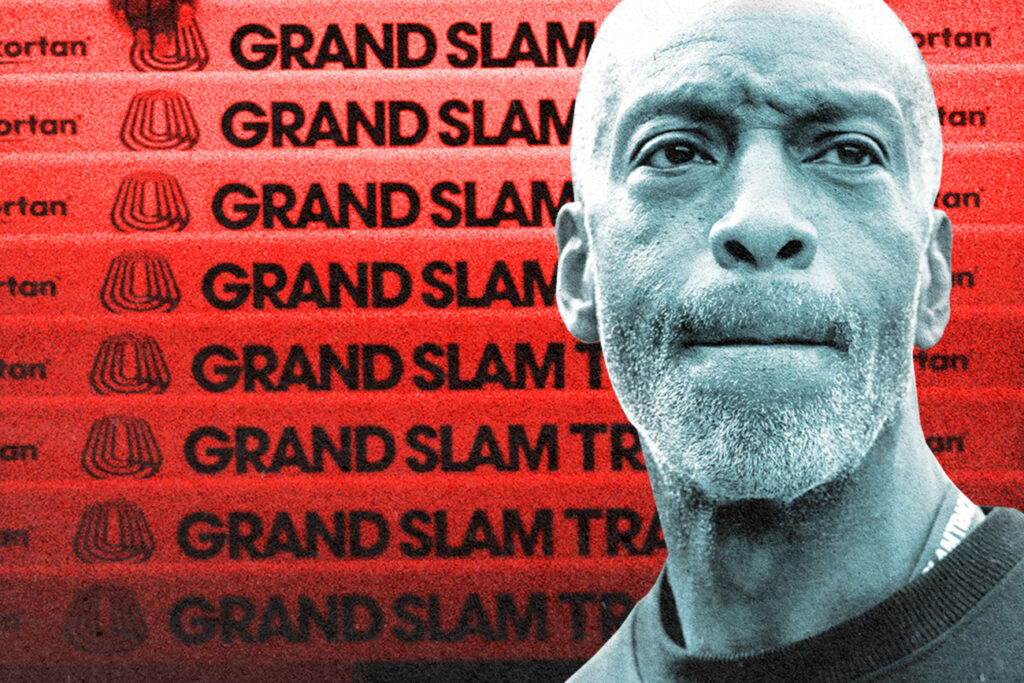
Michael Johnson offered clarity regarding the collapse of Grand Slam Track, including alleged payments made directly to him as the league endured financial issues and how he later dealt with the stress of seeing his venture ultimately enter bankruptcy.
In a 50-minute video interview released by The Daily Telegraph on Saturday, Johnson’s first since a court-monitored plan to resolve the league’s finances was approved in April, the track and field Olympic legend gave insight into how he worked to ensure that the all of the athletes who competed last year were compensated.
“No one was affected by it as much as me because I promised these athletes; they trusted me,” Johnson said. “I promised them ‘I’m going to build this league for you for the things that you’re frustrated by’. When I found myself in a situation where they were owed, that became my only goal. That’s what I’m focused on. And I’m not going to stop until I get it taken care of.”
Johnson has largely been out of the public eye as the league, its representatives and attorneys navigated a complex bankruptcy proceeding early this year that exposed just how badly Grand Slam Track had struggled to maintain appearances during its only season even as its finances floundered as would-be investments never materialized.
During the interview Johnson said that when the league’s own credit card was maxed out, he used his own cards to make sure athletes’ hotels, flights and other expenses were paid for and was later reimbursed through Grand Slam Track’s account. Creditors would later accuse him of “secretly” paying himself $500,000 even as the cash-strapped venture’s future became less and less certain, which Johnson flatly denied.
“So what I received was reimbursement,” Johnson said. “I also loaned the company $2 million to make sure we took care of the athletes. I decided to forgo my own salary.”
Grand Slam Track was founded in 2024 and instantly drew the eyes of the sport in its direction when Sydney McLaughlin-Levrone was introduced as its first athlete, giving the venture instant star power.
Other big names would follow, with Gabby Thomas, Yared Nuguse, Josh Kerr, Grant Fisher, Mellissa Jefferson-Wooden, Kenny Bednarek and others willing to take part in the inaugural season which kicked off in April 2025.
But after the first meet in Kingston, Jamaica the league drew criticism for appearing on its broadcast to have low attendance and bankruptcy filings would later show that financial troubles were already mounting. Still, two other meets in Miami and a revised Philadelphia format followed in May 2025 with large crowds but the finale scheduled for the following month in Los Angeles was canceled.
Rumors about internal trouble persisted and by July 2025, Johnson admitted that financing with an investor fell through and that there was a major shortfall in resources needed to keep Grand Slam Track afloat.
By December 2025, the league would file Chapter 11 bankruptcy in a bid to salvage the venture but also to pay athletes who had competed with some not seeing cash payouts dating back to the Kingston meet in April of last year.
Johnson attempted to provide explanations via social media through late 2025 but the prospect of a second season appeared impossible as bankruptcy filings detailed that the league he envisioned to disrupt the norms in the sport would likely be short lived
“How would we measure Grand Slam Track or any new league or any sort of venture?,” Johnson said. “You measure it based on what are you trying to accomplish? We’re trying to get people to come out in America and watch track. We were able to do that. One of the biggest problems this sport had prior to what we did last year was people can’t find the sport. Fans are complaining they can’t find it, they don’t know when meet are going to be. They don’t know who is going to be there — who’s going to show up. Athletes are complaining they’re not making enough money, they don’t have enough competitions here in the U.S. They’re not being promoted, nobody knows them outside of the Olympics.”
“I built Grand Slam Track to address all of those issues,” he added.
In late January, bankruptcy disclosures showed that the league had over 400 creditors, including well over 100 athletes and was nearly $41 million in debt as vendors argued that they would need to be paid far more than the proposed 15 percent of $13 million they were owed, which they rejected.
And Johnson claims that trying to resolve matters with the athletes became his primary focus before he looked to rebooting the league this year or at some point in the future.
“I could not even entertain a future for Grand Slam until I could get athletes paid and get a neutral space for Grand Slam where we don’t have any liabilities anymore and we’ve satisfied all of those and we got the athletes paid,” Johnson said. “Now that I’ve been able to accomplish that now I can think about what a future for Grand Slam Track might look like.”
While he also spoke on how the fallout of the league has impacted him personally, Johnson also said that his 22-year on-air broadcast relationship with the BBC is essentially on hold as he continues to sort the league’s issues.