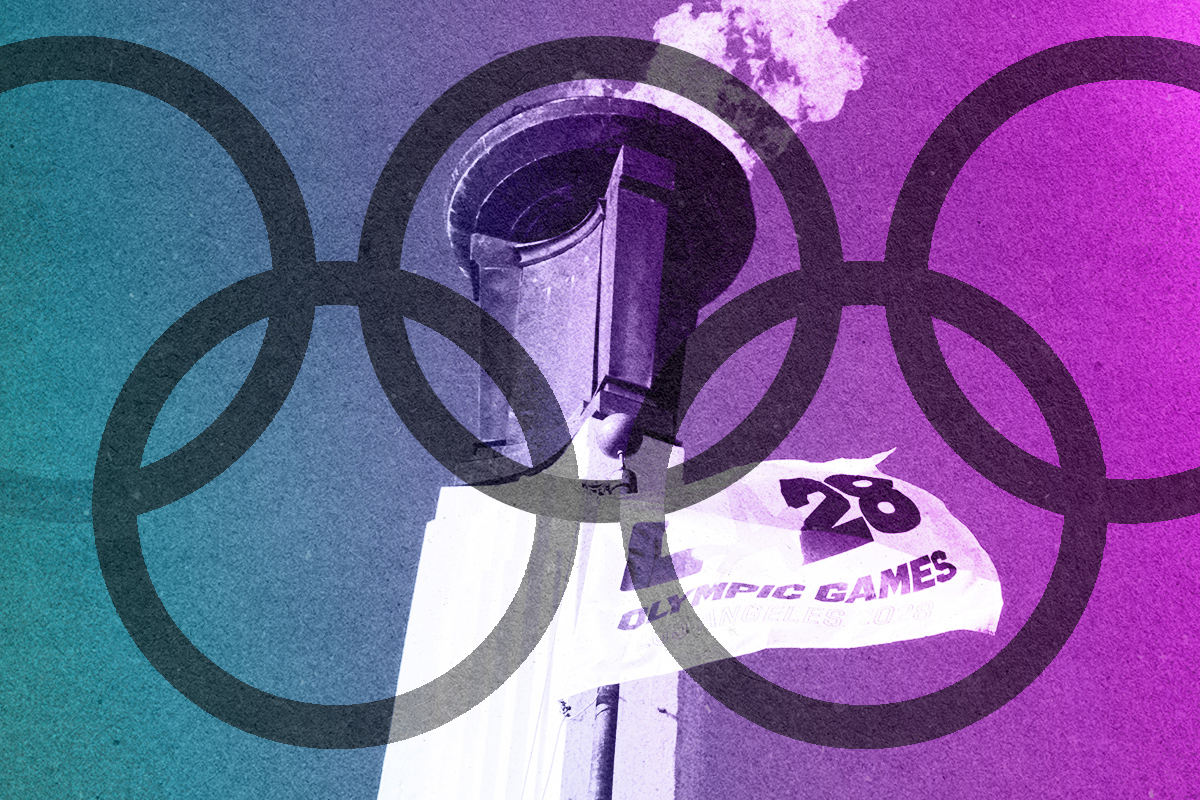
Businesses in the Los Angeles area could be in line for up to $800 million in contracts tied to the 2028 Olympic and Paralympics based on talks between LA28 organizers and city officials.
The proposed deal could represent a major opportunity for local companies and guarantee they have a stake in the largest Games in history.
But crucial details like how the money will be divided and who qualifies are only part of the inevitable questions if an agreement is set.
Negotiations with members of City Hall, including Mayor Karen Bass, are ongoing, according to people familiar with the matter based on a report in the Los Angeles Times on Sunday.
Still, top city officials are working on a deal that could allocate between five and 20 percent of the $4 billion total procurement budget, which would give local companies access to around $200 million to $800 million in contracts for the Games.
An agreement would mean business in the city and immediate surrounding area tap into a sizable share of a budget that LA28 organizers previously said would be spent with outside companies. Neither side has confirmed a final percentage or a target dollar amount that will be earmarked for L.A. firms.
If a deal can be worked out by the end of the year, it would mark another round of progress in a contentious relationship between the city and LA28 that will likely not cool even as Bass works through her final month in office.
Last month, city controller Kenneth Mejia subpoenaed LA28 for financial records, demanding bank statements, venue budgets, schedules, contractor identities and contract values and purposes that his office said were often delayed. Mejia voiced his concern over the city being responsible for extra costs if the Olympics ran over its $7.2 billion budget.
But some earlier progress has already been made in favor of local businesses at the urging of the city.
Local food trucks and small vendors were already included in an initiative by LA28 that would allow pop-up style shops to join the vendors that would serve the Games. Under the L.ocal A.uthentic Program, organizers would use 75 percent of its procurement spend on companies in L.A., while 25 percent would go to small businesses.
The push to include small local vendors is also a move to bring businesses on board that are distinctly unique to L.A. and another incentive to set the 2028 Games apart from other Olympics. Meanwhile, more than 17 million meals across the Olympic and Paralympic Games are expected to be served, with vendors in the program set to facilitate a sizable portion of those concessions.
That program came a year after City Council officials pressed LA28 organizers to reveal all of its procurement opportunities and directed the committee to work closely with the Regional Alliance Marketplace for Procurement, a city portal where business leaders connect vendors with public and private contracting opportunities.
LA28 launched the L.ocal A.uthentic Program in September and hundreds of vendors will be selected from applicants to get access to official areas within the competition zones and non-competition venues and be clearly designed as concession partners.