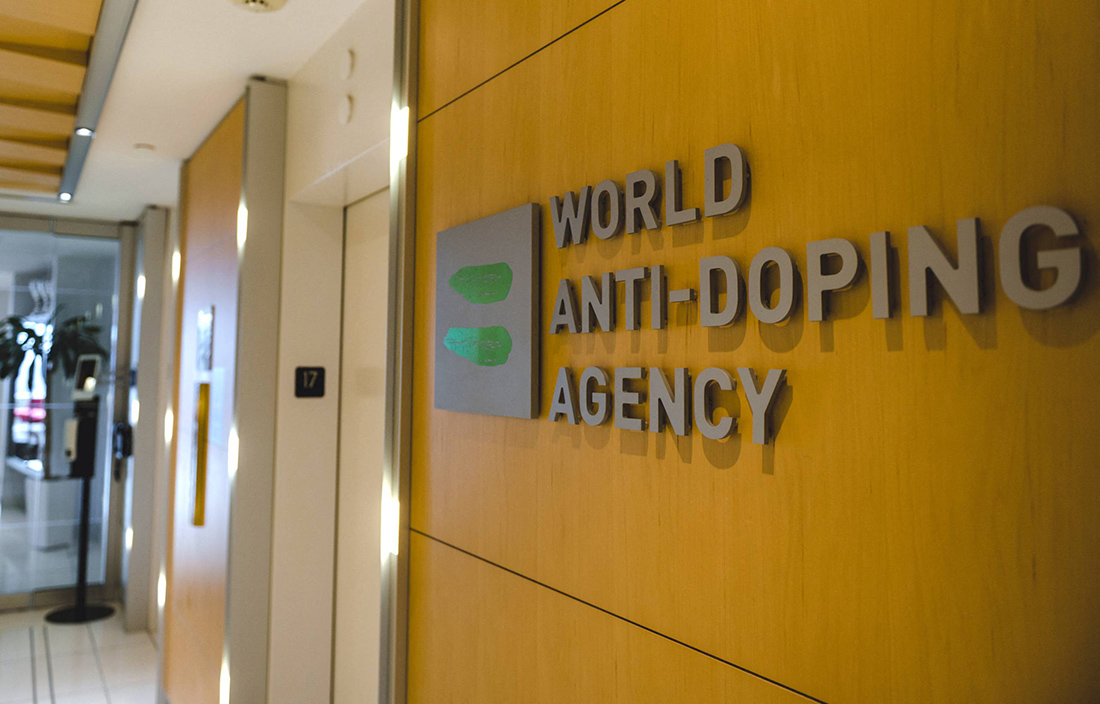
The United States has again refused to pay its share of dues to the World Anti-Doping Agency, deepening a dispute between both sides that began after the Tokyo Olympics in 2021.
Based on WADA’s budget disclosure for 2026, the U.S. allocation of dues payment is $3,957,756 but the Trump administration has still not paid more than $7 million in fees from 2024 and 2025.
Both sides have had a public disagreement over the handling of 23 Chinese swimmers who tested positive for banned substances before the 2021 Olympics in Tokyo but were still cleared by WADA to compete despite an investigation.
After an inquiry from China’s anti-doping agency in early 2021, the matter was settled when it was declared that the swimmers were exposed to the substance trimetazidine through food contamination. Several of the swimmers won medals at the Tokyo, including three gold, but the details of the investigation were not made public at the time or during the Tokyo Games.
A report in the New York Times in April 2024 detailed how the swimmers were still permitted to compete as WADA did not intervene, sparking immediate backlash from the U.S. Anti-Doping Agency.
“It’s crushing to see that 23 Chinese swimmers had positive tests for a potent performance-enhancing drug on the eve of the 2021 Olympic Games, as reported by the New York Times and ARD,” USADA CEO Travis Tygart said at the time. “It’s even more devastating to learn the World Anti-Doping Agency and the Chinese Anti-Doping Agency secretly, until now, swept these positives under the carpet by failing to fairly and evenly follow the global rules that apply to everyone else in the world.”
WADA quickly responded to the report and claimed that COVID-era restrictions in 2021 did not allow its own officials to examine any of the physical evidence associated with the investigation.
“During this review process, which spanned several weeks, scientists and external legal counsel thoroughly put the contamination theory presented by CHINADA to the test,” WADA said its statement in April 2024. “It was not possible for WADA scientists or investigators to conduct their enquiries on the ground in China given the extreme restrictions in place due to a COVID-related lockdown.”
What followed was a series of back-and-forth statements from both sides as the Biden Administration later refused to pay its WADA dues at the end of 2024.
“WADA must take concrete actions to restore trust in the world antidoping system and provide athletes the full confidence they deserve,” the White House said in a statement in January 2025. “When U.S. taxpayer dollars are allocated, we must ensure full accountability, and it is our responsibility to ensure those funds are used appropriately.”
The U.S. did not pay its dues in 2025 and has used a policy enacted by the first Trump administration in 2015 to withhold payments to WADA in response to the what it felt was governing body seemingly unwilling to act after a Russian state-sponsored doping program was exposed that year.
WADA’s budget reached more than $57 million in 2025 and continues to grow even as its largest contributor is also its biggest holdout.
In December, the agency was criticized by a bipartisan group in Congress for trying to find who leaked information that led to the clearing of Chinese swimmers.
Senators Marsha Blackburn and Chris Van Hollen and representatives John Moolenaar and Raja Krishnamoorthi blasted WADA in a public letter to its president president Witold Banka over “Operation Puncture” and its aim to reprimand whistleblowers.
“While WADA claims that their motivations are innocent, it appears this investigation’s intent is to intimidate and suppress whistleblowers,” the letter read. “If these allegations are accurate, WADA is not defending clean sport but is continuing to defend a cover-up.”
Meanwhile, other nations have already stepped up and paid their WADA dues for 2026, with Lithuania, Israel Estonia,Portugal, Costa Rica and Saudi Arabia making their contributions.