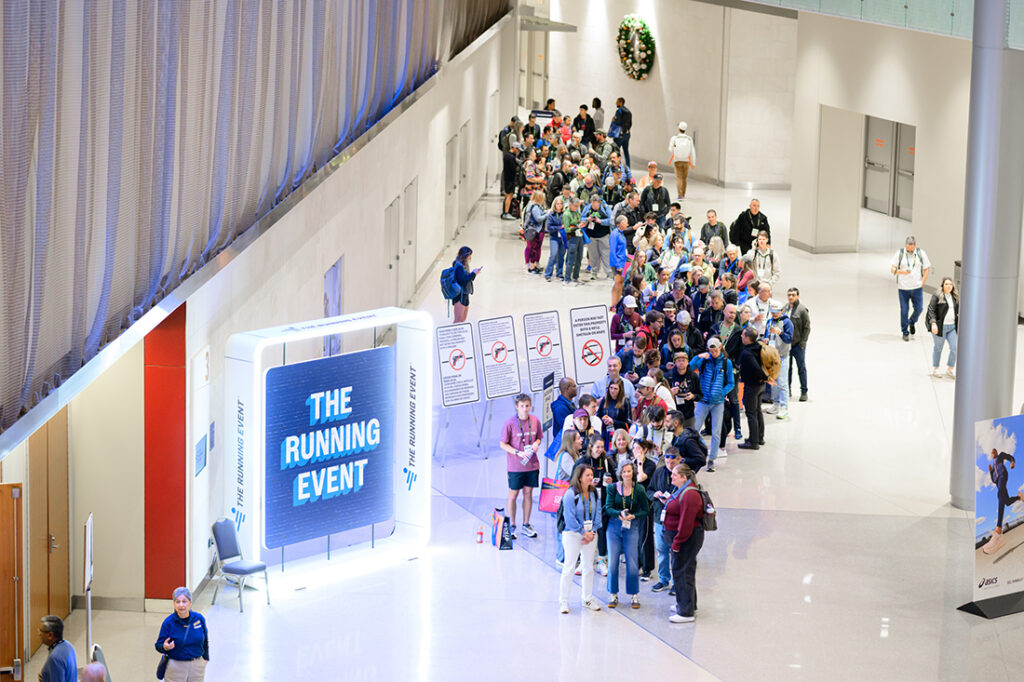
Running retail footwear sales in the United States rose 9 percent to $5.3 billion over the previous point last year, mostly fueled by higher prices in shops, based on figures revealed at The Running Event in San Antonio on Tuesday.
In a session during the trade show, David Durkin, co-owner of consultancy firm Karnan Associates and Beth Goldstein, an analyst with Circana, shared a detailed breakdown of how the adult running footwear segment has fared in the last three year and its positioning in the overall footwear market.
The figures show that running footwear, aside from the brand’s direct-to-consumer sales, have soared in the year through September largely due to higher average prices. But the 9 percent jump represents a 7 percent boost in the comparable time period from a glance at 2024 data.
Meanwhile, the adult running footwear market now accounts for around 10 percent of the entire footwear market and is up one percent over last year.
More product being sold and an uptick in average selling price tell the deeper story, with per unit sales rising 4 percent to 52.5 million after a 2 percent dip (50.6 million) just a year ago. But the average shoe price at retail is now $102, a 5 percent increase over the $97 average price from the same point last year.
Many of the attendees at TRE were speciality retailers and the figures presented in Tuesday session were of particular interest as the run specialty footwear segment was up 3.1 percent in sales while the average selling price — often much higher than then overall market — is now $145.95 a 3.3 percent rise over the previous year when shoes sold at average of $141.29 per transaction.
The higher numbers in the overall market and at run speciality can be attributed to tariffs, according to Goldstein, but runners are taking a harder look at the growing product lines from manufacturers and grabbing premium offerings.
Still, while many runners prefer to see and test products in store, the impact shopping trends has reached run specialty with around 40 percent of sales in the overall footwear market coming from online buyers, according to Goldstein. The number will surely rise.
For now, running footwear shoppers remain loyal to making trips to their local brick-and-mortar shops, with 57 percent of running footwear sales coming in-person through September and 43 percent was sold online. But the 6 percent rise for those showing up at stores is not moving as fast as the online counterpart, which grew 10 percent in the same period.
On the manufacturer side, Tuesday’s session revealed that Brooks, Hoka, New Balance, Asics and On were the top five adult running footwear brands overall in the market.
But on the run specialty side, there is a trending shift in sales in which brands shoppers are leaving the stores with.
Brooks is still king at run specialty, as it was in 2024, but was down 6.8 percent in sales dollars, while Hoka took the second position but saw a 7.4 percent decrease. New Balance was third on the list and fell 4.6 percent while Asics was down 2.1 percent in the same period.
On brand saw noticeable dip at run specialty retailers, falling 19.7 percent in sales dollars and fell to the sixth position as Saucony pushed to five on the list with a 1 percent increase.
Others on the list are pushing upward, with Nike seeing a huge 35.4 percent sales dollars bump (eight on the list), with Altra moving to the seventh spot at a 3.1 percent boost, Mizuno at ninth at 1.9 percent and Topo remaining at tenth but seeing a big 30.9 percent surge.