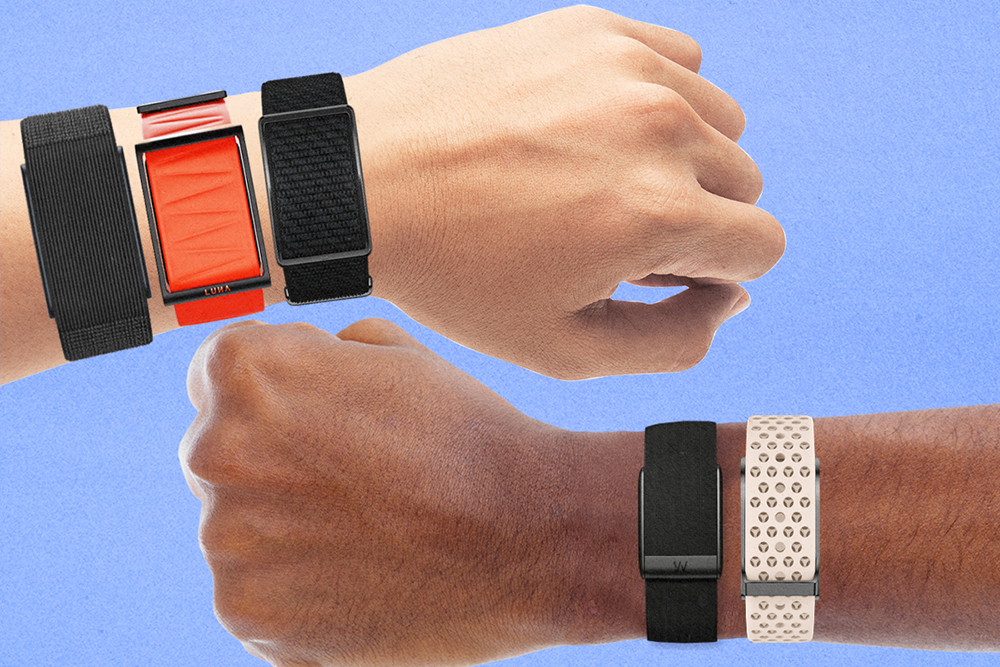
Whoop found its footing in the headless fitness tracker space in 2015 with the release of the Whoop 1.0 and flipped the fashion formula of a band-only wearable into style without seeming tech heavy.
And of course a few celebrity endorsements, whether intention or casual, helped lift the brand toward mainstream recognition where a lack of a smartwatch screen established the Whoop trade dress.
Heavy hitters across sporting world like Cristiano Ronaldo, LeBron James, Patrick Mahomes, Aryna Sabalenka, Michael Phelps, Rory McIlroy, Lando Norris, Carlos Alcaraz and others gave the brand the some of the best co-signs money — and cool factor — can generate and with last year’s release of the Whoop 5.0 and MG the stakes got higher.
The company had bigger ambitions as it eased toward medical grade health insights and blood testing in order to help prioritize accuracy with innovation. Meanwhile, Whoop CEO Will Ahmed eyes leading the brand toward an eventual public offering sooner than deeper into the future as becoming an authority in the fitness tracking and health segment takes more of a lead roll than being trendy.
“I would think about it over a horizon of two years,” Ahmed said in a report in Bloomberg in Novemer. “If you ask yourself, what public company today owns personal health, what comes to mind? I draw kind of a blank spot. It feels like it should be a big company in the world that is known for owning personal health.”
Still, Whoop was not the pioneer in the stripped down wearable division and this year it will likely have to make room for a new batch of competitors, clones and established tech giants demanding a piece of the action.
Nike FuelBand: A pioneer
When the Nike FuelBand dropped in 2012, it was one of the first more recent attempts at diving into to tracker market without being a traditional watch. And it was initially met with strong demand that was powered by slick marketing befitting of many products bearing the Swoosh. At $150, the wrist worn tracker logged steps, workouts and amount of energy burned — and synced to iPhone and Android devices that tapped into the existing Nike+ community.
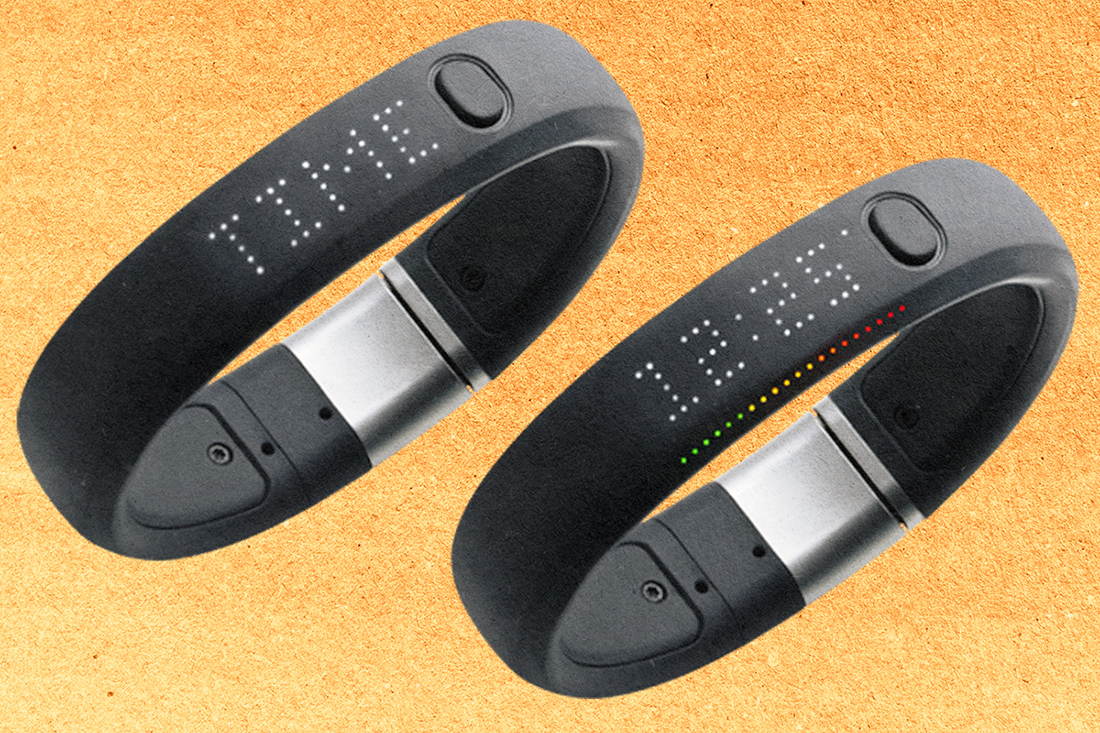
Unlike today’s trackers, the FuelBand’s distinctive silicone casing was crafted over embedded LEDs that displayed the time and other data. Meanwhile a side mission of users staying fitness focused was a chance to rack up NikeFuel points, the company’s proprietary fitness metric that pulled a gameplay style of achievement with the product into the mix. By 2018, the FuelBand — and its SE variant — was on the chopping block and Nike+ support was pulled as tech-focused powerhouses like Garmin and Apple rolled out smartwatches and corresponding platforms that tilted the wearable segment by flexing the limit of what engineers could squeeze from microchips (and displays).
THE OTHER EARLY CONTENDERS
Fitbit Flex
The Flex debuted in May 2013 at a time when Fitbit was riding high as a popular fitness tracking outlet that boated a solid lineup of devices that were both affordable and a gateway into the brand’s ecosystem. A slick app interface was data-rich, but not intensive and a roster of watches and trackers that could be used by children and older users kept Fitbit insulated from product recalls that did little to tarnish its reputation.
The Flex was a $99 stylish band with reasonable battery life, had distinct five LED indicators and came in a range of colors that helped usher in the trend of religiously tracking steps. A follow-up, the Flex 2, arrived in 2016 with noticeable improvements like better customization, sharper design and subdued profile that made it a worthy alternative to a smartwatch. By 2019 both Flex models were discontinued and two years later Fitbit was acquired by Google, with existing models absorbed into Google’s wearable stable.
Jawbone Up24
The Up24 joined an expanding arena of trackers like the Fitbit Flex that were segment-defining and perhaps a bit ahead of the wearable fitness tech surge that’s simply saturated in 2026.
But in 2013, the Up24 was a beefed up iteration of its initial predecessor at $149.99 that landed two years prior and came packed with improvements in a distinctive design. The Up24 was more bracelet than band in appearance, fit loose on the wrist and felt sleek. Solid battery life, impressive sleep tracking and a very user-friendly app — along with a standout design — put the Up24 in a healthy position among competitors.
Garmin Vivofit
Garmin is a pioneer in the fitness wearable space and in 2014 the Vivofit not only introduced a new line of trackers for the company, it expanded a growing segment.
The $130 Vivofit felt more like an evolved take on the Nike FuelBand and unlike devices from Fitbit or Jawbone, the Garmin tracker’s small curved integrated screen was a pivot from run-focused Forerunner watches.
With the tech cache of Garmin innovation (and heritage), the Vivofit improved in the subsequent three generations, gained a youth-focused variant and survived in a crowded in-house roster of multisport devices that only a leader in wearables can boldly get away with. The Vivofit line was discontinued by 2020 even as similar Vivosmart models were introduced alongside it as the aging Vivosmart 5 soldiers on with no official word on a replacement.
THE CURRENT CROP
Polar Loop
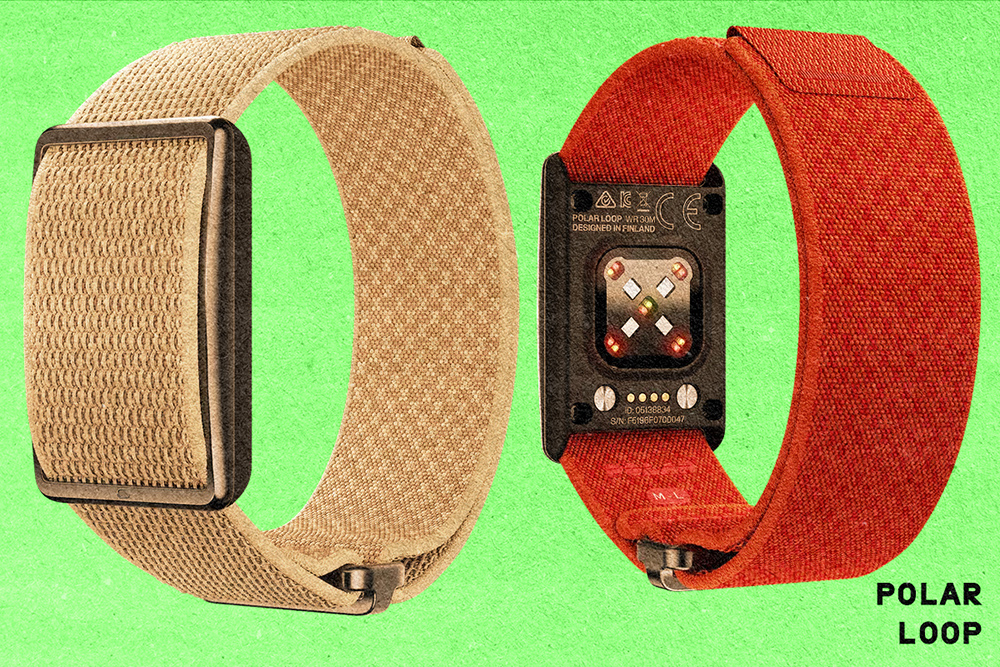
Polar released the Loop tracker last September for $199.99 as a subscription-free band that packed features the company claims would aid in better sleep, recovery and promote activity without the distractions of a screen. Aside from the band, the Loop packing include a pair of swappable wristbands. And while the Loop is a solid first effort some users were less-than-thrilled with what has been describe as a dated app experience, intermittent heart rate tracking issues and iffy syncing — all of which could be remedied with a wholesale software update.
In October, Whoop filed a lawsuit and preliminary injunction against Polar, claiming that the Loop was a “wholesale copy” of its distinct faceless front with no screen, fabric band and metal accents that have been consistent features since the Whoop 1.0 debuted in 2015 as part of what the company defines as the Whoop Trade Dress.
Polar denied the allegations of any infringement but last week Whoop scored a legal victory over Lexqi after a federal court in Massachusetts granted an injunction stopping the sale of a band that Whoop said copied its trade dress. The ruling could be a sign of how the issues between Polar and Whoop could ultimately unfurl.
Luna Band
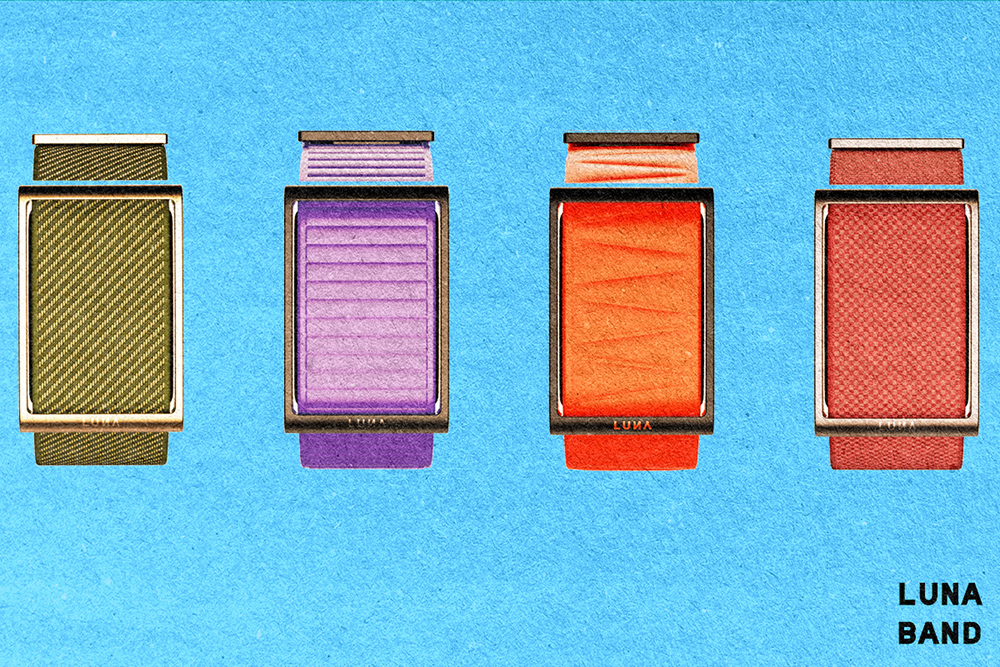
The Luna Band got a proper introduction at CES 2026 in Las Vegas in January and is aimed specifically at beating the Whoop 5.0 at its own game with a $149 pice tag, no subscription commitment and a loaded set of features in a stylish package that might be worth a serious look.
The tracker matches similar devices with the ability to keep tabs on heart rate, body movement, skin temperature, respiratory rate, sleep analysis and be comfortable enough to wear all day and feel barely there. The devince breaks from the pack with the ability to facilitate voice commands and get’s a boost from Luna’s adaptive AI engine. No exact release date for the Luna Band has been unveiled despite being showing at CES, but the tracker is expected to land at some point this year.
Speediance Strap
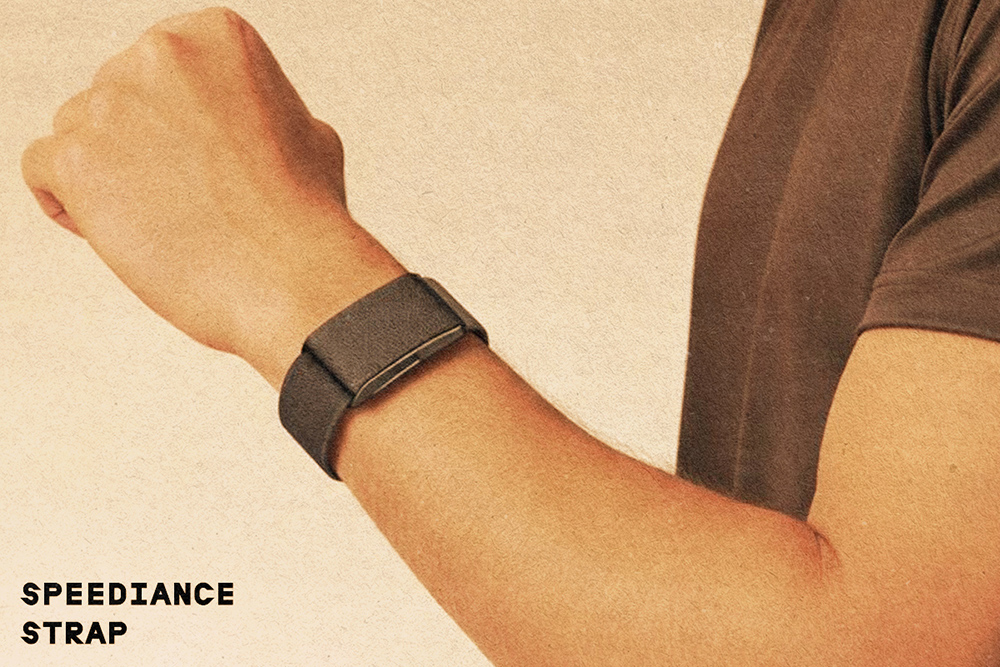
The Speediance Strap was also unveiled at CES 2026 as the company’s first wearable device with a major focus on comprehensive health reporting while giving a tailored look at recovery, training, sleep and baseline physiology to reflect how the body responds to user fitness progression.
And while there is no subscription attached to the Speediance Strap, the company’s Wellness+ option combines AI guidance with a deeper look at health projections.
Rogbid Halo Band
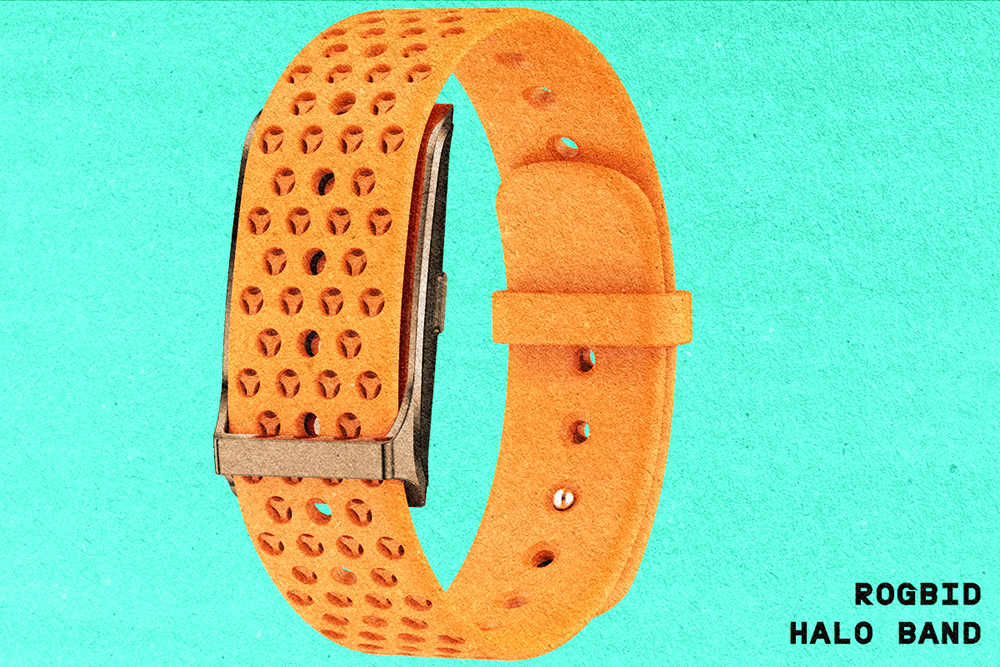
Rogbid’s Halo Band might be among the lesser known of the growing batch of fitness trackers but it’s much more affordable at a $49.99 starting price — with no subscription — and comes in nylon or silicon variants. The company claims the band is capable of 24 hours of continuous heart rate monitoring, can take blood oxygen readings, track sleep patterns and keep an eye on blood pressure.
Amazfit Helio Strap
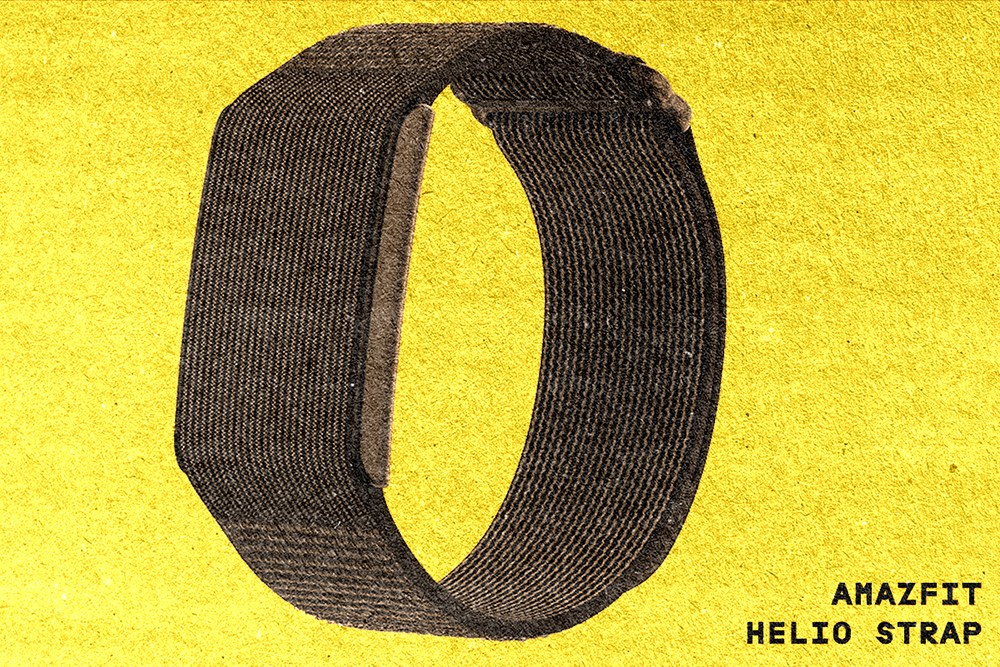
The Helio Strap is Amazfit’s foray into the segment with a $99 band that is not tied to a subscription and emphasizes health insights that can be integrated across the brand’s ecosystem of devices like its smartwatches and ring tracker. Meanwhile, the Helio Strap can be boosted, in a sense, with the addition of the Helio Core, which is a separate tracking add-on geared toward the fitness crowd seeking “pro-level performance” with a an emphasis on real-time accuracy.
POSSIBLE PLAYERS + LIKELY ENTRANTS
Garmin
It seems logical that Garmin would enter the segment despite boasting a packed lineup of watches that cover a range of demographics, use cases — and price points. But a band-style wearable is within Garmin’s ability from a production standpoint and the company, outside of Apple, has the resources to get the form factor correct on its first try.
The existing Garmin Connect ecosystem would easily support the device and if price, styling and no subscription are all part of the deal then Garmin could make up significant ground in the segment. On January 26, references to a possible Garmin band briefly appeared on the company’s website as the “CIRQA.” A part number, sizing, colors in black and “French gray” and “smart band” label were also shown, which means that a Garmin band could surface in the spring. The listing, which was later pulled, showed a 4-5 month shipping date, but all of the information displayed on the page were likely placeholders.
Coros
Coros has a stable lineup of watches, accessories and sensors but could lean into pushing out a device that is a competent Whoop rival among a field of wearables that might have to accommodate yet another tracker getting a seat at the table. Coros has the name recognition in running circles and a mainstream tracker with no monthly add-on gives the brand a fighting chance without having to depend on a feature-rich watch to remind the fitness tech space that it exists.