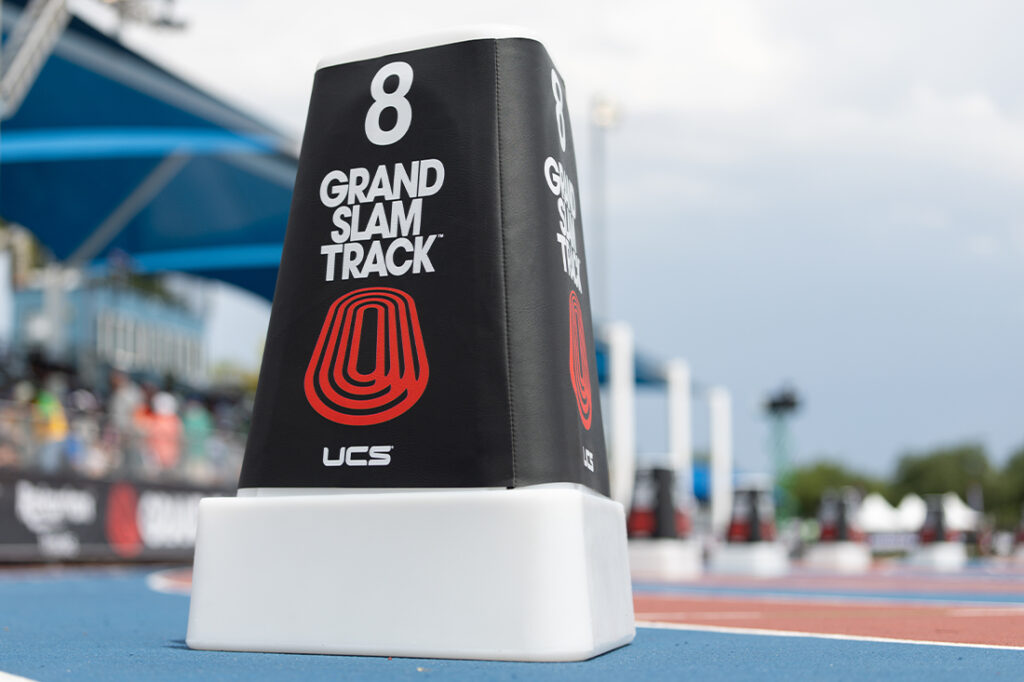
Grand Slam Track continues to sort out its financing through restructuring but has just $7,300 in cash according to its representatives in a court-mandated bankruptcy meeting on Wednesday.
The meeting was facilitated by the United States Department of Justice and was the first forum in 2026 where the league faced some of its creditors, which now stands at over 340 based to disclosures. The league also has only six employees, which includes founder and commissioner Michael Johnson.
It did not appear that Johnson was part of the video meeting, which included attorneys from its counsel at the firm Levene, Neale, Bender, Yoo & Golubchik L.L.P. along with Nicholas Rubin, a representative from Force 10 Partners, a corporate restructuring company tasked to guide Grand Slam Track through the proceedings.
The league has until the end of the month to present a clear roadmap of how a new round of financing would look, what are the specific steps toward restructuring and its plan to address its outstanding debts owed to creditors.
While just a fraction of its creditors were present in the meeting, Mark Fulton, the designated unsecured creditor representative was direct in his comments to Force 10’s agent who is acting on behalf of the league.
“For this to succeed going forward, you need the support of the very people that you’ve seemed to have cast aside,” Fulton said. “The athletes, the vendors — we seemed to be cast aside. It’s really important that you’re very clear with the questions that we’ve asked and you’re very clear with the answers you give to us as well.”
Fulton’s stake in finding some resolution to Grand Slam Track’s bankruptcy process is the highest of all creditors. Through a joint venture of his United Kingdom-based Momentum Broadcast Ltd and Carr Hughes Productions in the U.S. the partnership is owed $3 million as the top creditor while construction firm PMY Ets Usa Inc. is owed $1.27 million.
When Grand Slam Track filed for bankruptcy in December, the extent of its financial issues were not clear despite months of speculation and Johnson’s own admission in an open letter in last July about the money problems.
“We’ve had a very difficult situation this year financially,” Johnson said in July. “We had an investor that wasn’t able to honor their complete commitment to the league. So we started off with the capital we needed to get through the season as we planned it with the four slams — and made sure we could take care of everyone.”
After three of four scheduled events in 2025, the league canceled its final meet that was planned for Los Angeles in June.
But Grand Slam Track was already in a shaky position from the start at its inaugural meet in Kingston, Jamaica in April. According to bankruptcy disclosures last month, Eldridge Industries apparently said last March that it “decided to wait on committing” to financing the league until seeing how the Kingston meet fared.
Lower ticket sales and a noticeably empty Jamaica National Stadium during the three-day meet led to Eldridge not committing to getting involved with the league, which had to survive on $13 million in funding provided in 2024 by Winners Alliance, its largest backer.
Winners Alliance has since allocated Grand Slam Track a $3.25 million loan to assist with cash flow, the cost of the restructuring effort and staff payroll.
As of January, the league is $31.4 million in debt with an amended total and an assessed value of its assets to be presented to creditors and the U.S. Department of Justice later in the month.
Meanwhile, the creditors and its committee will continue to monitor the steps of the restructuring process — as well as how any new funds are allocated within Grand Slam Track.
During Wednesday’s meeting, Rubin confirmed that $1 million, presumably from Winners Alliance, is expected within the next day.
But the league is now slated to spend $100,000 on marketing, an additional $120,000 on payroll, $50,000 on consultancy fees as part of a proposed budget, which Fulton asked for clarification on exactly who would get that money. Rubin said he did not have specifics on the budget as the meeting was a general session of the creditors.
However, according to Rubin, $400,000 would be set toward new athlete contracts — supposedly for a new season — as a means to encourage athletes to join the league even as bankruptcy proceedings continue.