The European Broadcasting Union, a public service media alliance, has complied a best practices guide to help television networks avoid camera angles that can appear to overtly sexualize women’s events in track and field telecasts.
In its “Raising The Bar” document, which was issued in June but just recently has drawn sizable attention this week, the group outlined behaviors by broadcasters that have gone well beyond actions that are simply industry trends.
“This is not a list of restrictions,” the organization noted in its presentation of the guide. “Across high jump, pole vault, horizontal jumps and running events, the report demonstrates how the most compromising shots can be avoided with no loss of storytelling or visual quality. Whether you direct a major production or work with a small crew, it offers a clear, shared standard for broadcasters, directors, camera operators and the athletes they cover.”
According to the EBU, certain “selective” editing choices and camera angles are a longstanding issue in many sports broadcasts, not just track and field. The choice of shots that are fixed on bodies for an extended period of time, angles that are revealing and “excessive” use of slow-motion replays that don’t serve obvious purposes are rampant in the coverage of women’s events.
“These choices carry profound implications,” the EBU said. “They shape audience perception by diverting attention from the remarkable achievements and technical skills of women athletes, and risk perpetuating harmful stereotypes.”
Ivana Španovic, who competes in the long jump for Serbia, endorsed the recommendations in the guide and acknowledge that some camera positions have the ability to cast athletes in an unintended scene.
“When we step onto the runway, track, or field, we showcase the very best of our sport: a fusion of power, technique, and passion and the only thing we want is to execute our best jumps,” Španovic said. “However, certain camera angles, combined with gender stereotypes, not only cause discomfort for athletes and unnecessary distractions during competition but how it is broadcasted can also have serious long-term effects on athlete’s mental health, sometime even the position of the camera is not in the right place and can cause risk of injuries during warm-up.”
British pole vaulter Holly Bradshaw echoed a similar sentiment, noting that how the sport is aired can be “incredibly powerful yet sometimes harmful” based on the decisions made during the broadcast.
“Athletes want to enjoy themselves doing the sport they love without feeling uncomfortable or anxious about the footage being shown live,” Bradshaw said. “Many athletes, myself included have been in competitive scenarios where they are more focused on the cameras instead of their own performance.”
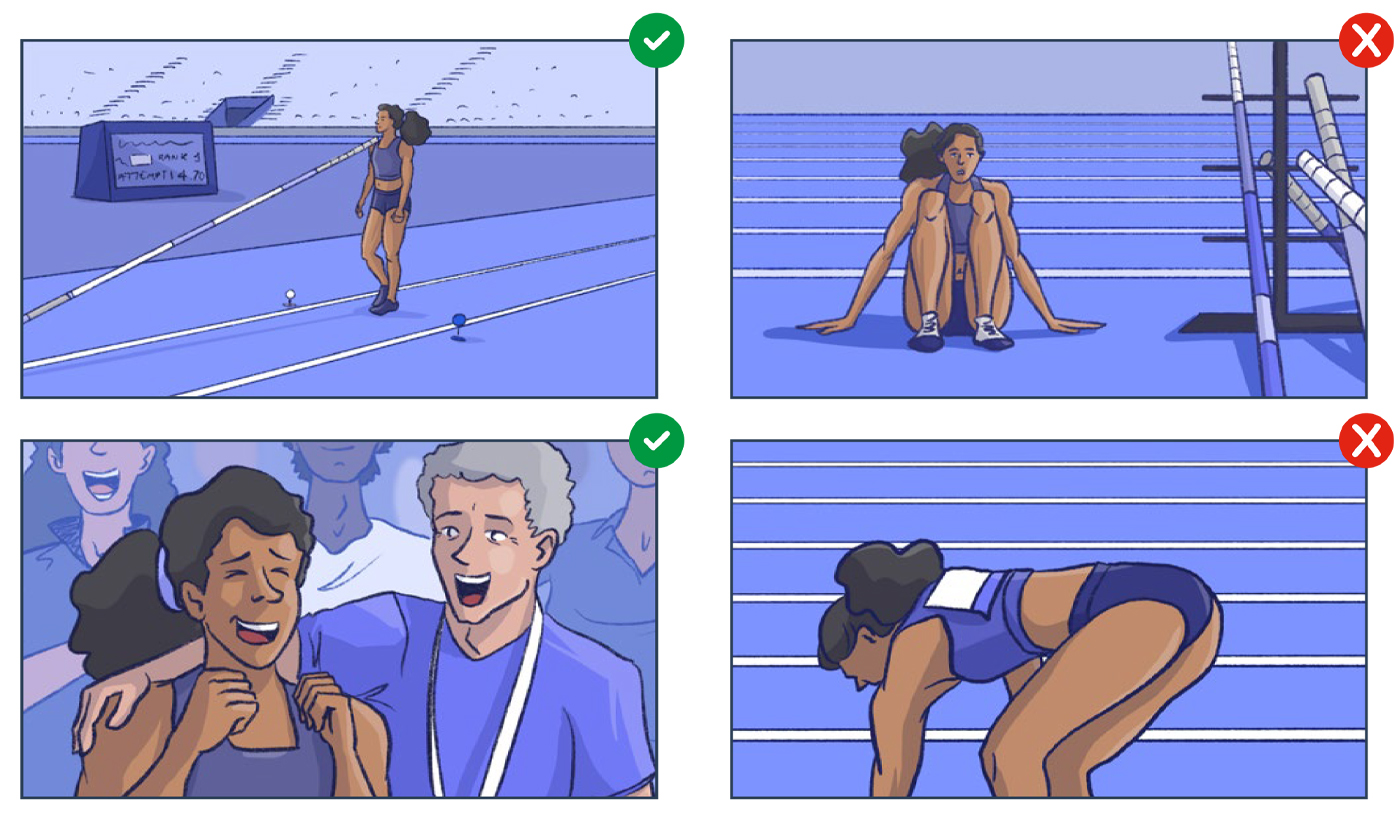
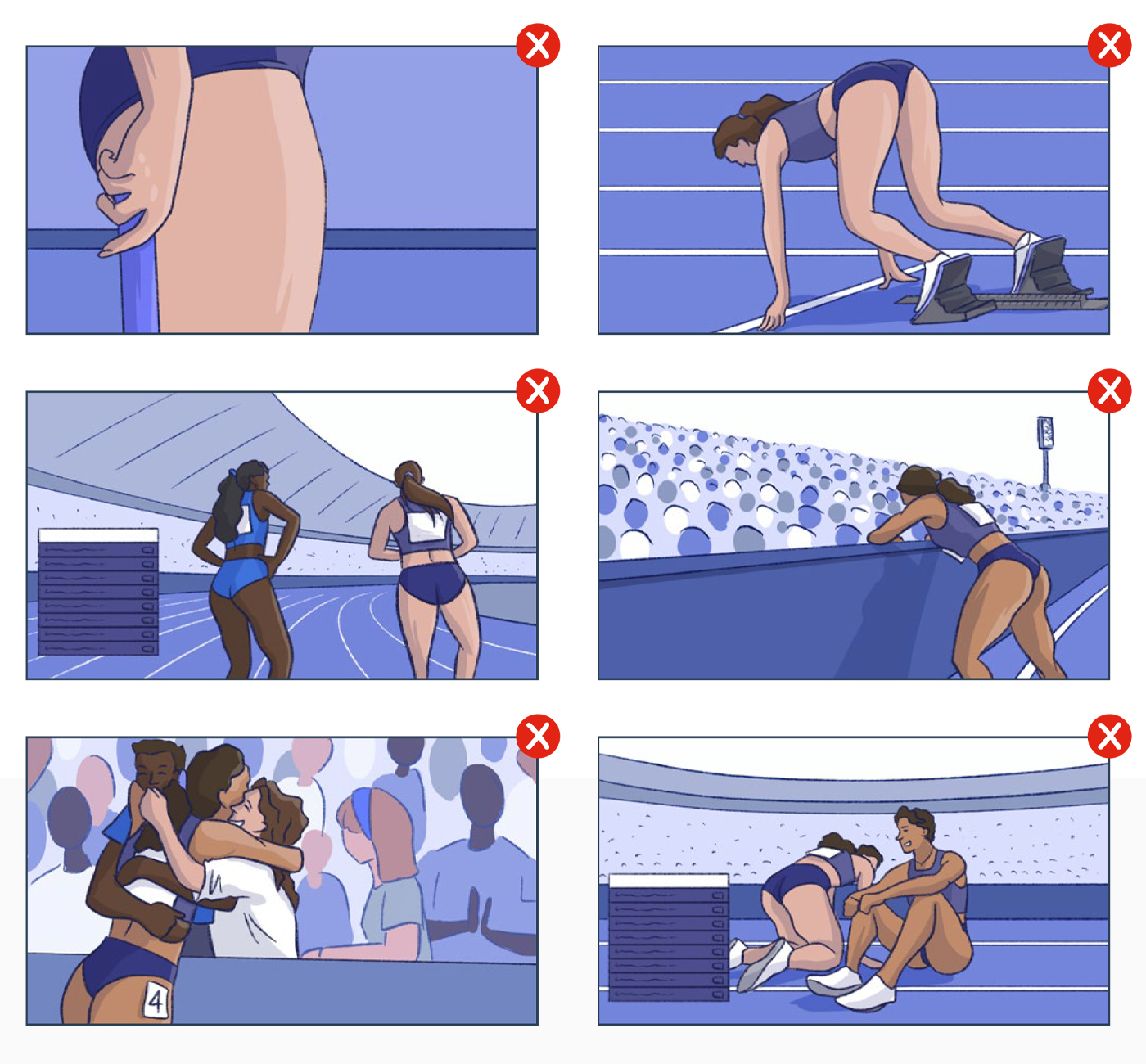
Using a series of clear illustrations in is guideline, the EBU shows broadcasters to frame their shots without using angles that could easily be interpreted as egregious. In each instance in the illustrations, a problematic scenario based on real world examples is presented with an immediate alternative that suggests more tasteful methods.
Broadcasters are not bound by any obligations to abide by suggestions noted in “Raising The Bar” and the EBU cannot sanction networks outside of its member roster. And while it also cannot legally penalize broadcasters, the organization can suspend, fine, or disqualify members and broadcasters for not abiding by its code of conduct.
The EBU describes itself as the “world’s foremost alliance” in public service media, and has 113 member organizations in 56 countries within its coalition.