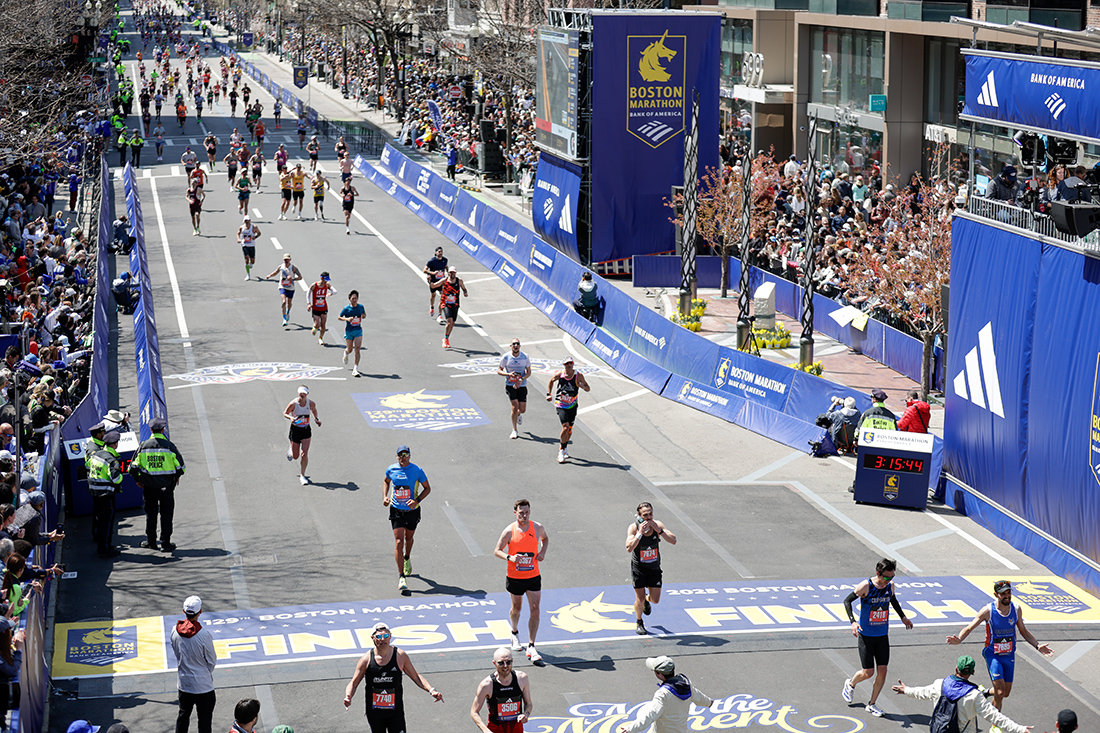
The Boston Athletic Association said on Tuesday that drones are banned on the entire course and warned owners to not bring the devices on race day on April 20.
The notice is part of a broader advisory by the BAA and Boston Police to keep the event incident-free and safe. But any unauthorized craft like a drone being used along any stretch of the 26.2 mile course would be in violation of federal restrictions meant to protect participants and spectators.
“The B.A.A. and public safety officials ask the public to assist in creating a No-Drone Zone along the entire course at the Boston Marathon,” the organization said in an advisory posted on social media on Tuesday. “Flight restrictions will be in place. “Please leave the drone at home.”
However, drones are not listed the BAA’s list of what not to bring on race day, which includes backpacks, bulky packages, costumes, large blankets, fireworks, coolers, props, suitcases and guns. But the entire course is part of federally restricted airspace that is commonly used by broadcast and police helicopters.
The Federal Aviation Administration has traditionally classified the area over the marathon as National Defense Airspace and warned that anyone operating a drone in a restricted region could face one year in prison, one year of supervised release and a $100,000 fine.
In 2024, Allan Nip was charged with flying a drone near the race finish line. His drone was intercepted by police, landed in a secure location nearby in Back Back and inspected by bomb technicians. Police then tracked the drone back to his apartment in the area and Nip admitted that he way flying the craft during the race.
He agreed to pay a $5,000 fine and surrendered the drone, which was valued at $4,000. The drone was seen flying just 20 minutes before the professional men in the wheelchair division were set to approach the finish line. The controller of the drone reportedly displayed warnings that Nip was flying the craft in a restricted area, which he apparently ignored.
The FAA said it sent out notices in the weeks before the 2024 race that said drones were prohibited without special authorization and amateur drone operators were not eligible for the clearance.
Since the Boston Marathon bombing in 2013, enhanced security has been been a priority at the event, with police officers carefully screening bags at multiple checkpoints along the final mile of the race. Extra barriers are usually in place along the sidewalk that prevent access to the course on the final stretch along Boylston Street and a noticeable police presence is increased in the days before the marathon.