Around 60,000 participants will cross the upper and lower decks of the Verrazzano-Narrows Bridge on Sunday in the only planned closure the full span sees all year for the New York City Marathon, setting the stage for a citywide block party.
Personal bests, streaks, bucket list goals and, of course, major championships are all at stake, while each step this weekend adds to the most valuable race in the sport.
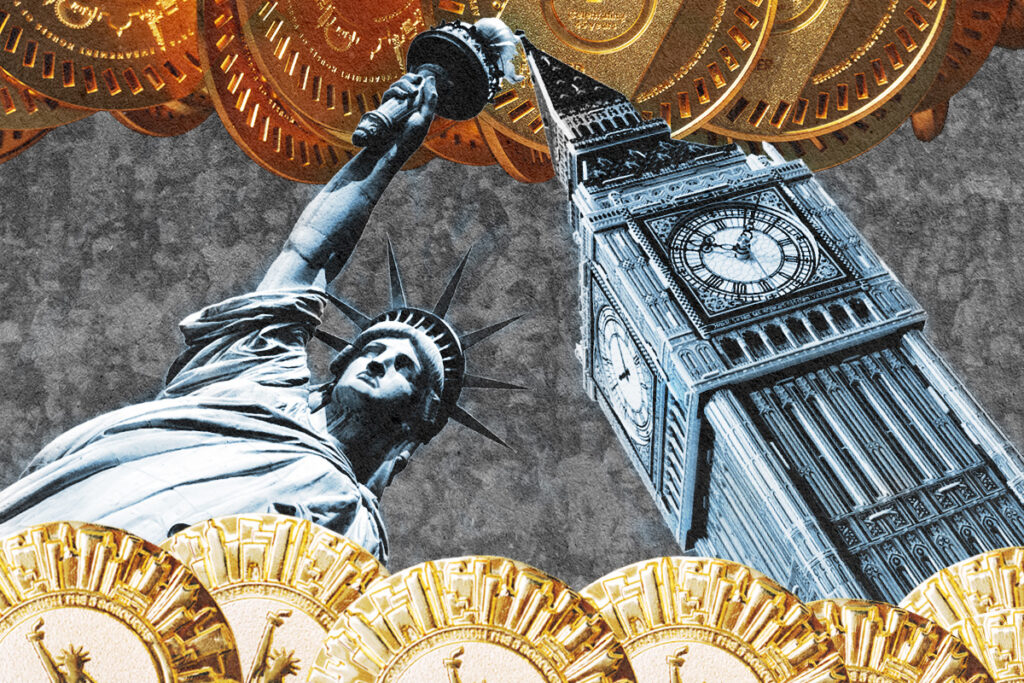
In a report issued on Saturday by Brand Finance, New York sat atop of all marathons globally at $339 million in brand value ranking and over $100 million ahead of London, which was named the strongest brand as all seven active majors ranked prominently in the briefing.
With Cape Town named as the eighth Abbott World Marathon Major in June, the valuation and brand ranking will likely see some shifting, but New York and London lead the current majors group, with all seven weighing in at a combined $1.1 billion value as demand for bibs continues to soar as running basks in an era where lucrative is now a prerequisite.
“Few other events allow an amateur athlete to compete on the same course, on the same day and in the same event as the world’s elite,” David Haigh, chairman and CEO of Brand Finance said in the report. “That combination of elite competition and mass participation gives marathon brands an unusually direct relationship with the people who engage with them. This is also what makes brand so important. For runners, choosing a marathon can mean months of training, significant travel and considerable emotional commitment.”
And while London ranks second in valuation at $230 million, it tops the Brand Strength Index at 95.5, according to the report, mixing scale, social impact and domestic engagement in a race that routinely breaks Guinness world marks for general participant costume records, fundraising and interest in ballot entries.
In April’s race, Sabastian Sawe pushed London into uncharted territory when he became the first person to officially run under two hours at 1:59:30, shattering a significant barrier in the sport. The 2027 edition of the race will put other majors on notice as London will field 100,000 runners over two days in what will redefine marathoning, even if organizers insist the format will be a one-time alteration.
New York came in second with a 92.3 brand score and joins London as the only two races above 90, while Boston (85.9), Berlin (85.4) and Paris (84.6) round out the top five.
Brand Finance notes that the key criteria to determine the top races that were evaluated in the report included participants believing that an event being seen as the best marathon was the most important and accounted for 32 percent of the ranking, with atmosphere (11 percent) and location (8 percent) driving the lead events into the highest grades.
But how this year’s report was assembled was also fine-tuned, with the 2025 edition not comparable to the new formula for determining the best brands in marathoning. For 2026, a runner-only pool was curated, with marathoners making up more than 97 percent of the respondents, far larger than last year.
“The shift reflects conversations with marathon organizers, for whom runners are the predominant audience their marketing is aimed at,” Scott Moore, sports services head for Brand Finance said. “Runners do not tend to perceive marathons differently to the general public (for example, whether a race has a good atmosphere or is well managed), but they are considerably more engaged, and that selectivity is now what the Marathons 50 2026 report reflects.”
And as valuations and interest in marathons increases, the impact on the cities and surrounding economies they serve, in addition to charitable causes.
The seven majors were responsible for $3.5 billion in economic impact through spending on hotels, food and transportation, while $317 million was generated for charity, with about $1.1 billion in combined brand value. New York again led the way, with New York with $857 million from its marathon alone and nearly $1 billion through a packed events calendar, followed by Chicago at $803 million, London with $604 million and Berlin at $516 million.
“As one of the world’s largest and most iconic sporting events, the TCS New York City Marathon attracts runners and visitors from around the globe, generating nearly $700 million in incremental spending for our local economy each year—on par with the entire New York City holiday shopping season,” Rob Simmelkjaer CEO of New York Road Runners said. “From hotels and restaurants to museums and shops across all five boroughs, the TCS New York City Marathon creates opportunities for New Yorkers and drives economic activity throughout the city.”
The report also highlights who runs marathons and why sponsors flocking to stand behind races care about the demographic, with 16 percent of marathoners holding executive positions, compared with 7 percent of recreational runners.
Tata Consultancy Services, the title sponsor of both New York and London, has significantly increased its presence in distance racing since partnering with the Mumbai Marathon in 2028. The company contributed to the report and revealed how the partnerships have helped the TCS brand grow, while Marathon Tours & Travel, Mastercard and World Athletics continue to play pivot — and distinct — roles in global marathon growth.
With London and New York set the lead the direction of the sport’s competitive and economic future, the friendly rivalry between the two races could play out on the course, too.
New York set the record for marathon finishers last November with 59,226, only for London to pass it this past April with 59,830. Sunday is expected to be another record chapter in the modern rise of distance racing, and 100,000 people possibly crossing the finish line in London in six months is proof that the evolution of the marathon is now.