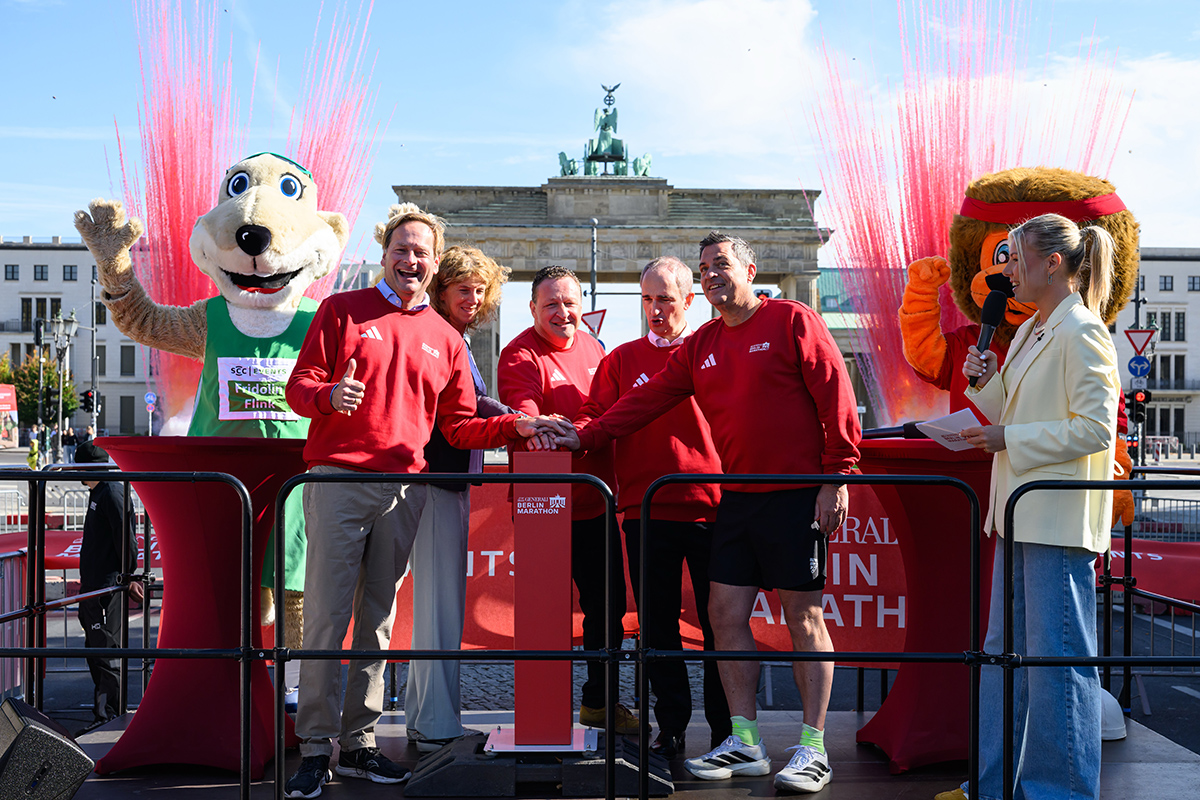
Generali will be the next title sponsor of the Berlin Marathon, replacing BMW after 15 years.
The move was announced on Thursday by race organizer SCC Events, describing the partnership as a “new chapter” and builds on an existing relationship that dates back to 2019.
“Our partnership has developed over many years; through the Generali Berlin Half Marathon, the Generali 5K, and the mini-marathon presented by Generali, we have built a deep connection and tremendous mutual trust over the past decade,” Jürgen Lock, CEO of SCC Events said. “We are therefore all the more delighted to now extend this partnership to the Generali Berlin Marathon. We are convinced that together we can make an even greater impact – far beyond running.”
The change is effective immediately and will be reflected in next year’s race as the Generali Berlin Marathon.
“Sport is one of the few social forces that promotes health whilst also bringing people together across social, cultural and generational boundaries,” Stefan Lehmann, CEO of Generali Deutschland AG said. “Through our ‘Ecosystem Sport’, we have been committed for many years to getting more people active, in both elite and grassroots sport. The partnership with SCC Events and the Generali Berlin Marathon is a significant step for us in further expanding this commitment and sustainably strengthening sport’s contribution to society.”
BMW’s tenure with the race marked one of the most successful race partnerships with a marathon, and it is unclear why the German automaker did not renew its deal with SCC Events.
But in 15 years as lead sponsor, the sport saw moments — and times — that pushed beyond barriers that pushed into a new period of marathoning.
In BMW’s first year as sponsor in 2011, Patrick Makau ran a 2:03:38 on the course and broke Haile Gebrselassie’s world record, while Wilson Kipsang lowered the mark to 2:03:23 in 2013 and captured the record. The next year, Dennis Kimetto broke 2:03 at the 2014 race and became the first person to break 2:03 in an officially ratified marathon.
The race thrived in the Eliud Kipchoge era and in 2018 he shaved an astonishing 1:18 off the existing world record in 2:01:39 and lowered his own record by 30 seconds in 2:01:09 in 2022.
Meanwhile, in 2023, Tigst Assefa clocked a 2:11:53, and took more than two minutes off the women’s world record. The race would become the world’s largest marathon to that point, with 54,280 finishers in 2024.
And last week, Assefa would pull off one of the most dramatic performances in any marathon after winning in 2:11:04 in a course record while powering through an Achilles injury.
SCC Events also announced that RTL will continue to broadcast the Berlin Marathon through 2029 in an exclusive media rights package, while the general ballot for the 2027 race also officially opened on Thursday.